The best hardscaping ideas for a Tucson backyard start with materials that handle the heat, like light concrete pavers and travertine, and then add the pieces that make a yard usable: seat walls, steps, a fireplace or fire pit, a BBQ island and clean borders with turf or plants. Under all of it, a well-built base and good drainage keep your patio flat through monsoon season.
Here are the materials we compare most often, the features Tucson families ask for, and what to get right before anything is built.
Which hardscape material is best for a Tucson backyard?
There is no single winner. Each material trades off heat, look, upkeep and cost. Here is how the four most common options compare in our climate.
| Material | Heat underfoot | Relative cost | Look | Maintenance |
|---|---|---|---|---|
| Artistic Pavers (concrete pavers) | Light colors stay fairly cool | Mid-range | Clean, uniform, many shapes and colors | Low; single pavers can be lifted and reset |
| Travertine | Stays comfortable, especially light tones | Higher | Natural stone, soft and upscale | Low to moderate; can be sealed to resist stains |
| Flagstone | Varies by color; dark stone gets hot | Higher | Rustic, irregular, very natural | Joints need upkeep; uneven surface |
| Poured concrete | Light finishes are fine; dark color gets hot | Usually lowest up front | Plain unless stamped or colored | Can crack with soil movement; hard to patch invisibly |
Costs are relative and vary a lot by layout, access, base work and pattern. We give written, line-item quotes after we see the yard.
Artistic Pavers
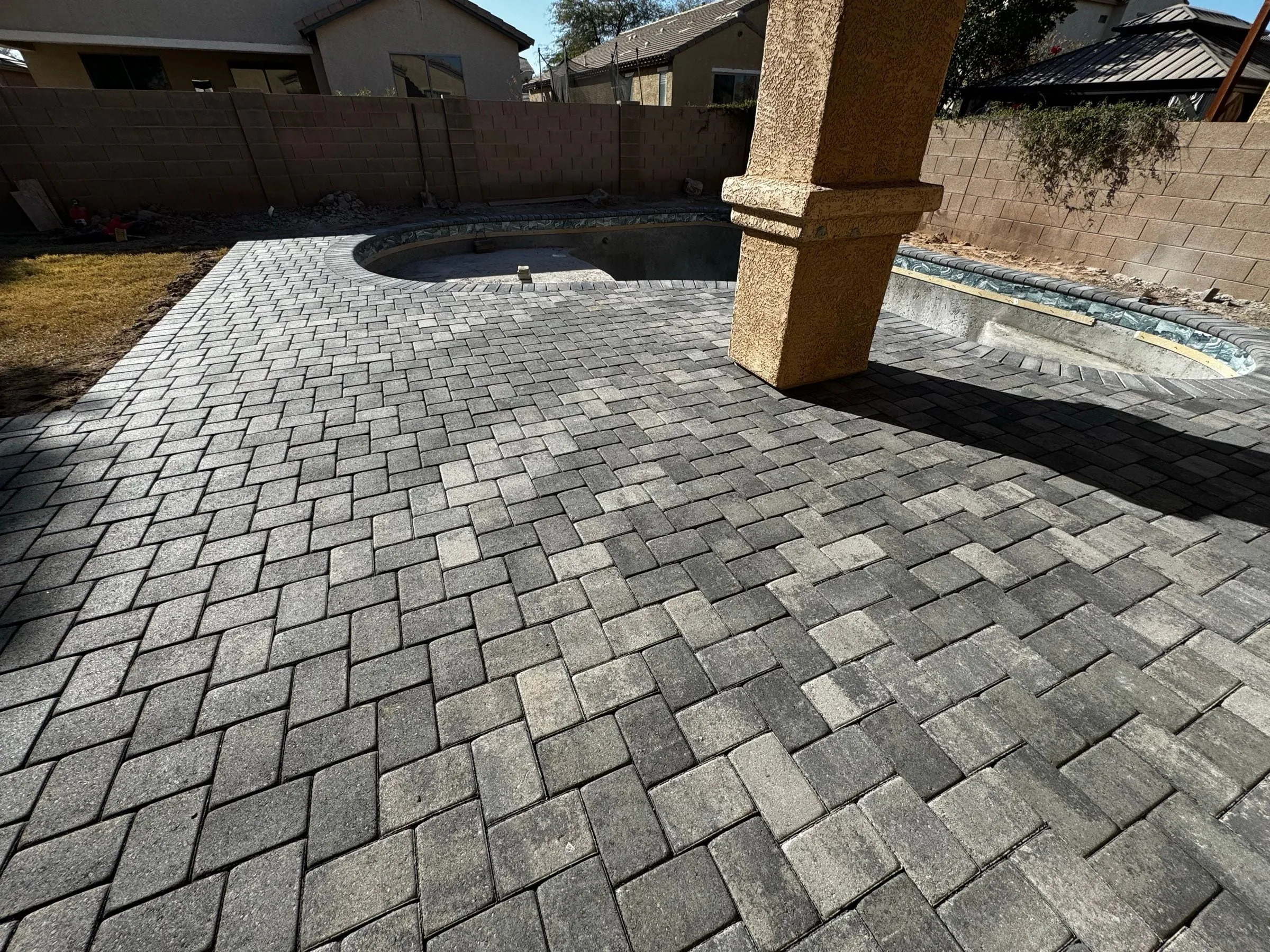
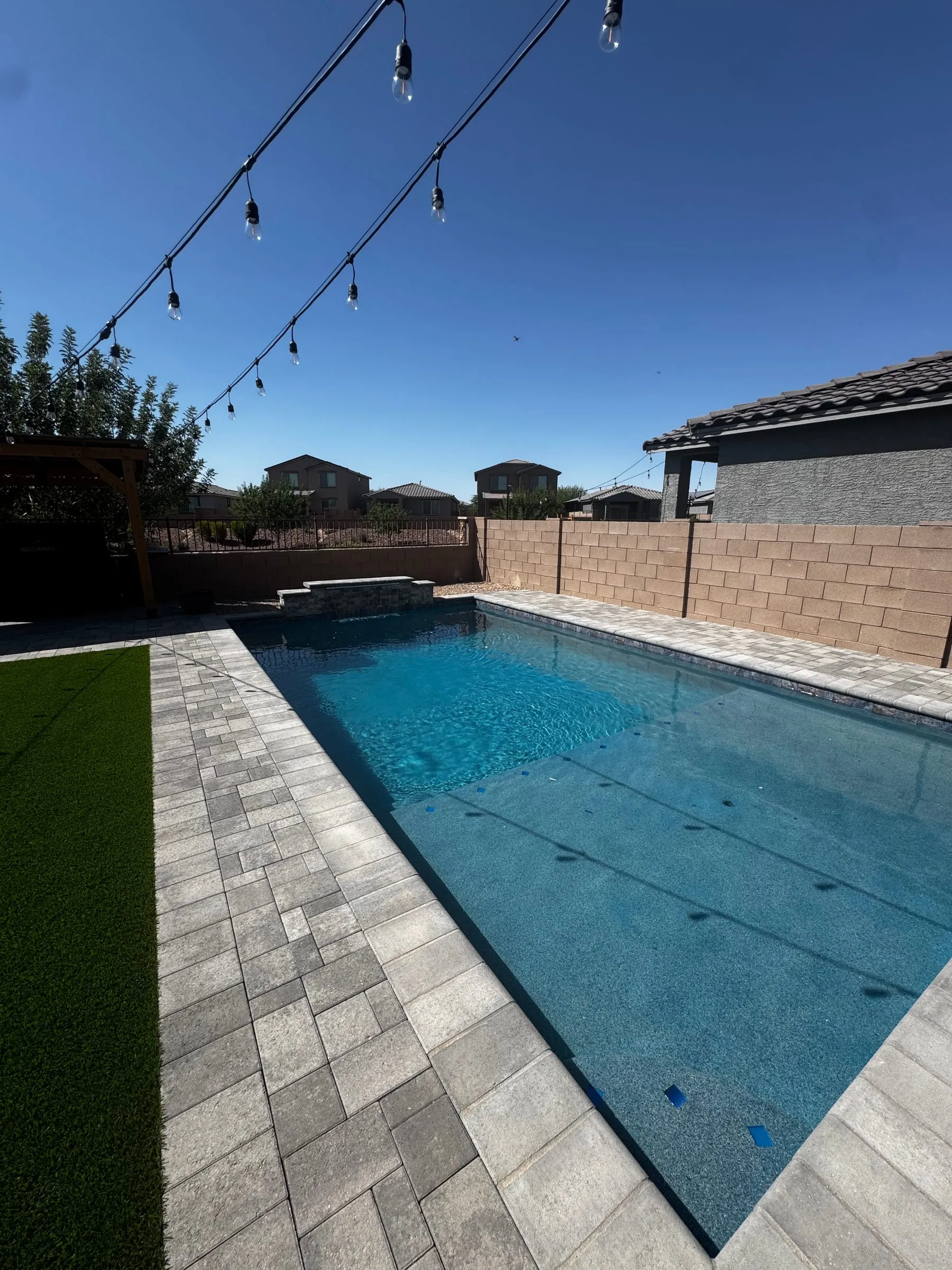
We install Artistic Pavers, interlocking concrete pavers and coping made for outdoor living areas. The company says its light-colored pavers are typically much cooler than most other deck surfaces, and that sealing is optional for its pedestrian pavers. Pavers come in many sizes and colors and can be laid in herringbone, running bond or mixed patterns.
The big advantage of pavers is repair. If a utility line needs work or one area settles, you can lift the pavers, fix the problem and put the same pavers back. That is hard to do with poured concrete.
You can see a herringbone paver patio under a covered porch in our Marana freeform pool and paver patio project.
Travertine
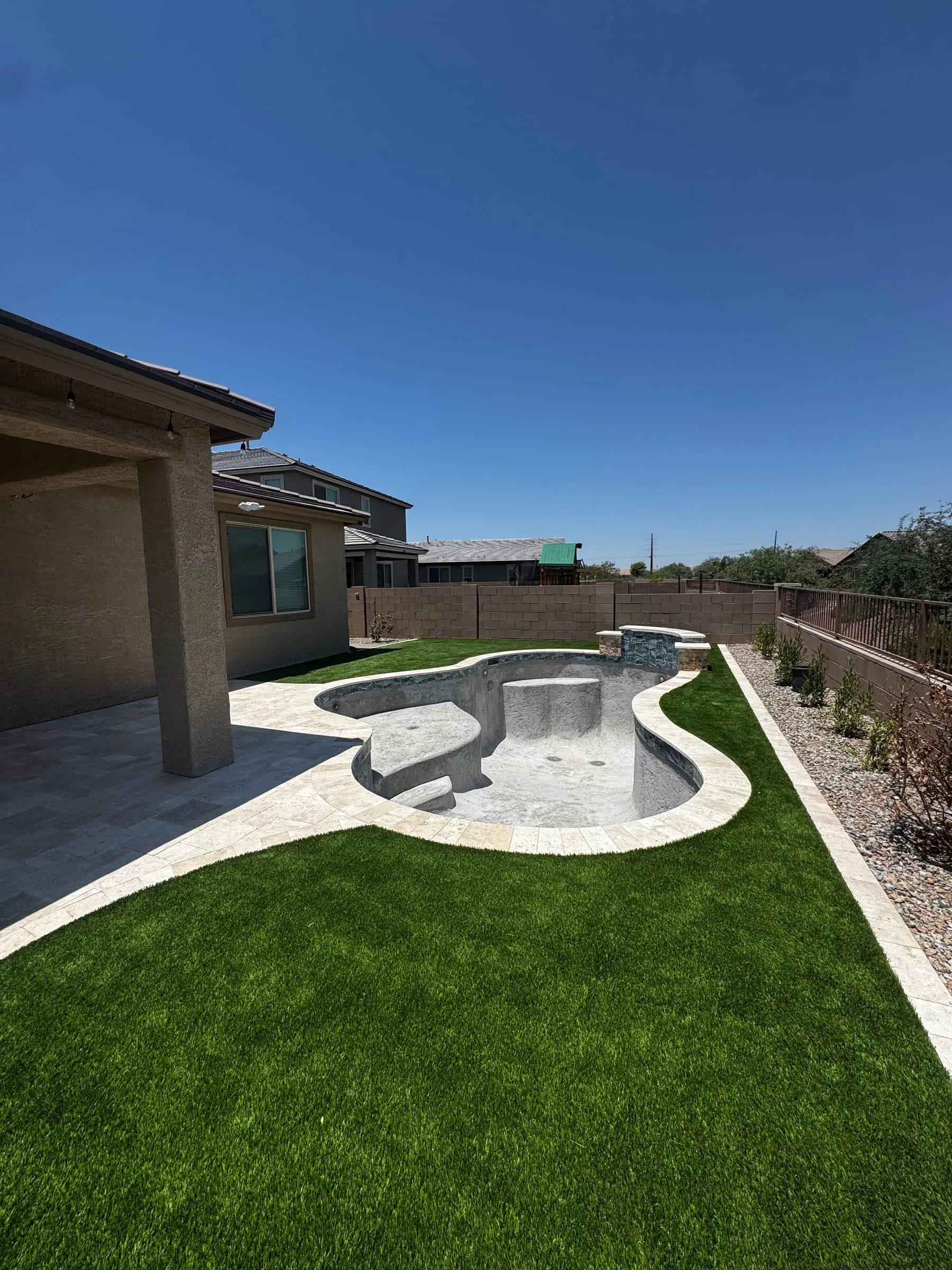
Travertine is a natural limestone with small pores that give it texture. It is a favorite around Tucson pools because it stays comfortable on bare feet and has a softer, natural look. We cover travertine and shade in more depth in pool decking materials that beat the heat, so here we will just say: choose light tones and a tumbled or textured finish for grip.
Flagstone
Flagstone is cut or split natural stone with irregular edges. It fits rustic and desert-style yards. The downside is an uneven surface, which matters for patio furniture and dining tables, and wide joints that need upkeep. Dark flagstone also gets hot in full sun.
Poured concrete
Concrete is often the lowest cost up front and works for side yards and utility areas. In Tucson, expansive soil and caliche can lead to cracks over time, and repairs rarely match the original color. Many homeowners who start with plain concrete later cover it with pavers or travertine.
What features make a hardscape yard feel finished?
Materials are the floor. Features are what make people want to spend time outside.
Seat walls
A seat wall is a low wall with a smooth cap, built at sitting height. It adds seating without furniture, defines a space and can hold back a raised planter or small grade change.
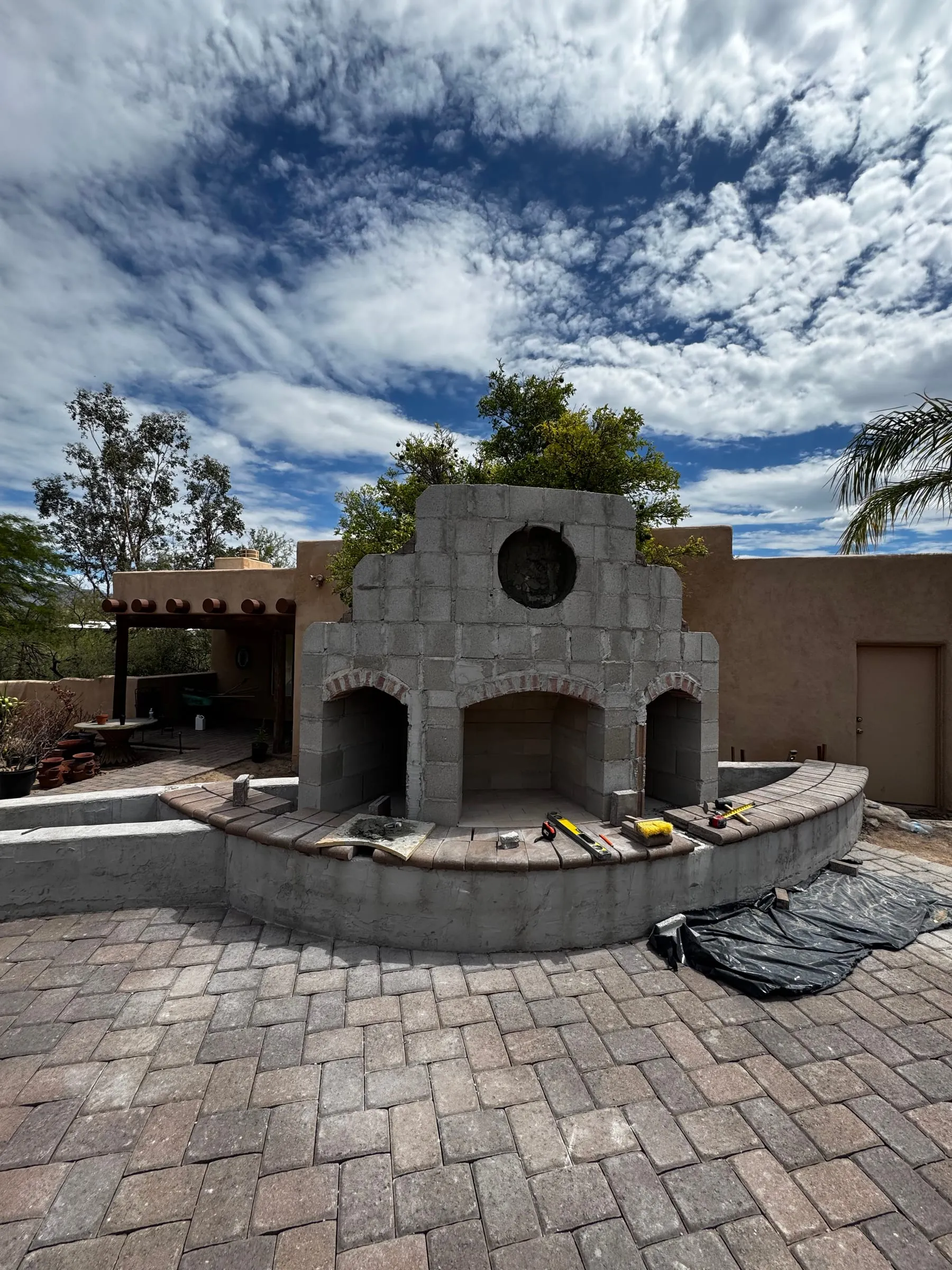
Curved seat walls are a great way to wrap a fire feature. In our east Tucson outdoor fireplace project, we built curved block seat walls that follow a new paver path and wrap the fireplace patio. The block was capped and finished to match the rest of the yard.
Tips for seat walls:
- Make the cap wide enough to sit on and smooth enough for bare legs.
- Pick a cap color that stays cool. Dark caps get uncomfortable in summer.
- Plan lighting. Small lights under the cap make the wall usable at night.
Steps and grade changes
Many Tucson lots, especially in the foothills and Dove Mountain, are not flat. Wide, shallow steps feel more relaxed than narrow ones. Capping the steps with the same material as the patio ties things together. Boulders set alongside steps soften the edges and look natural in a desert yard. The east Tucson project above finished with capped steps and boulders at the patio edge.
Fire pits and outdoor fireplaces
Fire is the reason many Tucson backyards get used from October through March.
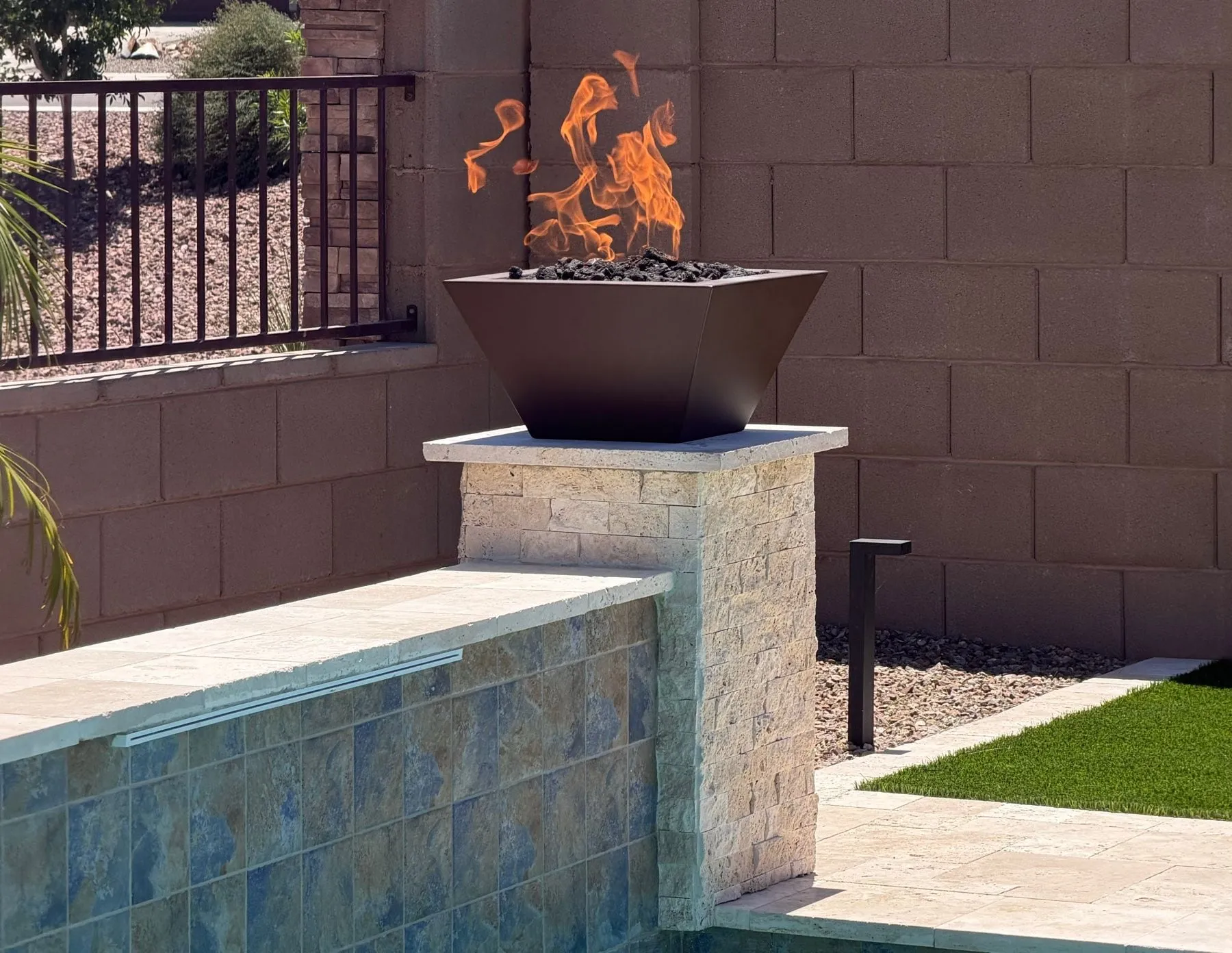
- Fire pits are lower and more open. People sit all the way around. A square fire pit clad in travertine works well on a travertine or paver patio. Our Marana fire and water project has a travertine fire pit along with fire bowls on stacked travertine pillars.
- Outdoor fireplaces are taller and act as a focal point. They block wind and give a patio a room-like feel. The east Tucson fireplace has three arched openings and is finished in stucco.
- Fire bowls and fire troughs pair well with pools and raised walls. See our water and fire features page.
Most fire features are gas-fed, so plan the gas line route early. HOAs often have rules on the height and placement of fireplaces, so check before you design one.
BBQ islands and outdoor kitchens
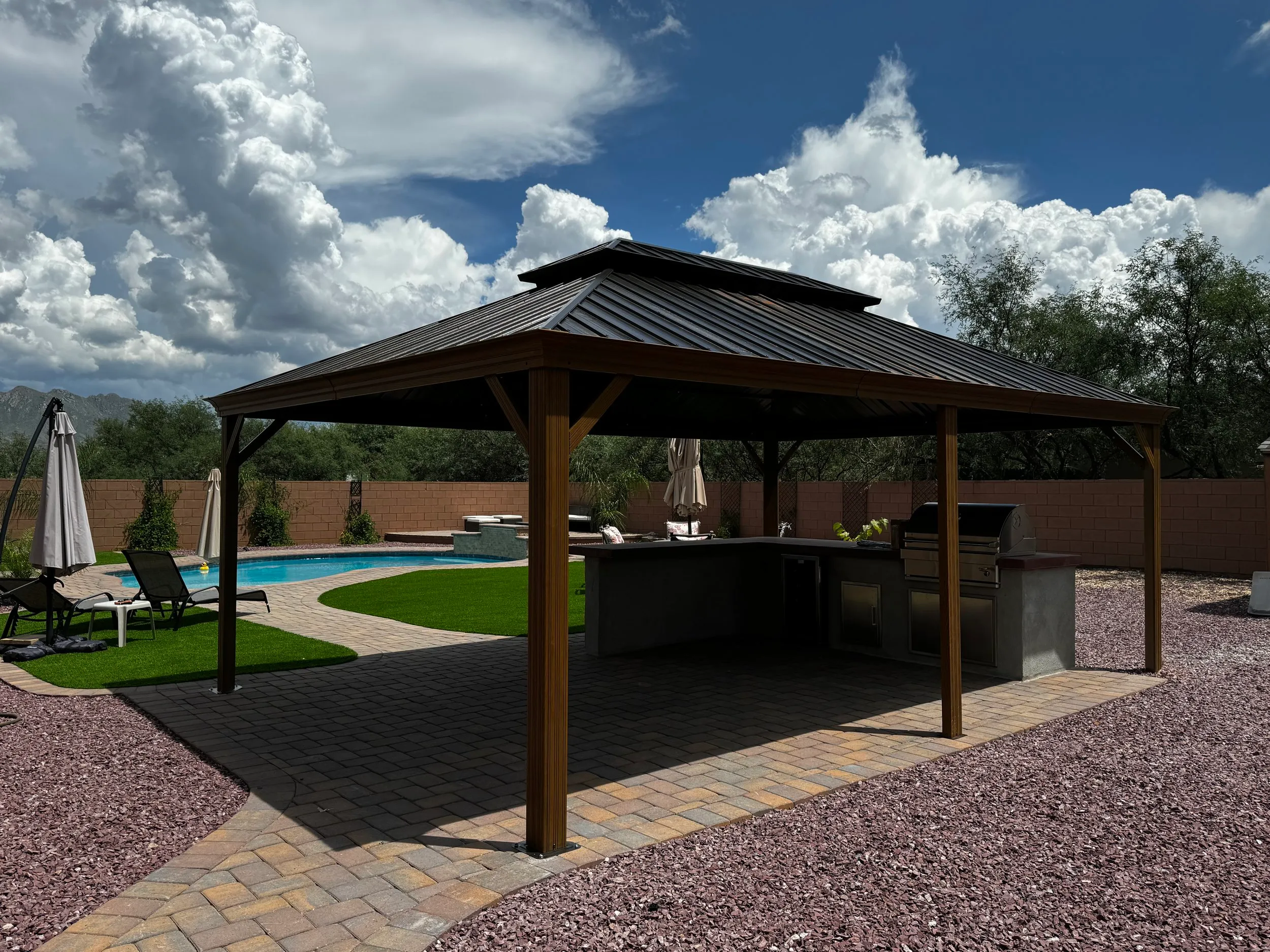
A BBQ island is often the most-used piece of hardscape in a Tucson yard. An L-shape gives you a cooking side and a serving or bar side. Plan for:
- Shade or an evening-friendly spot. Cooking in direct afternoon sun in July is not fun.
- Counter space on both sides of the grill.
- Gas and electrical routed under the patio before pavers go down.
The east Tucson project includes an L-shaped BBQ island, and our outdoor kitchens page covers layouts and options.
Borders with turf and plants
Clean borders are what make a hardscape look professional. Common Tucson combinations:
- Pavers or travertine with turf. The hardscape gives a solid edge for the turf to butt against. Many of our pool yards use this to keep a strip of turf for kids and pets. Our artificial turf guide covers the details.
- Pavers with rock and desert plants. A soldier course or border paver keeps decomposed granite and rock from spilling onto the patio.
- Travertine stepping pads in turf or gravel. A softer way to make a path.
For plant ideas that pair with hardscape, see our guide to xeriscape landscaping in Tucson.
Why does base prep matter so much in Tucson?
Most hardscape problems come from what is under it, not the material on top. Tucson has three things working against a patio: caliche, expansive clay in some areas, and monsoon storms that dump a lot of water at once.
A sound hardscape has:
- Excavation to firm ground. Loose fill and organic material come out.
- A compacted aggregate base. Crushed rock in layers, compacted with a plate compactor, gives pavers a stable bed.
- Bedding sand screeded flat under pavers.
- Edge restraints so pavers do not creep outward over time.
- Slope away from the house and pool. Water should run to planting areas, basins or the yard drain, not toward the foundation or into the pool.
- Drains where needed. Low spots, covered patios and areas between walls may need channel drains or area drains.
Caliche deserves its own mention. It is a hard, cement-like soil layer common across Southern Arizona, and it can block drainage under patios and planters. Our post on building a pool in caliche explains how we deal with it. Because we own our excavation equipment, we can dig and grade hardscape areas with our own crew.
How do you plan hardscape around a pool?
If you have a pool or are adding one, plan the deck and the rest of the hardscape together.
- Keep the deck material consistent near the water, then change materials for paths or patios farther out if you want contrast.
- Leave room for lounge chairs. A deck that is too narrow feels crowded.
- Mind the pool barrier. Seat walls, planters and BBQ islands should not sit where a child could use them to climb over the barrier. Arizona requires pool barriers of at least 5 feet. Our pool barrier rules guide has more.
- Drain away from the water. Deck slope should send rain and rinse water away from the pool.
Our pool decks page covers deck replacement and new decks with travertine and pavers.
What about shade?
Shade makes any hardscape more usable. We build custom pergolas, ramadas and shade structures, and if you buy a shade somewhere else, we can install it for you on concrete footings set in the ground so it stays secure in monsoon winds. We plan the hardscape, footings and shade together so everything lines up, and we also work with your covered patio, the house’s shadow and shade trees.
Plan your Tucson hardscape in 3D
Every project starts with a 3D design and a VR walkthrough, so you can see your seat walls, fireplace, BBQ island and patio before we break ground. Browse finished work on our hardscaping page and in our projects.
Meraki Pools AZ is a family-owned Tucson builder licensed under AZ ROC #342505 (CR-21 hardscaping and irrigation) and #352797 (KA-5 swimming pool). Call (520) 342-8335 or request a free estimate.
Put this guide to work
Planning your own project? See our Pool Landscaping, Turf & Irrigation in Tucson, Hardscaping in Tucson and Pool Decks: Travertine & Pavers in Tucson, or read about building a pool in Marana or Dove Mountain.
Frequently asked questions
What is the best patio material for Tucson heat?
Light-colored materials stay the most comfortable. Travertine and light concrete pavers are popular because they stay cooler underfoot than dark stone or dark concrete. Shade from the house or trees helps any material.
Are pavers or travertine better?
Both work well in Tucson. Concrete pavers come in many shapes and colors, are uniform and easy to replace one at a time. Travertine is natural stone with a softer, high-end look and stays comfortable in the sun. Many yards use travertine near the pool and pavers for paths and patios.
How tall should a seat wall be?
Most seat walls are built close to chair height so they are comfortable to sit on. The cap should be wide enough to sit on and smooth enough for bare legs. We set the exact height in the 3D design based on how you plan to use the space.
Do I need a permit for an outdoor fireplace or BBQ island in Tucson?
It depends on the project and where you live. Gas lines, electrical work and larger structures often need permits, and HOAs in newer subdivisions usually require design approval. We check the city, county or town rules and your HOA before we build.
How do you keep pavers from sinking after monsoon storms?
The base does most of the work. Pavers need a compacted base, solid edge restraints and a slope that sends water away from the house and pool. When those are built right, monsoon rain drains off instead of washing out the bedding sand.