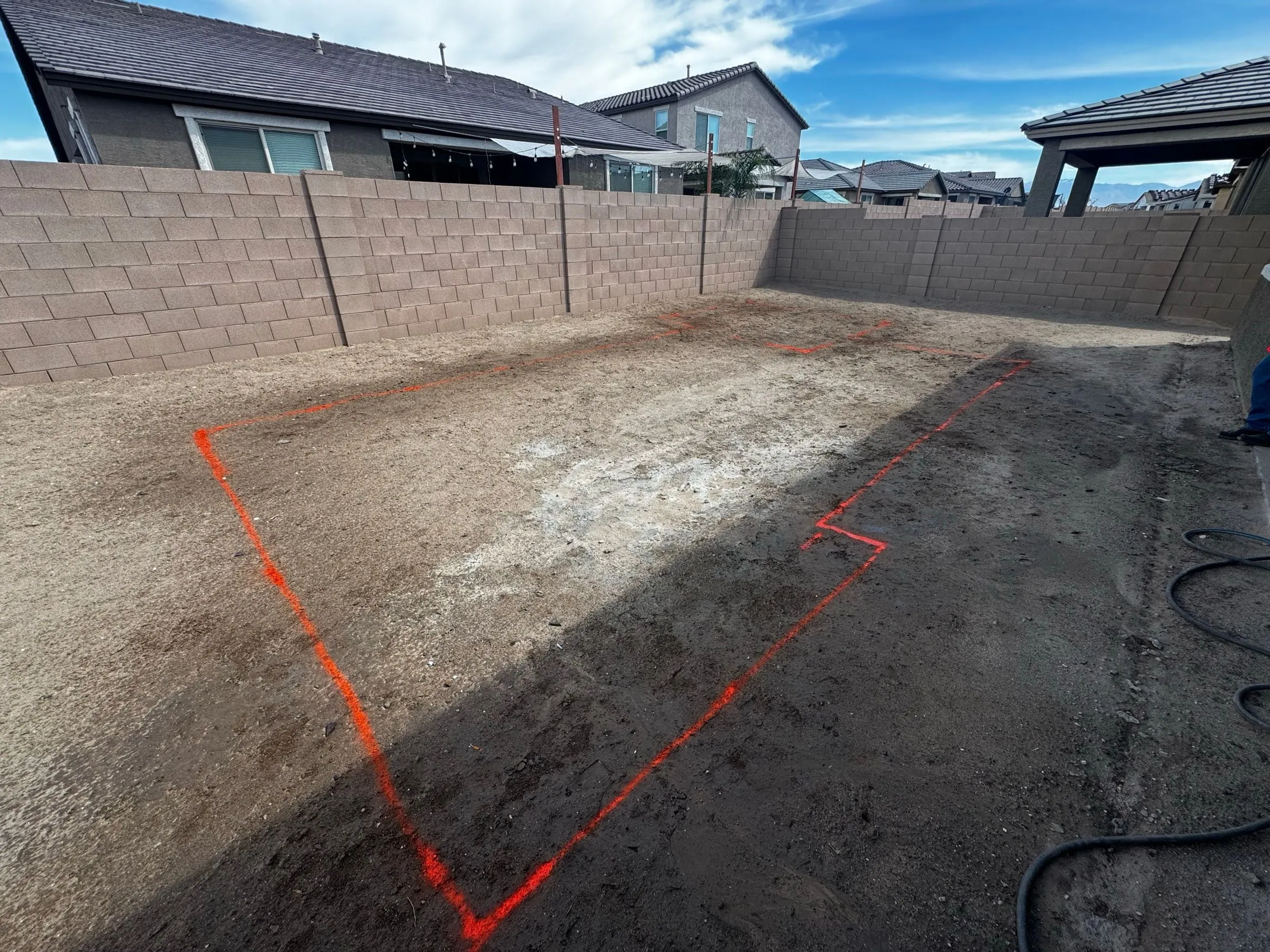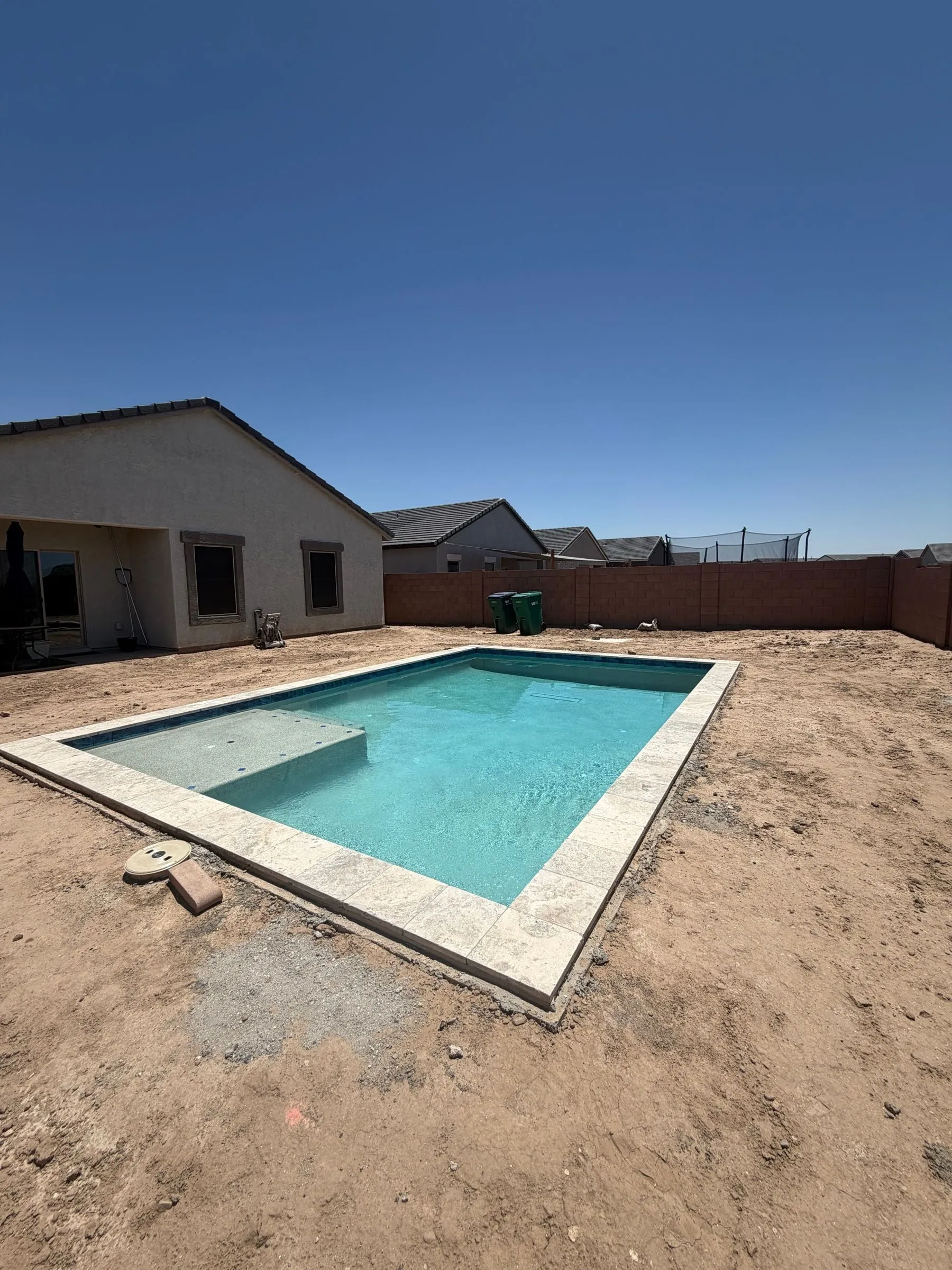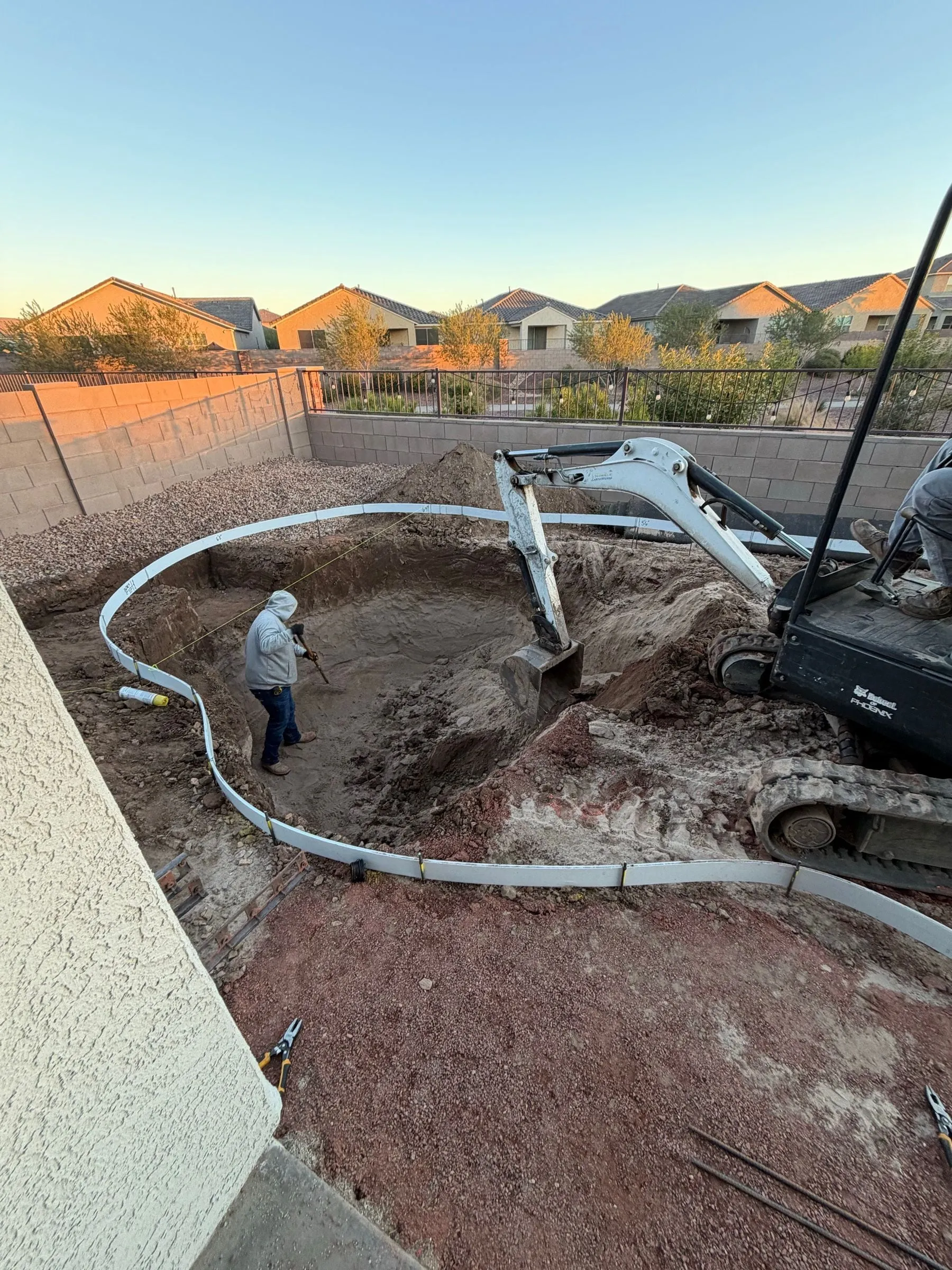
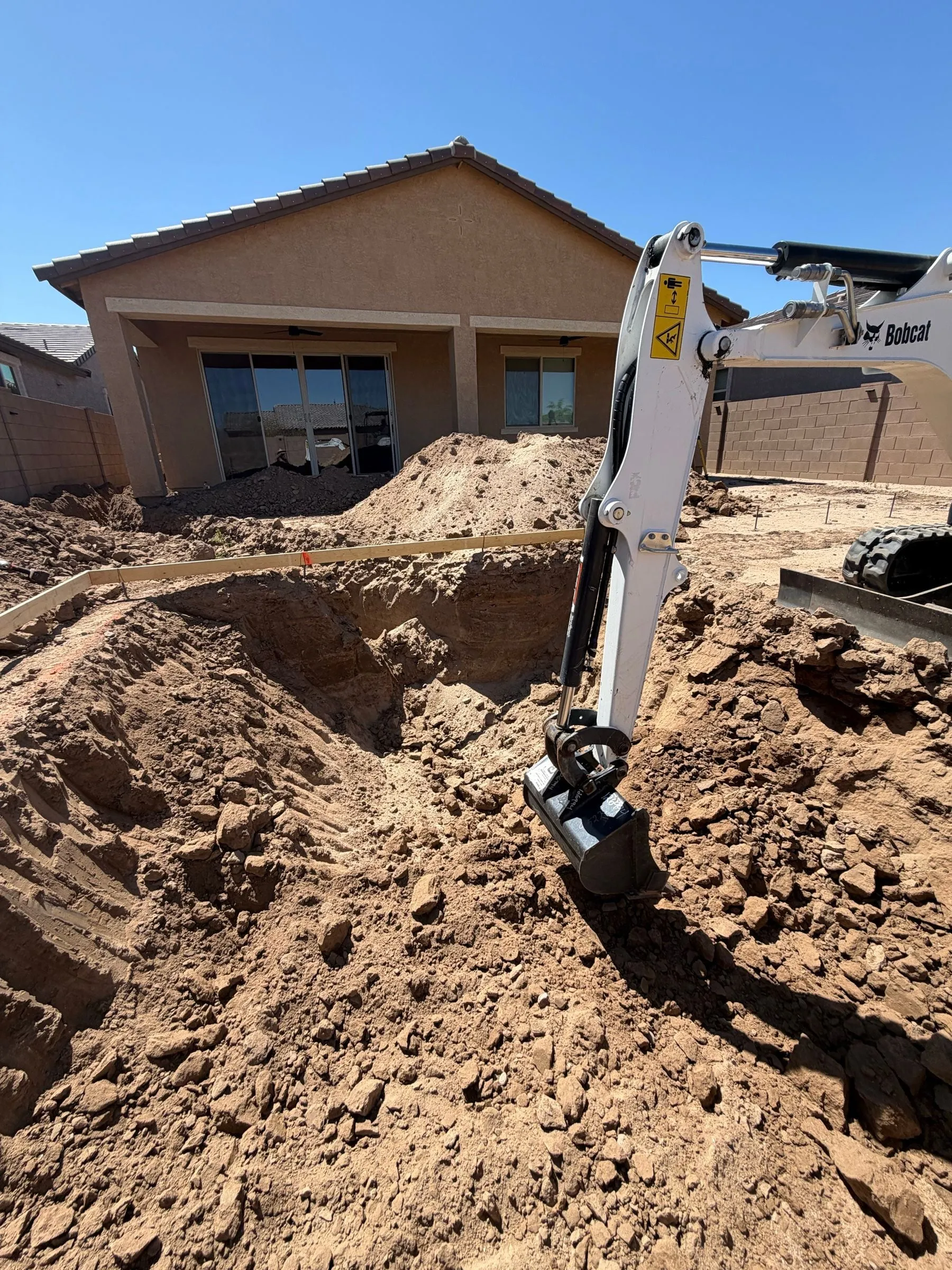
Caliche is a hard, cement-like soil layer made of dirt and rock glued together by calcium carbonate, and it is common across Southern Arizona, including Tucson, Marana and Vail. You can absolutely build a pool in it, but it can take heavier equipment, more time to break and haul, and engineering that accounts for the soil. Because we own our own excavation equipment, we can handle hard digs without waiting on rental machines or outside crews.
If you have ever tried to dig a post hole in Tucson and hit a layer that feels like concrete, you have met caliche. Here is what it means for a pool project and how to plan for it.
What is caliche?
The University of Arizona Cooperative Extension describes caliche as a soil layer where the particles are cemented together by calcium carbonate. It forms slowly. Rainwater carries calcium into the soil, where it combines with carbon dioxide and forms calcium carbonate deposits. In a dry climate, there is not enough rain to wash those deposits away, so they build up and harden over time.
Caliche shows up in a few forms:
- Loose lumps (nodules) mixed into the soil, from under an inch to several inches across
- A solid layer that can be anywhere from a few inches to several feet thick
- Anything in between, from crumbly to rock-hard
The Extension calls caliche a common problem in southern Arizona soils. That is why so many Tucson homeowners have a story about a shovel that would not go any deeper.
Why is caliche so common around Tucson, Marana and Vail?
Caliche forms where rainfall is low and soils are not flushed by heavy water. That describes most of the Sonoran Desert. In the Tucson basin, it is often mixed with rock, cobbles and gravel washed down from the Catalina, Rincon, Tucson and Santa Rita mountains.
What you hit depends on your lot, not just your neighborhood:
- Two yards on the same street can be very different
- Homes near washes or on old alluvial fans often see more cobble and rock
- Lots in growing areas like Marana, Gladden Farms, Vail and Sahuarita can have caliche, rock or both
- Foothills lots in Oro Valley, SaddleBrooke and the Catalina Foothills may have rock outcrops or boulders
The only way to know for sure is to dig, which is why the plan should allow for it from the start.
How does caliche affect pool excavation?
Excavation is where caliche matters most. Here is how the dig changes.
Equipment
Soft soil can be dug with a standard excavator bucket. Hard caliche and rock may call for:
- A larger excavator with more breakout force
- A hydraulic hammer (breaker) to fracture solid layers
- Ripper teeth to break up hardpan before scooping
- Compact machines like skid steers for tight side yards and access
Breaking and shaping
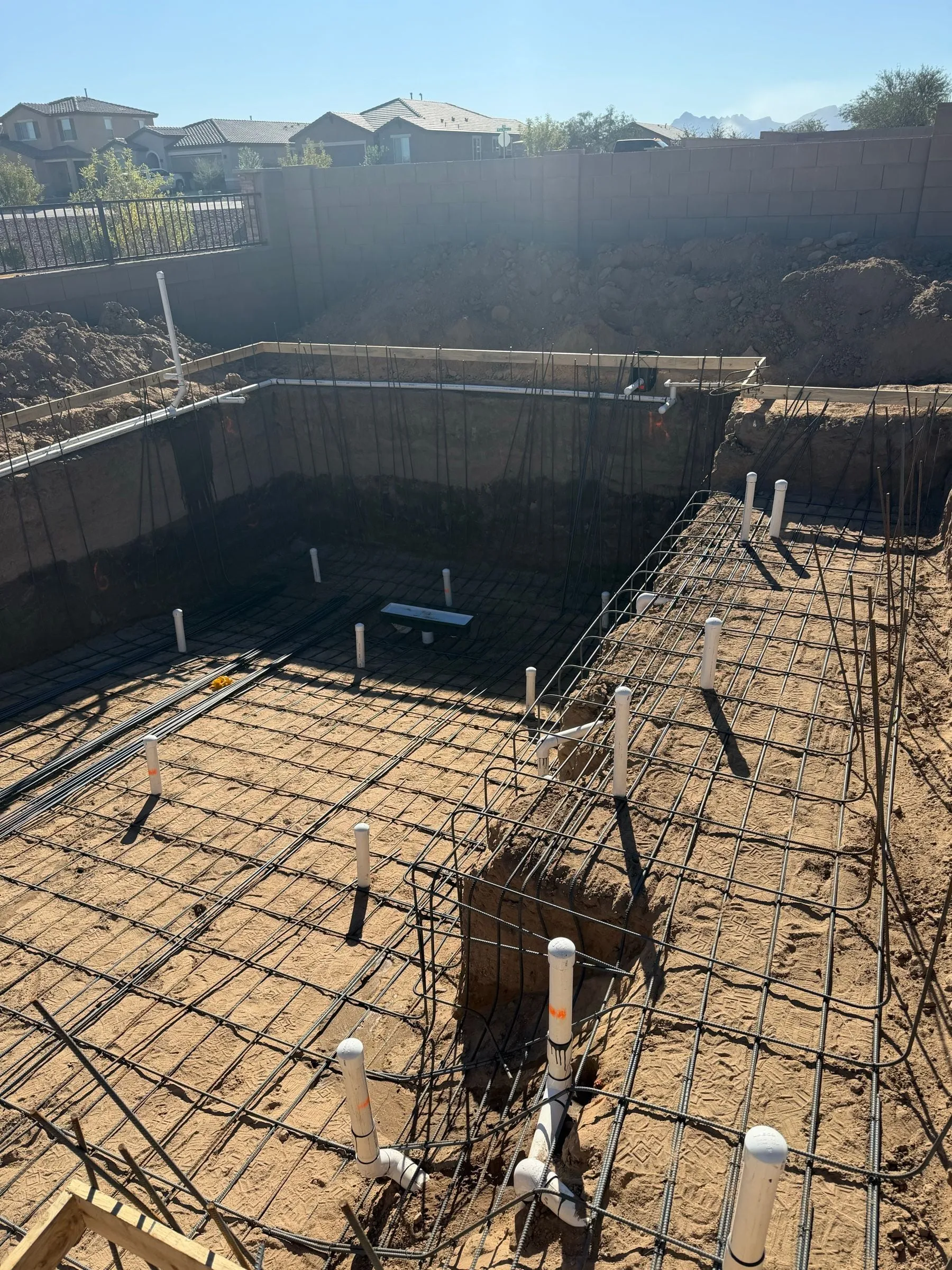
A pool shell has to match the engineered shape and depth. In caliche, the crew breaks the hard layer in small sections, cleans it out and trims the walls and floor to the right shape. Steps, benches and tanning ledges all need careful shaping, which takes longer in rock than in sand.
Hauling
Broken caliche and rock take up more room than the same material in the ground, so it takes more truck loads to haul off. On tight lots, the haul route, block wall openings and street parking all need a plan.
Protecting the rest of your yard
Breaking hard material is loud and heavy work, so site protection matters. Before we dig, we plan where machines will travel, which block wall panels may need to come out for access and how to protect patios, sprinkler lines and landscaping you want to keep. In Marana, for example, the town’s pool checklist says any masonry screen wall removed for access has to be rebuilt to match the original. We build those steps into the schedule, so you know what your yard will look like during the dig and after we put things back.
| Soil condition | What we typically see | Effect on the dig |
|---|---|---|
| Sandy or loamy soil | Digs easily, may need shoring care near walls | Fastest |
| Scattered caliche nodules | Lumps mixed into the dirt | Slower, more sorting and hauling |
| Solid caliche layer | Hard, light-colored hardpan | Breaking needed, more time and wear |
| Rock, cobbles or boulders | Common near washes and foothills | Breaking, sorting and heavy hauling |
What engineering and soils issues come with caliche?
Every pool shell is engineered, and the soil is part of that design. Pima County, for example, asks for sealed structural calculations with a custom pool permit, and the City of Tucson’s general residential submittal checklist includes sealed geotechnical (soils) reports when they apply. The permit side is covered in our Tucson pool permit guide.
Things the engineer and builder look at on caliche lots:
- Bearing and uniformity. A pool that sits partly on hard caliche and partly on loose fill needs attention so it is supported evenly.
- Nearby foundations and walls. Pima County’s checklist calls out pool locations near building foundations and retaining walls, which affects how close and how deep you can dig.
- Drainage. The Extension notes that solid caliche can block water from moving down. Around a pool, that means grading, deck drains and where you send backwash all matter more.
- Over-digging. Breaking rock can leave the hole larger than planned. Those areas are backfilled or built up properly so the shell has solid support.
How does caliche affect pool cost and timeline?
Here we have to be honest: no one can price caliche precisely until the digging starts. What we can say is how it tends to play out.
- Cost: Hard caliche and rock usually mean more machine hours, more equipment wear and more haul loads. All of that can add cost compared with an easy dig. How much depends on how thick and hard the layer is and how much of the pool sits in it.
- Time: Breaking rock is slower than scooping dirt. A hard layer can add days to excavation. Once the shell is dug, the rest of the build moves at a normal pace.
- Design choices: A shallower play pool or a smaller deep end means less digging in hard material.
Ask any builder how they handle rock and caliche in their contract before you sign. It is one of the questions in our pool builder checklist. For overall budgeting, see our pool cost guide, and for the full schedule, read how long it takes to build a pool in Tucson. If the budget is a concern, our financing options through Lyon Financial and Credit Union West can help.
Why owning our own heavy equipment matters in caliche
This is where we are different. We own our own excavation and heavy equipment, and our in-house crew runs it. On a hard dig, that means:
- No waiting on rentals. If the dig takes longer than planned, our machines stay on the job instead of going back to a rental yard.
- No outside dig crew. The same team handles excavation, steel, masonry, tile and decking, so nothing gets lost between companies.
- Better control of the schedule. We decide when the next step starts, not a rental yard.
We wrote more about this in why we own our heavy-duty equipment.
How we plan for caliche before we dig
- Walk the site. We look at access, slopes, nearby washes, walls and any signs of rock or caliche.
- Design in 3D. You see the pool in your yard and walk it in VR, including depths (see our process).
- Engineer the shell. The structural design accounts for the site and goes into the permit.
- Plan access and hauling. Wall openings, haul routes and staging are set before day one.
- Dig with the right machines. Our own equipment and crew handle the excavation and shaping.
Thinking about a pool on a rocky lot?
Whether you are in Tucson, Marana, Vail, Oro Valley or Rio Rico, we will look at your site, explain what the soil might mean for your project and design around it. Barriers are part of every plan too; see our pool fence and barrier guide. Contact us or call (520) 342-8335, Monday through Friday from 8 to 4, with Saturdays by appointment.
Sources
- University of Arizona Cooperative Extension: Managing Caliche in the Home Yard (AZ1281)
- Pima County: Custom Pools submittal requirements
- Town of Marana: Pool & Spa Application Checklist
- City of Tucson: Residential Submittal Requirements & Checklist
Put this guide to work
Planning your own project? See our Custom Pool Construction in Tucson, Block Walls & Pool Barrier Walls in Tucson and Affordable Custom Pools in Tucson, or read about building a pool in Gladden Farms, Sahuarita or SaddleBrooke.
Frequently asked questions
Can you build a pool in caliche?
Yes. Pools are built in caliche and rocky soil all over Southern Arizona. It takes the right equipment, more time to break and haul the material, and an engineered design that accounts for the soil. It is a planning issue, not a deal breaker.
How do I know if my yard has caliche?
Common signs are a hard, whitish or tan layer a short way down when you dig, light-colored lumps in the soil, and water that puddles instead of soaking in. You cannot know how thick or hard it is until you dig. A soils report or test hole can give more detail before excavation.
Does caliche make a pool more expensive?
It can. Hard caliche and rock usually take more machine time, wear on equipment and more truck loads to haul off. How much it adds depends on how thick and hard the layer is and how much of the pool sits in it. A good builder will explain how rock is handled in the contract before digging starts.
How much longer does excavation take in caliche?
Soft, sandy soil can dig quickly, while hard caliche or rock can slow progress a lot. There is no single number, since it depends on depth, thickness and hardness. Owning our own excavation equipment helps because we are not waiting on rental machines or outside crews if the dig takes longer.
Does caliche cause drainage problems around a pool?
It can. Solid caliche layers can block water from soaking down, so runoff and backwash may sit near the surface. That is why grading and deck drainage matter so much on caliche lots. We plan drainage so water moves away from the pool and the house.
Is it better to choose a shallower pool if I have caliche?
Sometimes. A play pool or a design with less deep area means less digging in hard material, which can save time and money. Many Tucson families prefer a shallower pool anyway. We look at the soil and your goals together before settling on depths.