Most of what makes a Vail pool different happens before anyone picks a tile. The community is unincorporated, so Pima County issues the permit. Many parcels have washes crossing them, and some sit near Cienega Creek, which the county protects. Water can come from Vail Water Company or from a private well. And the elevation, about 3,238 feet, changes how much heating you might want. This page walks through each of those so you know what to expect.
Vail is unincorporated, so the county runs your permit
Vail is a census-designated place in Pima County, about 24 miles southeast of Tucson. Residents voted down incorporation in 2013 and again in 2023, so there is no town building department. Your pool permit comes from Pima County Development Services.
The county’s custom pool requirements ask for construction drawings, sealed structural calculations, and a site plan showing setbacks from the property lines to the pool and to existing construction. Two rules shape layouts on a lot of Vail jobs:
- No part of the pool structure can sit within a 45 degree line down from the bottom of a nearby footing. On a house with a patio slab or a garage close to the yard, that rule can push the pool back a few feet.
- Pool equipment has to be at least 4 feet from a required barrier. On a big open lot that is easy. On a tight subdivision yard, it decides where the pad goes.
We handle the drawings, submit them, answer corrections and schedule inspections. Our Tucson-area pool permits guide explains the general process.
Washes, floodplains and Cienega Creek
Cienega Creek runs through the Vail area, and Pima County manages the Cienega Creek Natural Preserve, where stretches of perennial flow support rare fish and frogs. The county takes floodplains and riparian habitat seriously here and across unincorporated areas.
Pima County’s Regional Flood Control District requires a Floodplain Use Permit for improvements inside a regulatory floodplain, an erosion hazard area or mapped riparian habitat. Its guide names pools, walls and fences specifically. If your lot has a wash, we check the county maps for your parcel before we finalize the design. Sometimes a different spot on the lot keeps the pool out of a mapped area. Sometimes the floodplain review simply becomes part of the schedule.
Even outside a mapped floodplain, monsoon runoff on a sloped desert lot needs a plan. We grade the deck so water sheds away from the pool and the house, and we look at where runoff from uphill neighbors already flows before we place the pool in its path.
Water: Vail Water Company or a private well
Vail does not have a single water provider. Vail Water Company serves homes inside its service area, and part of its supply is Central Arizona Project water. Since 2013, Tucson Water has delivered, or “wheeled,” that CAP water to Vail Water through the Old Vail Reservoir and booster station. If you are a Vail Water customer, you fill your new pool through your regular meter.
Homes outside that boundary get water another way, and some rely on a private well. A well can fill a pool, but its output sets the pace, and running it hard for a long fill is something to plan for rather than discover. Tell us early if you are on a well and we will work the fill and startup around it. Our post on what it costs to fill a pool covers the basics.
Subdivision yards vs. open desert parcels
Vail has both, and they lead to very different pools.
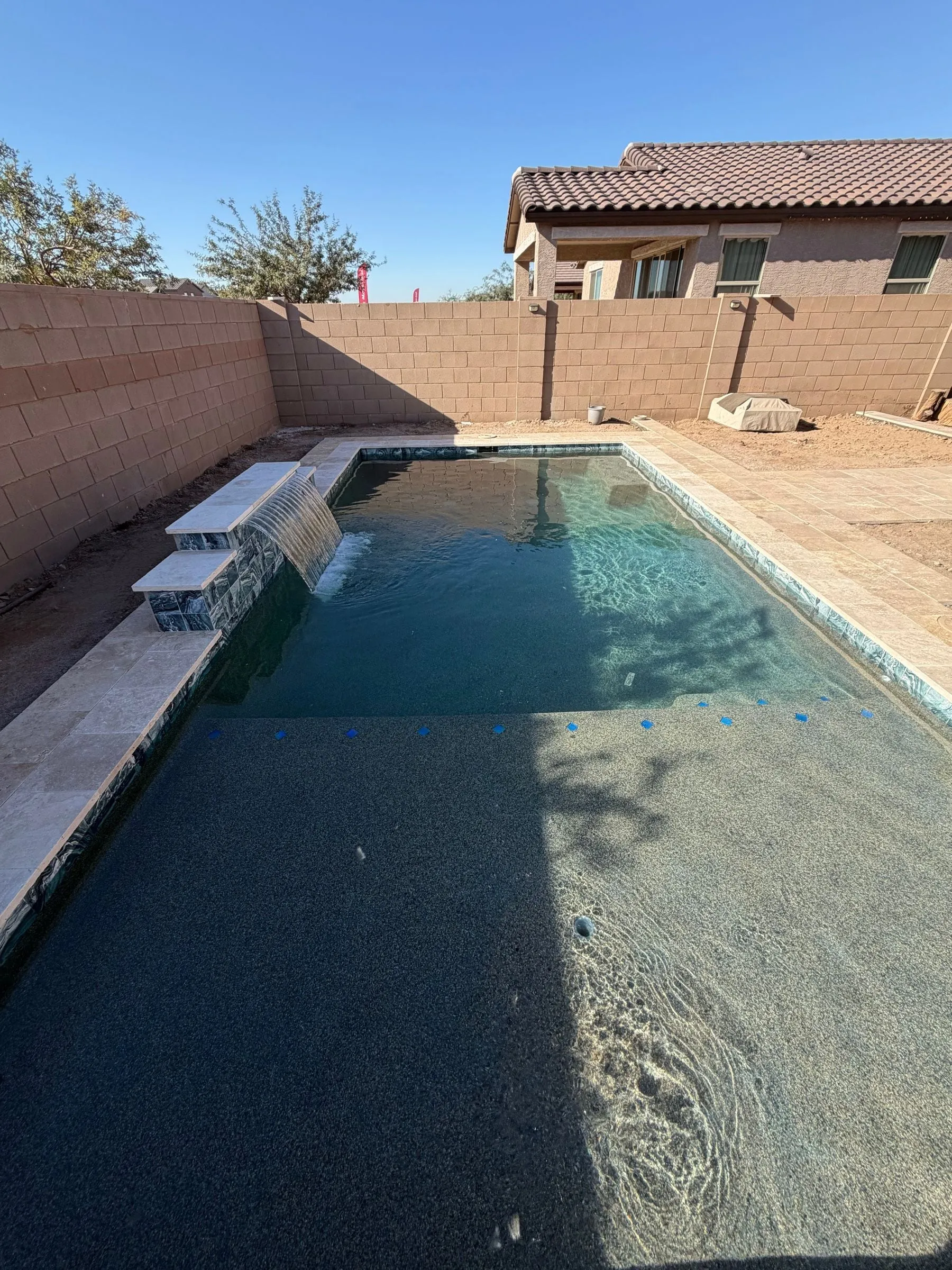
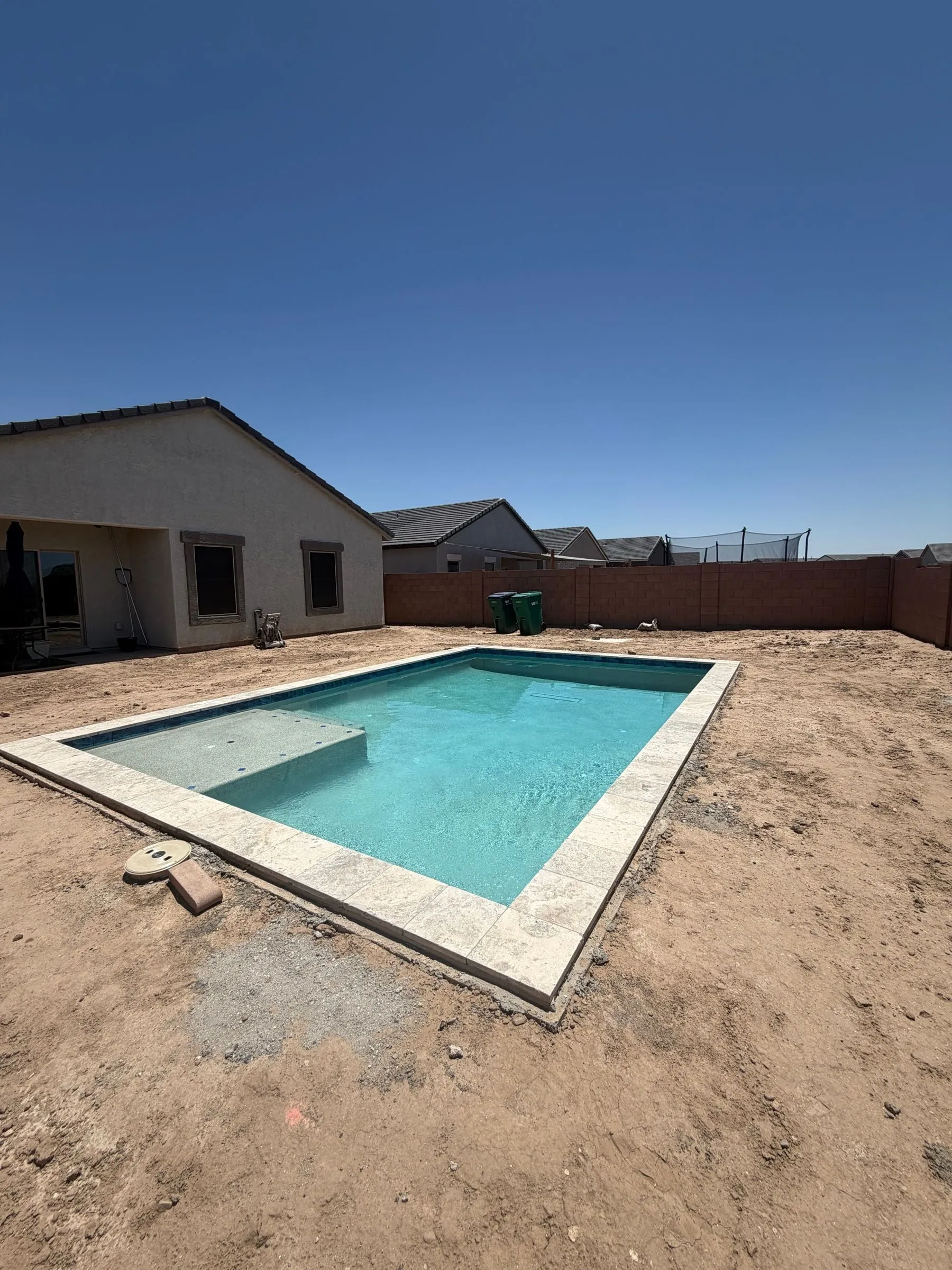
Master-planned neighborhoods. Rancho del Lago is a master-planned community in Vail with parks, trails and courts, and builders are still opening new phases there. Yards in neighborhoods like this usually come with block walls already up. The design questions are setbacks, side-yard access for the excavator, and where the equipment pad fits. Expect HOA architectural review, and read your HOA’s guidelines first. Our HOA approval guide explains what committees often ask to see.
Open desert parcels. Larger lots without full block walls need a barrier plan from day one. Every barrier we build is at least 5 feet tall (A.R.S. 36-1681), and on an open lot that may mean a fenced pool area rather than fencing the whole property. Our pool barrier rules guide covers the options, and we build the block walls and pool fences ourselves. These lots also tend to have the rock and caliche that slow a dig, which is one reason we own our excavation equipment. See building a pool in caliche.
Designing for 3,200 feet
At roughly 3,238 feet, Vail is several hundred feet higher than central Tucson. Nights tend to cool off sooner in fall and spring, and that affects how many months you will want to swim without heat. Ideas that tend to fit:
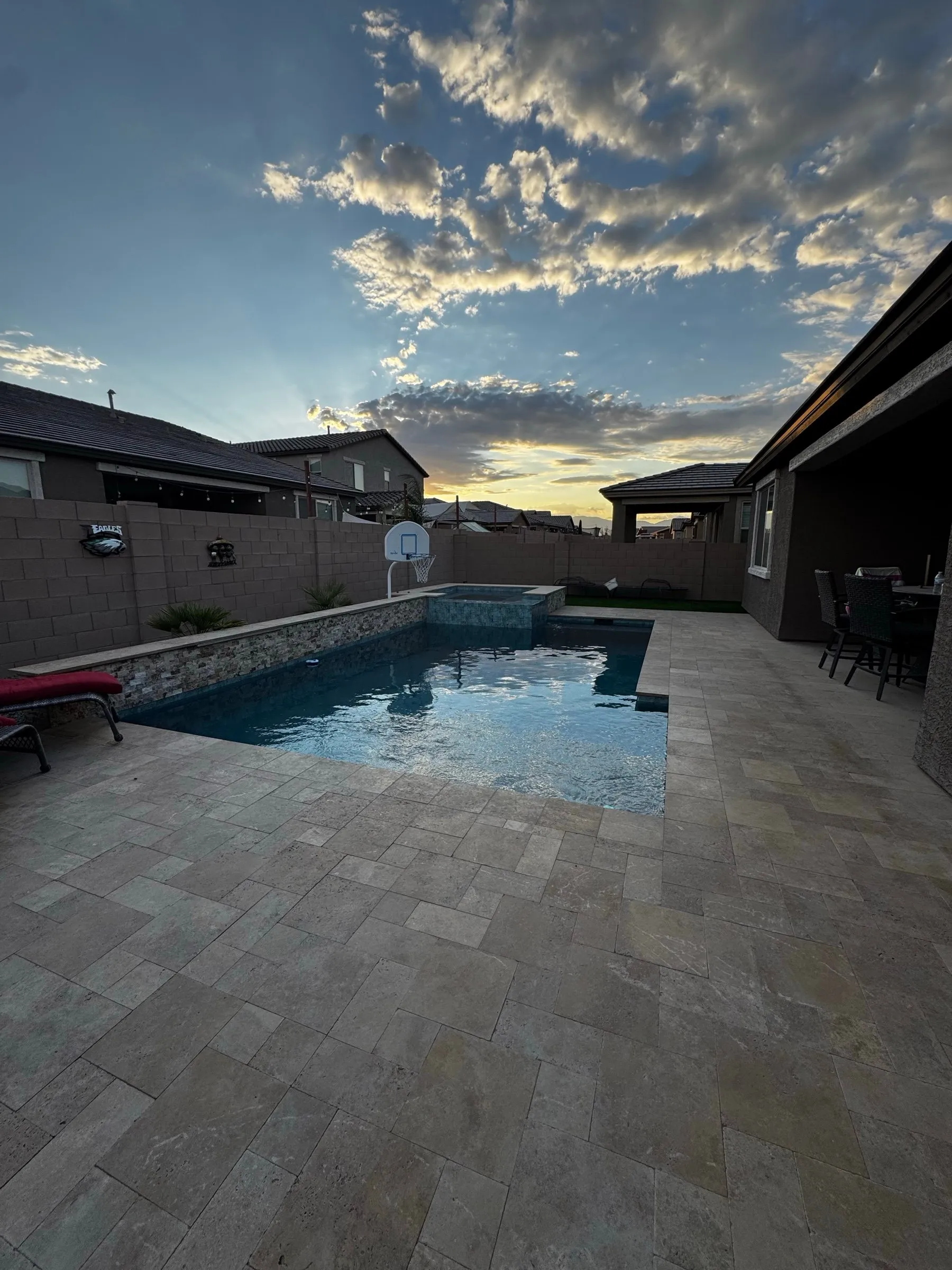
- A raised spillover spa to use on cool evenings, sized so it heats quickly.
- A heat pump or gas heater chosen for how you will actually use the water. Our pool heating guide compares the options.
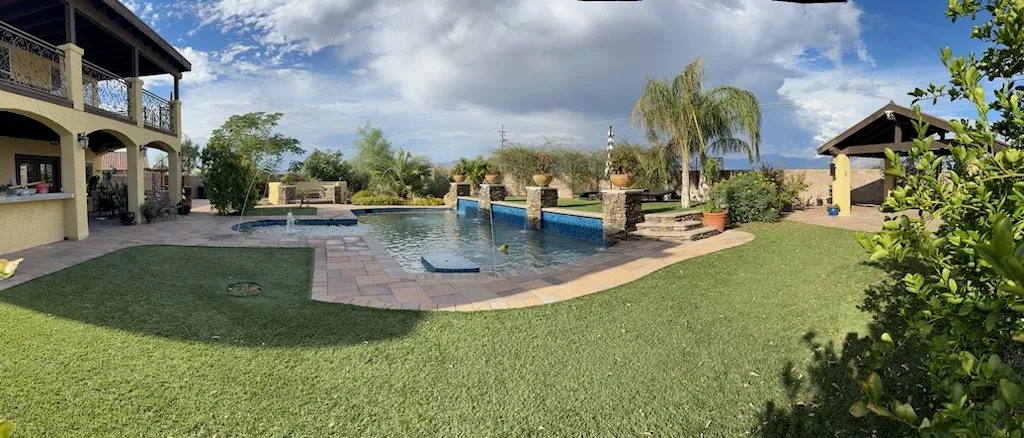
- Pool placement for the view. If your lot looks toward the Rincon Mountains or the Santa Ritas, we set the pool and the main seating so the view lines up, and we can show it to you in VR before we dig.
- A larger deck on open lots. If you have the room, a wider travertine or paver deck gives space for lounge chairs without crowding the water.
Who builds it
Meraki Pools AZ is a family-owned builder of concrete (shotcrete) pools. Our own crew does the work with our own excavation equipment, every project is designed in 3D with a VR walkthrough, and every contract includes a written warranty schedule. We are licensed under AZ ROC #352797 (KA-5 Dual Swimming Pool Contractor) and #342505 (CR-21). Most new custom pools we build run about $40,000 to $120,000 or more; our pool cost guide explains what moves the number.
Getting started in Vail
- Tell us about your lot. Subdivision or open parcel, any washes, Vail Water or a well, and whether you have an HOA.
- Site visit. We measure, check access for equipment, and look at drainage and setbacks.
- Design. You see the pool in 3D, then walk it in VR.
- Approvals. HOA review if you have one, a floodplain review if the parcel needs it, then the Pima County permit.
- Build and fill. Our crew builds it, and we plan the fill around your water source.
Next door, see our Corona de Tucson page.
Call (520) 342-8335 or request a free estimate.
Sources
- Vail, Arizona (Wikipedia): census-designated place in Pima County, 24 miles southeast of Tucson; elevation 3,238 ft; incorporation defeated in 2013 and 2023; Rincon Mountains District of Saguaro National Park nearby.
- Pima County: Custom Pools: drawings, sealed structural calculations, setbacks on the site plan, 45 degree footing rule, equipment 4 ft from the barrier.
- Pima County: Floodplain Use Permit Application Guide: permits needed for pools, walls and fences in regulatory floodplains, erosion hazard areas and mapped riparian habitat in unincorporated Pima County.
- Pima County: Cienega Creek Natural Preserve: county preserve near Vail with perennial flow and habitat for rare fish and frogs.
- City of Tucson: Old Vail Reservoir: Tucson Water has wheeled Vail Water Company’s CAP allocation since 2013.
- KB Home: Rancho Del Lago announcement: Rancho Del Lago is a master plan in Vail with parks, pathways and courts.