Xeriscape landscaping in Tucson means building a yard around desert-adapted plants, drip irrigation, rock or decomposed granite mulch and smart use of rain, so the yard looks good while using far less water than a lawn. It is not a bare gravel lot. Done well, a xeriscape yard has shade, color, a place to sit and, if you have one, a pool that stays cleaner because the yard around it drops less debris.
Here is how xeriscape works in our climate, which plants to use, and how to plan it around a pool.
What are the seven principles of xeriscape?
The University of Arizona Cooperative Extension sums up xeriscape in seven principles in its guide Water Wise Landscape Design (AZ1497). Here they are in plain terms, with what each one looks like in a Tucson yard.
- Plan and design first. The extension calls this the most important step. Map your yard, note sun and shade, where rain runs off the roof, and how you want to use each area.
- Pick the right plants and group them. Favor drought-tolerant plants and put plants with similar water needs together so one drip zone can serve them all.
- Use lawn sparingly, if at all. If you want grass for kids or dogs, keep it to a size and shape you can water and mow efficiently.
- Irrigate efficiently. Zone your system by water need, send rainwater and gray water to plants, and expand the system as plants grow.
- Amend soil only if needed. The guide notes that desert-adapted plants do not need soil amendments or fertilizer. Save amendments for vegetables, annuals and any turf areas.
- Use mulch. The extension recommends a 2 to 4 inch layer of top-dressing, such as gravel or wood chips, to cut evaporation, block weeds and keep the soil cooler.
- Maintain it properly. A well-planned xeriscape needs little care, but it still needs pruning, weeding and timer adjustments.
The same guide suggests dividing the yard into water use zones. A small “mini-oasis” with higher-water plants sits close to the house or patio. A transition zone of low to moderate water plants comes next. A natural zone at the edges lives mostly on rainfall. This simple idea is the backbone of most good Tucson landscapes.
Which low-water plants work best in Tucson?
The best place to start is the Tucson AMA Low Water Use and Drought Tolerant Plant List, updated in 2022 by the Arizona Department of Water Resources with local plant experts. It is also the list Tucson Water uses for its Treebate. The plants below are all on it.
If your plants will sit close to a pool, read our guide to the best plants around a pool in Tucson as well. That post covers poolside picks and the litter-heavy trees to avoid. The list here leans toward the rest of the yard.
Trees for shade
- Palo verde (Parkinsonia). Green bark, a burst of yellow flowers in spring and light shade. Plant it away from the pool, since the flowers drop.
- Desert willow (Chilopsis linearis). Orchid-like flowers in summer and a loose, airy shape. It loses its leaves in winter.
- Desert ironwood (Olneya tesota). Slow-growing, tough and long-lived, with purple spring flowers.
- Velvet mesquite (Prosopis velutina). Great shade for a patio or side yard. Keep it well away from the water because of leaf and pod drop.
Shade trees matter in Tucson. They cool patios and walls, and shade on the ground means less water lost to evaporation.
Shrubs and accents
- Brittlebush (Encelia farinosa). Silver leaves and bright yellow spring flowers.
- Globe mallow (Sphaeralcea). Orange blooms in spring, and it reseeds in natural areas.
- Creosote (Larrea tridentata). The smell of Tucson after rain. Good for the natural zone.
- Fairy duster (Calliandra eriophylla). Low, airy and loved by hummingbirds.
- Chuparosa (Justicia). Red tubular flowers in the cooler months.
- Desert milkweed (Asclepias subulata). Upright gray-green stems that support butterflies.
- Ocotillo (Fouquieria splendens). A bold vertical accent with red flowers after rain.
- Agaves, red yucca and deer grass. Structure and texture with very little care.
Groundcovers and flowers
- Desert marigold (Baileya multiradiata) and blackfoot daisy for long-lasting color.
- Trailing indigo bush (Dalea greggii) to fill wide areas with silver foliage.
- Desert ruellia for purple flowers in tough spots.
Buy by botanical name. The extension guide points out that common names vary, and the botanical name is how you make sure you get the plant you want.
How should drip irrigation be set up?
Drip is the heart of a xeriscape yard. Emitters put water at the roots of each plant instead of spraying it into the air, onto walls or across the pool deck.
A few rules that work well in Tucson:
- Zone by water need, not by location. Trees, shrubs and small flowers need different amounts. Put trees on their own valve when you can.
- Water deep and less often. The AZ1497 guide recommends wetting the root zone to about 1 foot for flowers, 2 feet for shrubs and 3 feet for trees.
- Move emitters out as plants grow. Roots follow water. Emitters at the trunk of a mature tree do very little.
- Change the timer by season. Summer, monsoon and winter need very different schedules. Many owners set it once and forget it, which wastes water.
- Check for leaks and clogs. Our hard water can clog emitters over time. A quick walk with the system running catches most problems.
Our crew installs drip and irrigation under our ROC CR-21 hardscaping and irrigation license, as part of landscape design and pool landscaping and turf projects.
Decomposed granite, rock or mulch?
Mulch is one of the seven principles, and in Tucson most mulch is rock.
| Material | Best use | Watch for |
|---|---|---|
| Decomposed granite (DG) | Paths, sitting areas, mulch between plants | Needs a solid edge; can track onto decks and into pools |
| Stabilized DG | Firmer paths and patios | Costs more than loose DG; still needs a good base |
| Rip rap and river rock | Swales, basins, dry creek beds | Hot to walk on; heavier to install |
| Boulders | Accents, borders, slope edges | Plan placement early so equipment can reach |
| Organic mulch | Around trees and in basins | Breaks down and blows around in monsoon wind |
A tip from the extension guide: if you want a weed barrier under rock, use breathable landscape fabric, not black plastic. Plastic keeps water and air from reaching the roots.
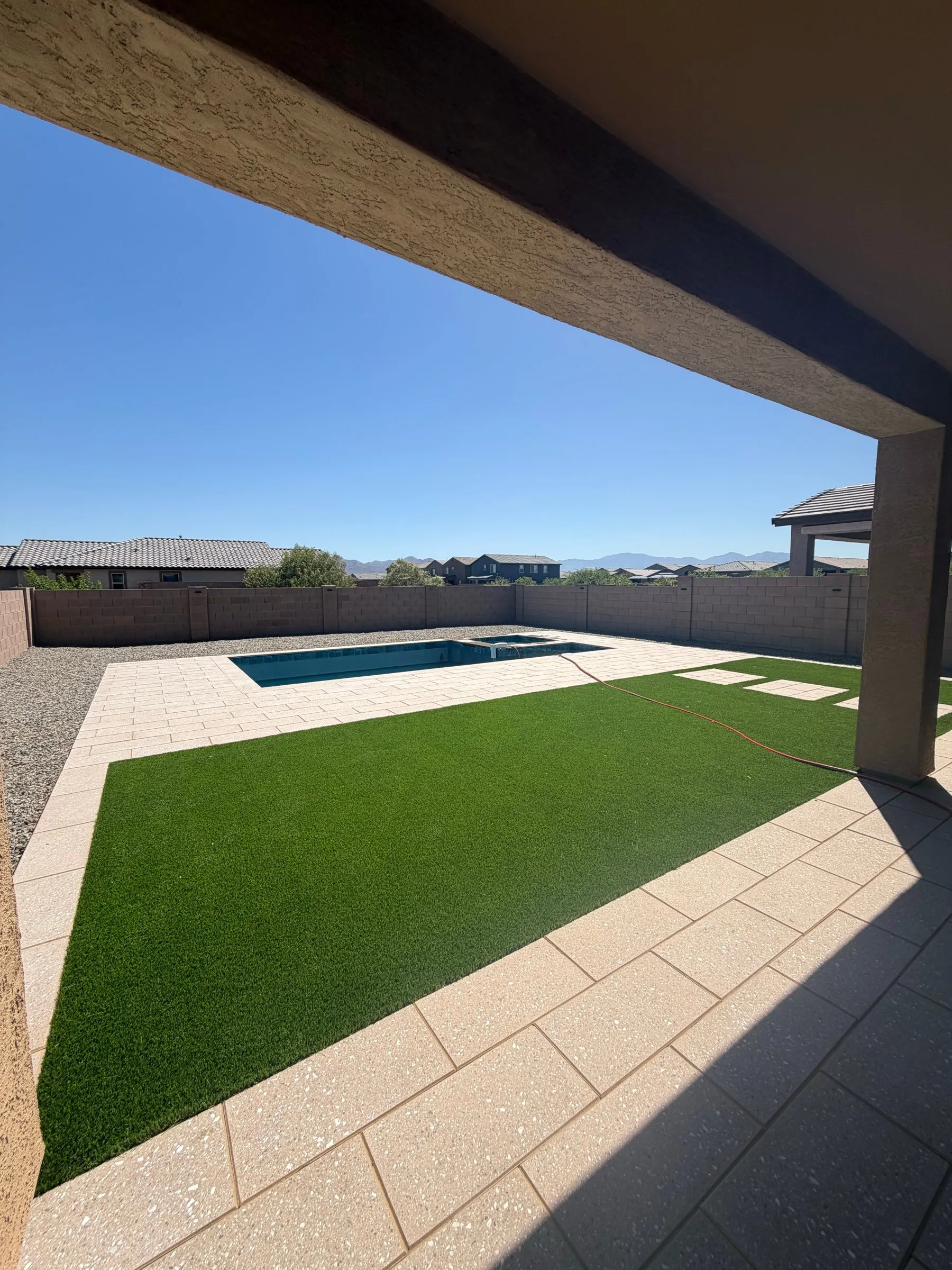
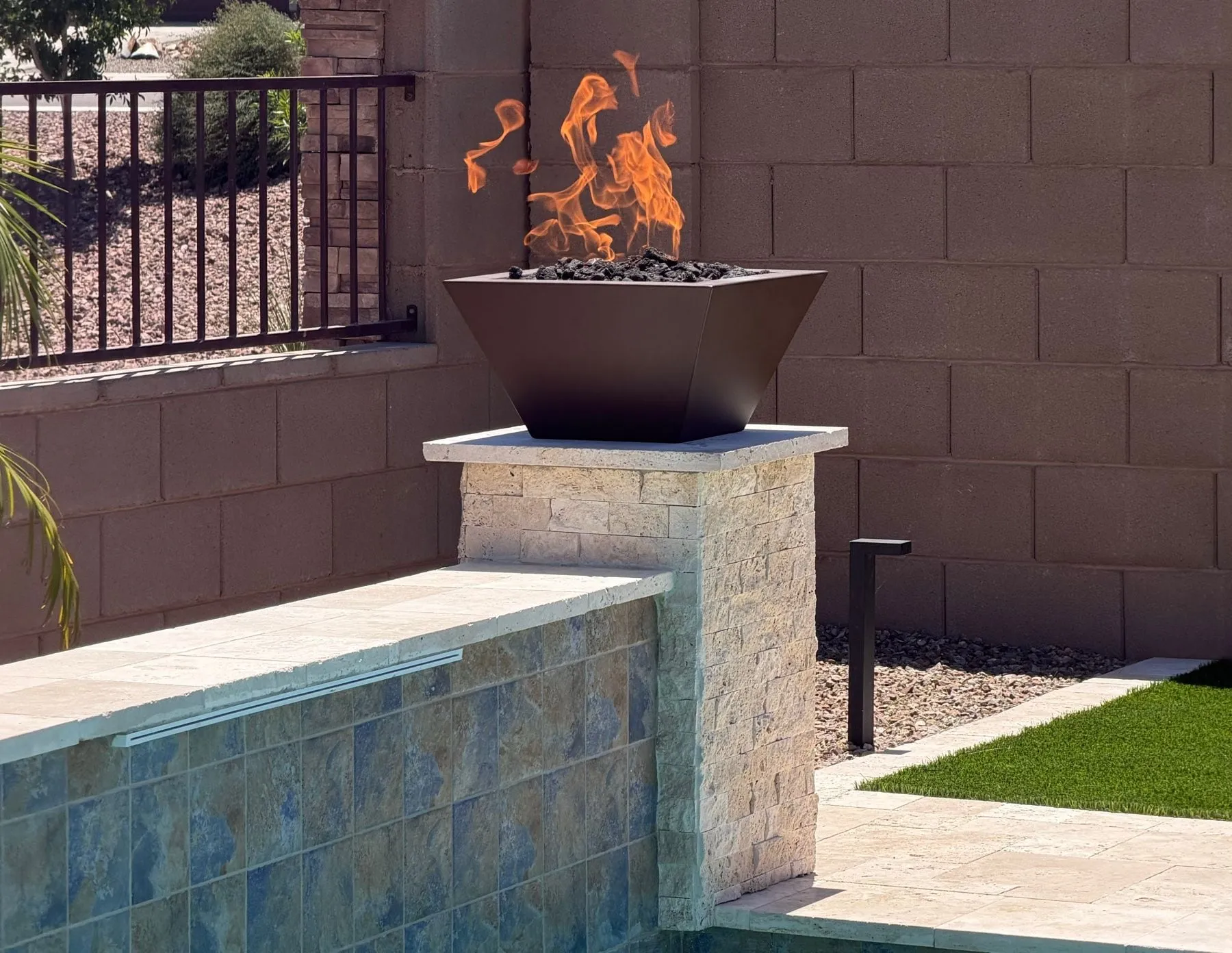
Near a pool, we keep loose DG and small rock a few feet back from the deck. Feet and monsoon wind carry it onto the deck and into the skimmer. Pavers, travertine or turf make a cleaner edge between the water and the planting beds. Our hardscaping page shows how we handle those borders.
How does rainwater harvesting fit in?
Tucson gets much of its rain in a few big monsoon storms. Rainwater harvesting slows that water down and sends it to your plants instead of the street.
There are two main types:
- Passive harvesting. Shaping the yard with basins, berms and swales so rain soaks in near trees and shrubs. This costs little and works with almost any xeriscape plan.
- Active harvesting. Catching roof runoff from gutters in a tank or cistern, then using it for plants later.
Tucson Water offers a rainwater harvesting rebate for single-family homes. As of July 2026, the city lists a maximum of $1,999 per property: up to $1,900 for storage and up to $99 through a new Treebate for qualifying drought-tolerant trees. You must take a qualifying workshop with Watershed Management Group and get your design approved before you install, and funding is limited. Our news post on the Tucson Water rebate changes has the details.
One caution for pool owners. Harvesting basins and swales should send water away from the pool and deck, not toward them. We plan grading and drainage together with the pool so monsoon runoff waters the plants and stays out of the water.
Turf vs xeriscape: which makes sense?
Many Tucson families still want something soft for kids and dogs. That is fine. The xeriscape principles say to use lawn sparingly, not to ban it.
| Option | Water use | Upkeep | Feel in summer |
|---|---|---|---|
| Natural grass | High, needs regular irrigation | Mowing, fertilizing, overseeding | Coolest underfoot when watered |
| Artificial turf | No regular irrigation | Brushing, rinsing, clearing debris | Gets hot in full sun |
| Xeriscape beds | Low, on drip | Pruning, weeding, timer changes | Rock gets hot; shade helps |
Tucson Water says you can save up to 70 percent of irrigation water by replacing turfgrass with low-water plants. That figure comes from its turf removal rebate, which is only open to commercial and multifamily customers and does not rebate artificial grass.
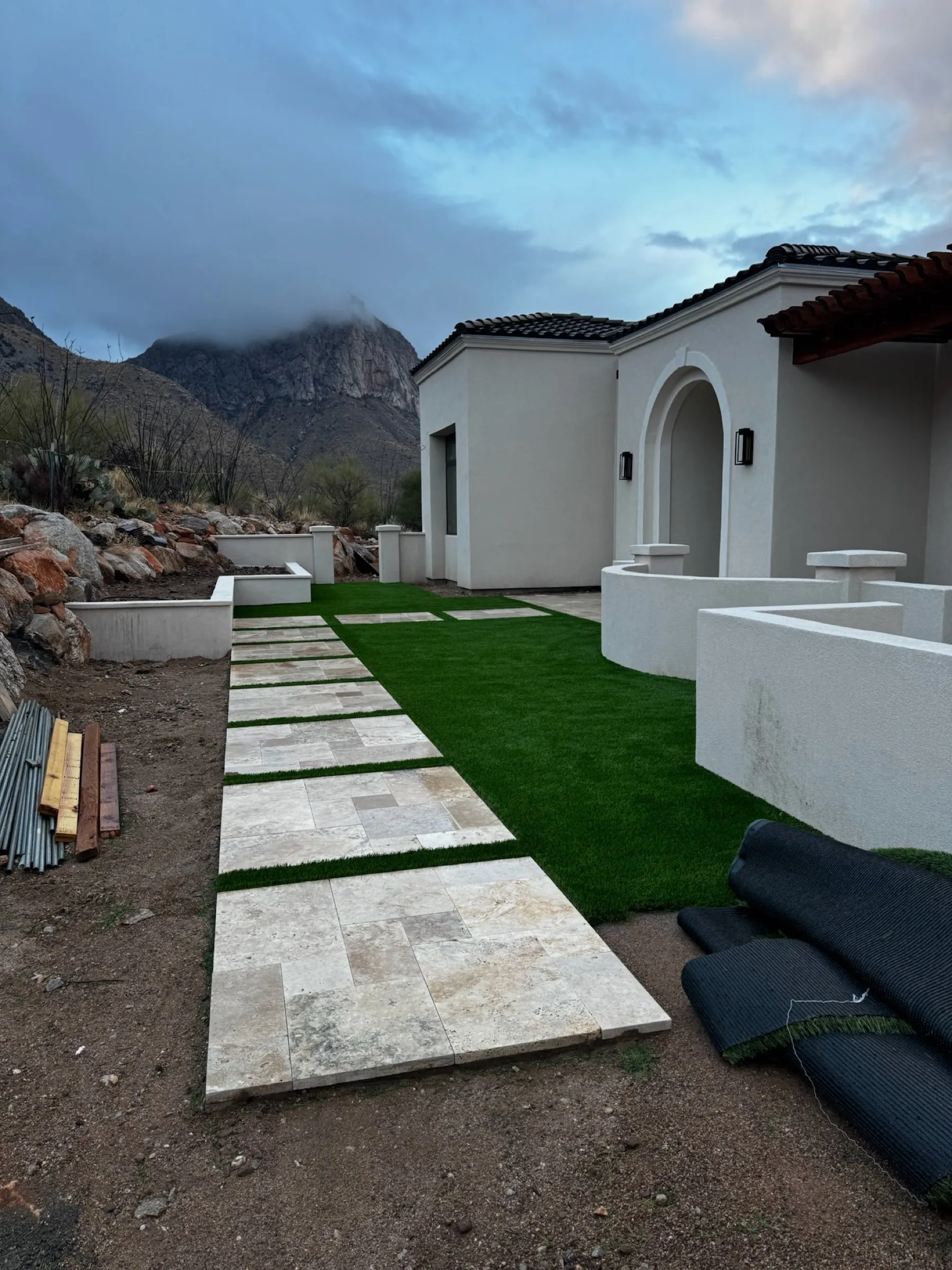
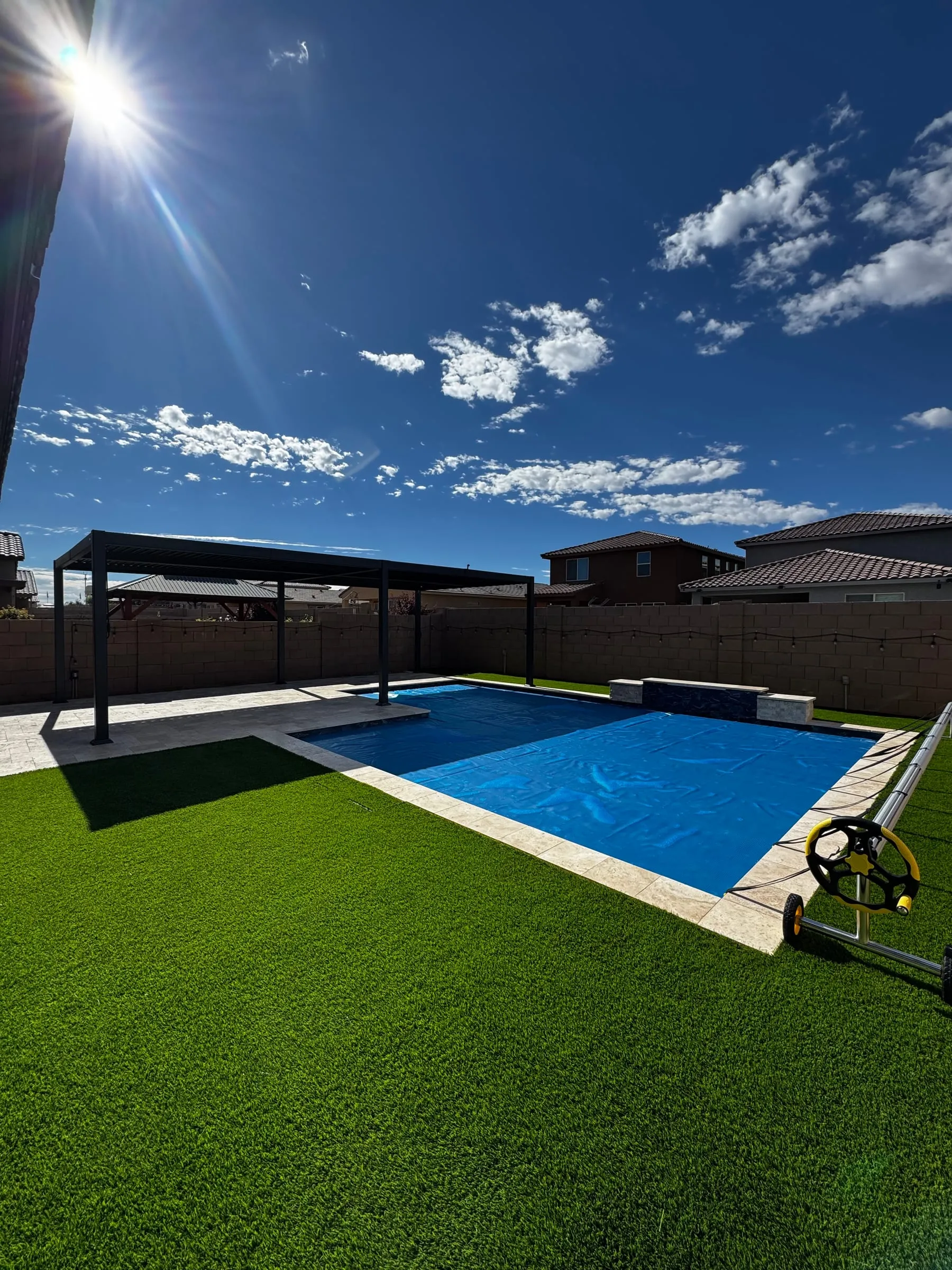
For most homeowners, the answer is a mix. A small patch of artificial turf where kids play, xeriscape beds for color and shade, and a paver or travertine deck to tie it all together. Our artificial turf guide covers heat, infill and pets in more detail.
How do you xeriscape around a pool?
A pool and a xeriscape yard work well together. Both are about planning water carefully. A few things to get right:
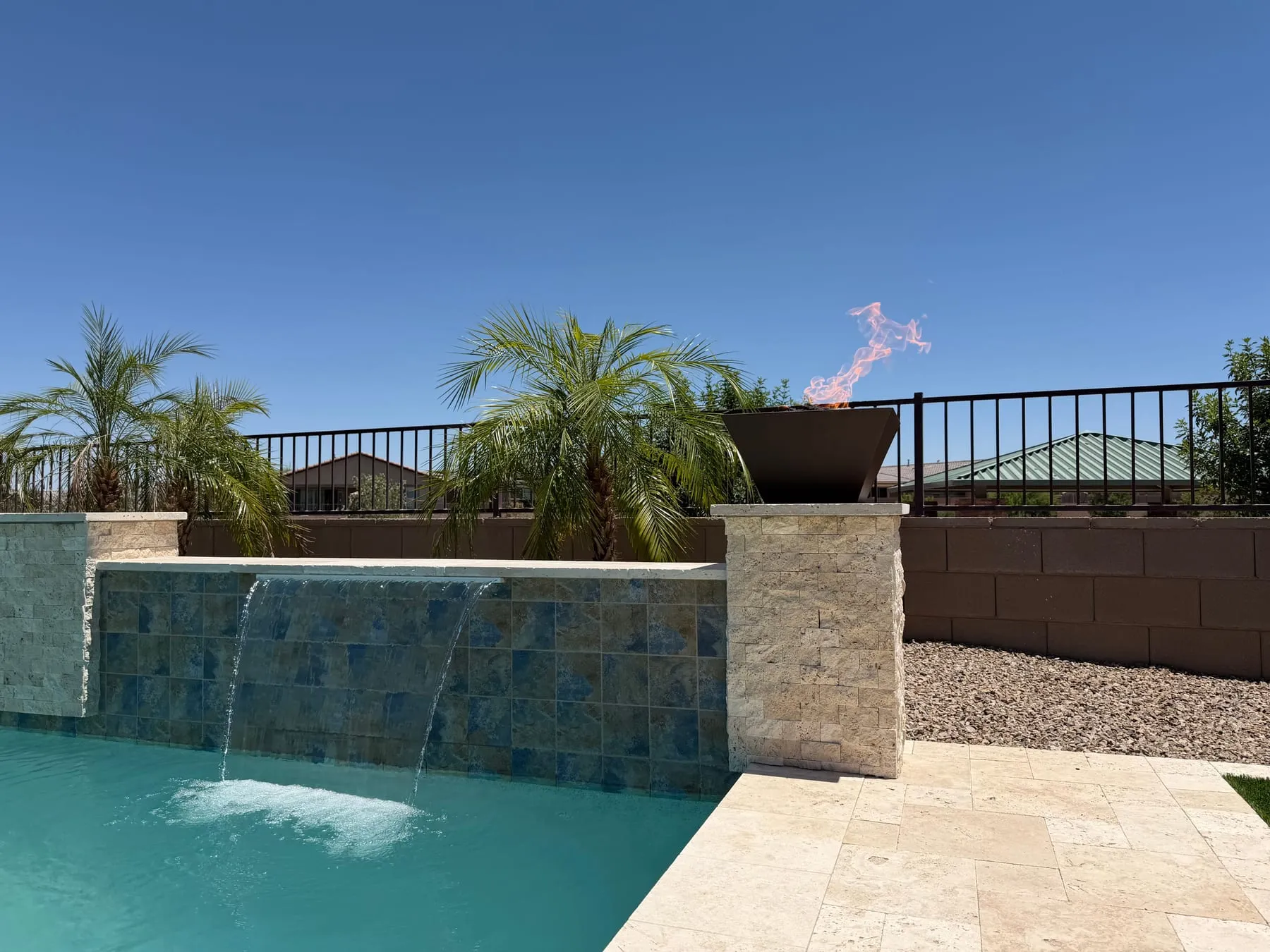
- Low litter near the water. Use agaves, aloes, red yucca and other tidy plants close to the deck. Keep mesquite, palo verde and other heavy droppers well back and downwind.
- Drip only near the deck. Spray heads soak coping and leave mineral spots on travertine. Drip keeps water at the roots.
- A clean border. Put pavers, travertine or turf between the water and loose rock so DG does not end up in the skimmer.
- Grade away from the pool. Beds and basins should drain away from the deck and the house.
- Mind the pool barrier. Keep planters, boulders and large shrubs away from the barrier wall so a child cannot use them to climb. Arizona requires pool barriers of at least 5 feet. See our pool barrier rules guide.
- Check HOA rules. Newer subdivisions in Marana, Gladden Farms, Dove Mountain, Rita Ranch and Vail often have approved plant lists and front yard rules.
The best time to plan all of this is during pool design. In our 3D design with a VR walkthrough, you can see the pool, deck, planting beds, turf and drainage together before anything is built.
Plan your low-water yard with us
Meraki Pools AZ is a family-owned Tucson builder of custom concrete pools, hardscape and landscaping. We are licensed under AZ ROC #342505 (CR-21 hardscaping and irrigation) and #352797 (KA-5 swimming pool). Call (520) 342-8335 or request a free estimate to plan your pool and yard together.
Put this guide to work
Planning your own project? See our Pool Landscaping, Turf & Irrigation in Tucson and Landscape Design in Tucson, or read about building a pool in Marana, Gladden Farms or Vail.
Frequently asked questions
What is xeriscape landscaping?
Xeriscape is a way of designing a yard so it looks good while using as little water as possible. It relies on planning, plants suited to the local climate, efficient irrigation and mulch. In Tucson that usually means native and desert-adapted plants on drip, with rock or decomposed granite between them.
Is xeriscape the same as a rock yard?
No. A yard of bare gravel is not xeriscape. Real xeriscape uses plants, shade trees and usable spaces like patios and paths, with rock or granite as a mulch around them. The goal is a yard that feels alive, not a parking lot.
Does Tucson Water give rebates for xeriscape?
Tucson Water offers a rainwater harvesting rebate for single-family homes, with a maximum of $1,999 per property as of July 2026, including a small Treebate for qualifying drought-tolerant trees. You must take a qualifying workshop and get your design approved before you install. Its turf removal rebate is for commercial and multifamily customers, not single-family homes.
How often should I water desert plants on drip?
It depends on the plant, its age and the season. New plants need water more often while their roots get established, and most desert plants need much less once they are settled. Water deeply and less often rather than a little every day, and adjust your timer between summer and winter.
Can you xeriscape around a pool?
Yes, and it is a great fit. Low-litter desert plants, drip irrigation and a clean deck edge keep leaves and mud out of the water. Keep spiny plants away from walkways, keep big litter-dropping trees far from the pool, and grade beds so water drains away from the deck.
Is decomposed granite good for a Tucson yard?
Decomposed granite is a common choice for paths, sitting areas and as mulch between plants. It lets water soak in, comes in local colors and stays tidy if it has a solid edge. Near a pool, keep loose granite back from the deck so it does not get tracked into the water.