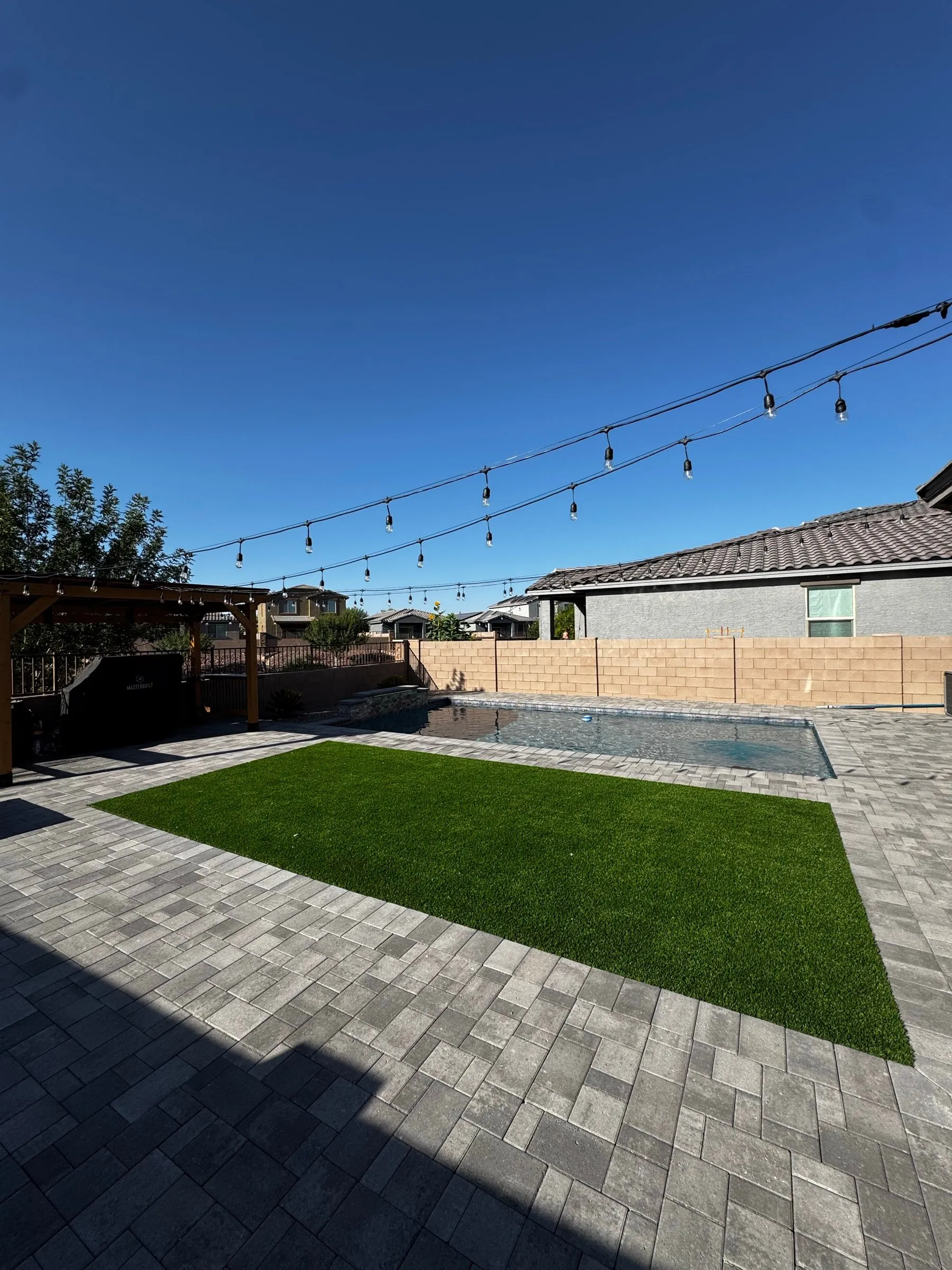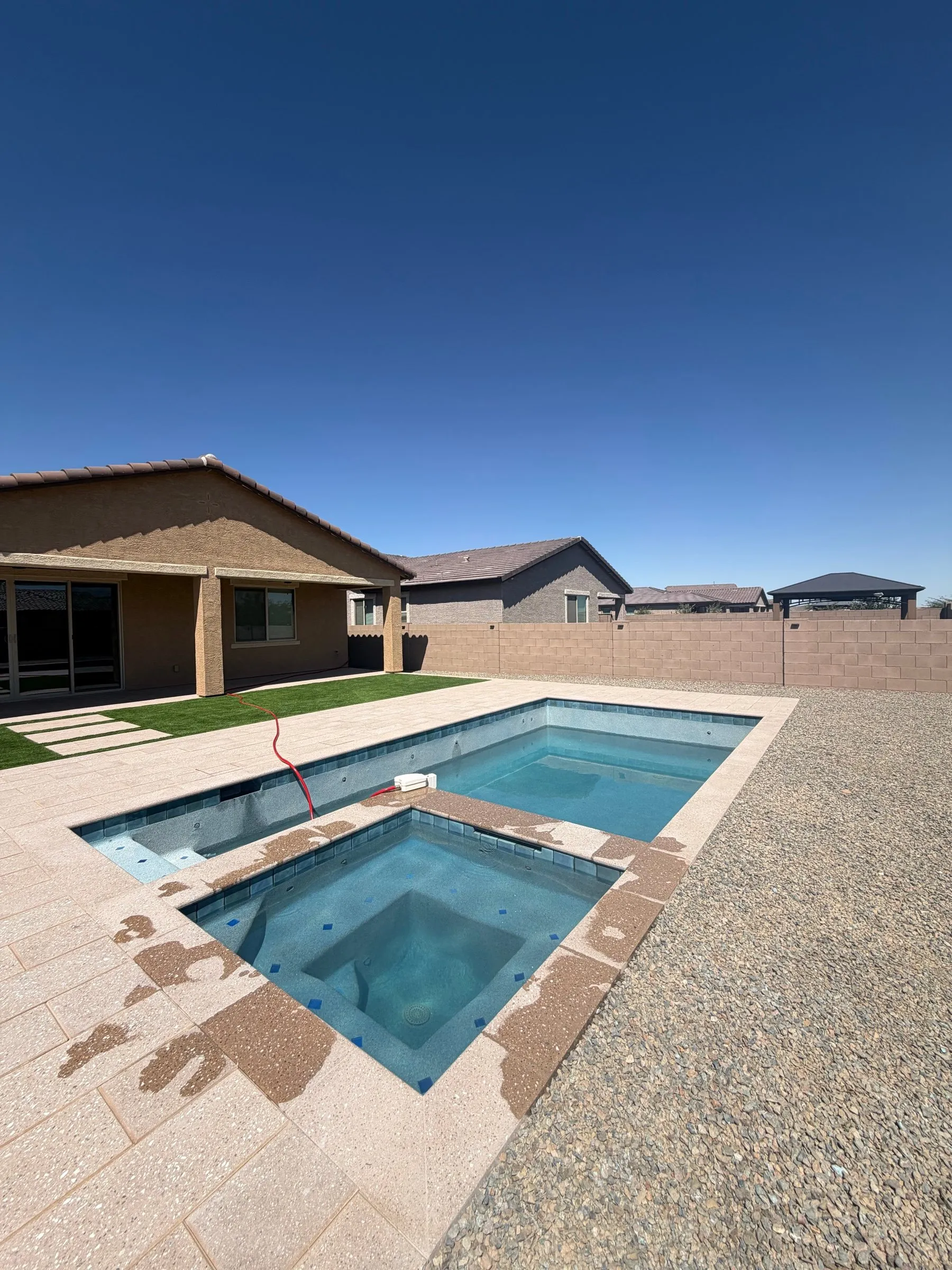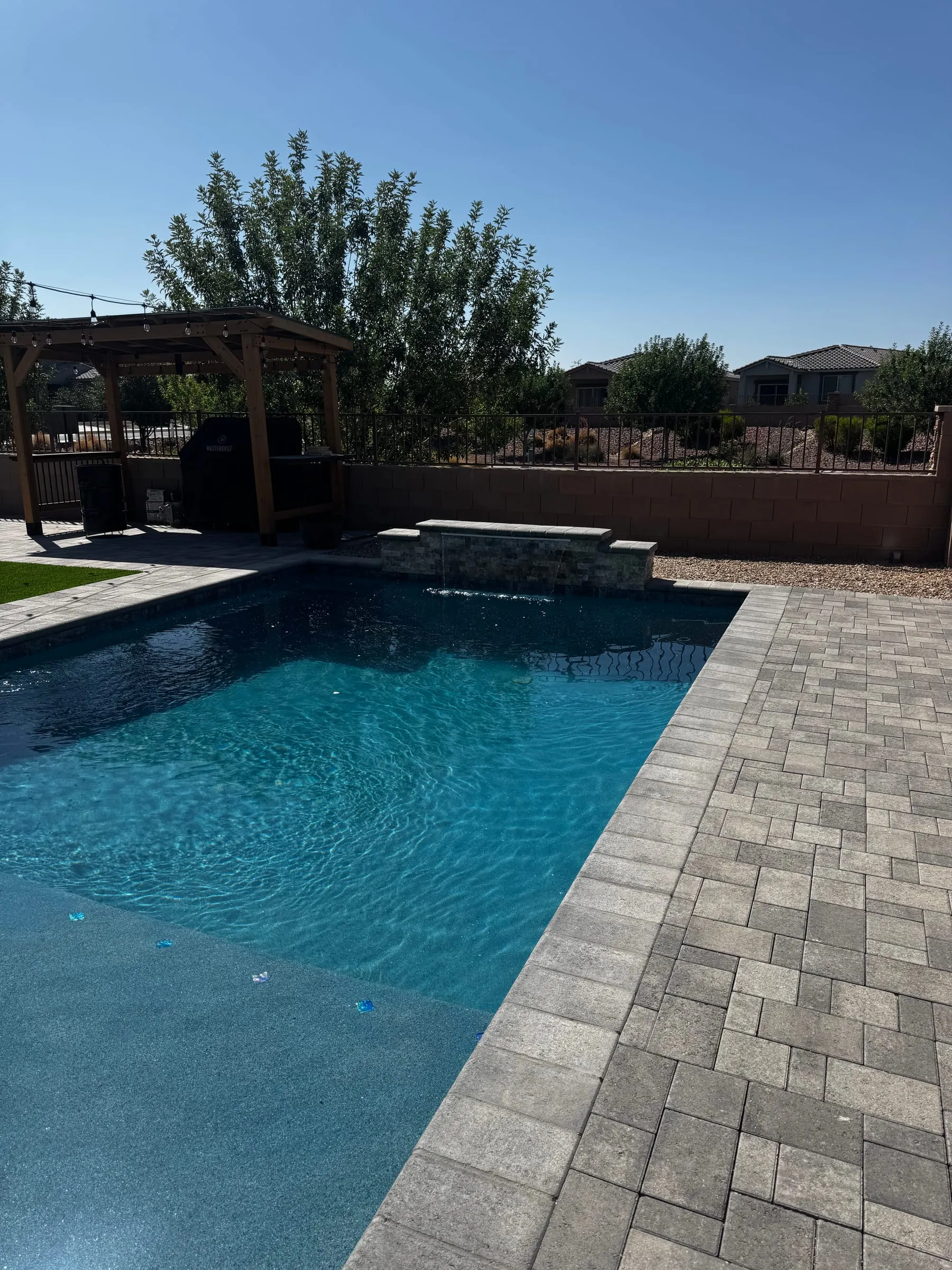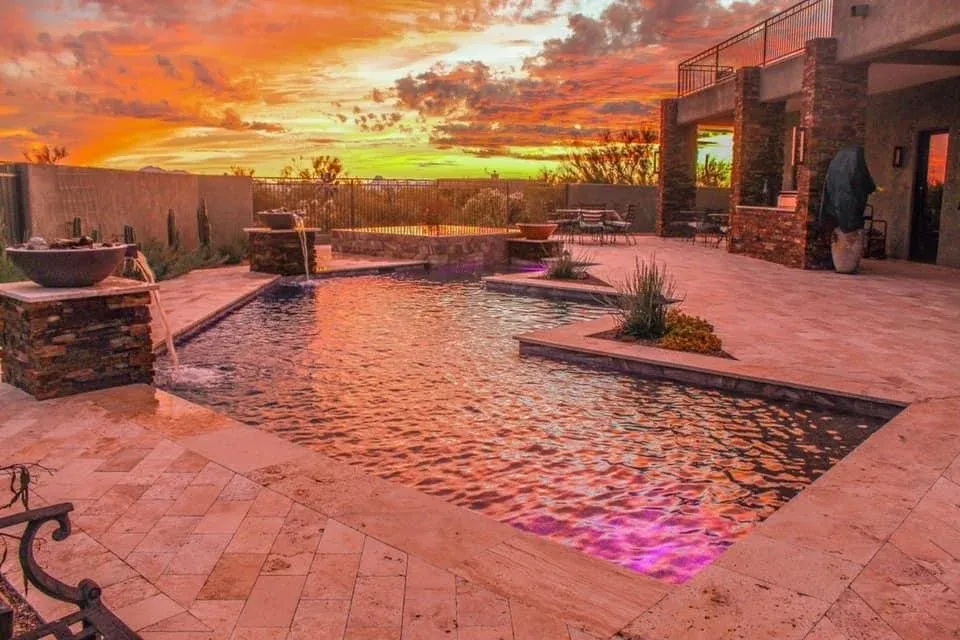
Corona de Tucson sits southeast of Tucson in the foothills of the Santa Rita Mountains, next to the Coronado National Forest, at about 3,300 feet. Twenty-five years ago it was a small place: the 2000 census counted 813 residents. By 2010 it had 5,675, and by 2020 it had 9,240. That growth explains the backyards. Most of today’s homes went up after 2000, and many families are now ready to turn a gravel yard into a place to swim.
We’re Meraki Pools AZ. If you live in Corona de Tucson or nearby Vail and you are planning a pool, this page covers what is specific to building here.
Tucson Water, on its own small system
This surprises people. Corona de Tucson’s water is supplied by Tucson Water, but not from the main Tucson network. According to Tucson Water’s annual water quality report for Corona de Tucson, it is a small community water system serving more than 3,500 households and businesses, about 10,000 people, with local groundwater from four active wells.
What that means for your pool:
- Filling is simple. You fill through your regular meter like any Tucson Water customer. Our post on what it costs to fill a pool shows how to estimate it.
- Start-up chemistry matters. Well water carries its own mineral profile. We test the fill water at startup and set the chemistry from there.
- Evaporation adds up. A pool cover and a sensible surface area keep top-off water down.
What Pima County checks on your plans
Corona de Tucson is unincorporated, so Pima County Development Services issues the permit. The county’s custom pool requirements call for construction drawings, sealed structural calculations and a site plan that shows setbacks to the property lines and existing construction. A few rules commonly shape designs on newer subdivision lots:
- Footings. No part of the pool structure may sit within a 45 degree line down from the bottom of a nearby footing, which can push the pool away from the house or a patio cover.
- Equipment. The pool equipment must sit at least 4 feet from a required barrier.
- Other agencies. Depending on the project, the county may require approval from the Regional Flood Control District first. If a wash crosses your lot, a Floodplain Use Permit may be needed for the pool, walls or fences.
We handle all of this, from drawings to final inspection. Our permits guide explains the steps.
Higher ground, cooler nights
At around 3,300 feet, Corona de Tucson is several hundred feet above the valley floor. Summers are still hot, but spring and fall evenings tend to cool off sooner. That makes heating worth thinking about from the start:
- A spillover spa heats quickly and gets used year-round.
- A heat pump is efficient for stretching the pool season; a gas heater heats a spa fast. Our pool heating guide compares them.
- Fire features pair well with cool evenings. Fire bowls on stacked stone pillars or a linear fire trough make the deck usable after sunset. See water and fire features.
With the Santa Ritas close by, a pool set to face south or east may frame the mountains. We check sight lines on your lot and show them to you in VR.
Plan the whole yard while it is still empty
A bare yard is the easiest yard to plan. Before we dig, we can lay out the pool, the deck, turf and plants, an outdoor kitchen, and where the equipment pad will go, all in one 3D model. Even if you build in phases, a few choices during the pool build save money later: running gas and electrical sleeves under the deck, setting irrigation lines, and leaving the excavator a clean path to the back of the lot. Our landscaping and turf work fits around the pool so the yard looks planned, not added to.
Expect rocky soil and caliche in places. We own our excavation equipment and plan for it; see building a pool in caliche. If your neighborhood has an HOA, read its architectural guidelines before you finalize a design. We can prepare the site plan and 3D design for your submittal.
A yard for a young community
Corona de Tucson skews young. The 2020 median age was 35.6, and about 70% of households were married couples, so a lot of these backyards will be used by kids. That changes a few priorities. A barrier that works is first: every barrier we build is at least 5 feet tall, per A.R.S. 36-1681, and doors and gates from the house need a plan too. After that, think about a wide tanning ledge for little swimmers, a shallow end long enough for games, and a deck with room for a shade umbrella.
Our crew, briefly
Meraki Pools AZ is a family-owned builder of concrete (shotcrete) pools. Our own crew handles excavation through decking with our own equipment, every design is built in 3D with a VR walkthrough, and every contract includes a written warranty schedule. AZ ROC #352797 (KA-5 Dual Swimming Pool Contractor) and #342505 (CR-21). Most new custom pools we build run about $40,000 to $120,000 or more; see our pool cost guide. Financing is available through Lyon Financial and Credit Union West.
Getting started in Corona de Tucson
Walk your yard and note three things: where the sun sits in late afternoon, which way the mountain views are, and how a truck could reach the back. Then call us. We will measure, check setbacks and access, and come back with a 3D design you can walk through in VR plus a written, line-item quote. Once you approve it, we submit to Pima County.
Just north, see our Vail page.
Call (520) 342-8335 or request a free estimate.
Sources
- Corona de Tucson, Arizona (Wikipedia): CDP in Pima County in the Santa Rita foothills next to the Coronado National Forest; elevation about 3,300 ft; population 813 (2000), 5,675 (2010), 9,240 (2020); 2020 median age 35.6 and 69.7% married-couple households.
- Tucson Water: Corona de Tucson Water Quality Report: small community water system serving more than 3,500 households and businesses, about 10,000 residents, from four active groundwater wells.
- Pima County: Custom Pools: permit documents, setbacks, 45 degree footing rule, equipment 4 ft from the barrier, possible prior approval from the Regional Flood Control District.
- Pima County: Floodplain Use Permit Application Guide: permits for pools, walls and fences in floodplains, erosion hazard areas and mapped riparian habitat.