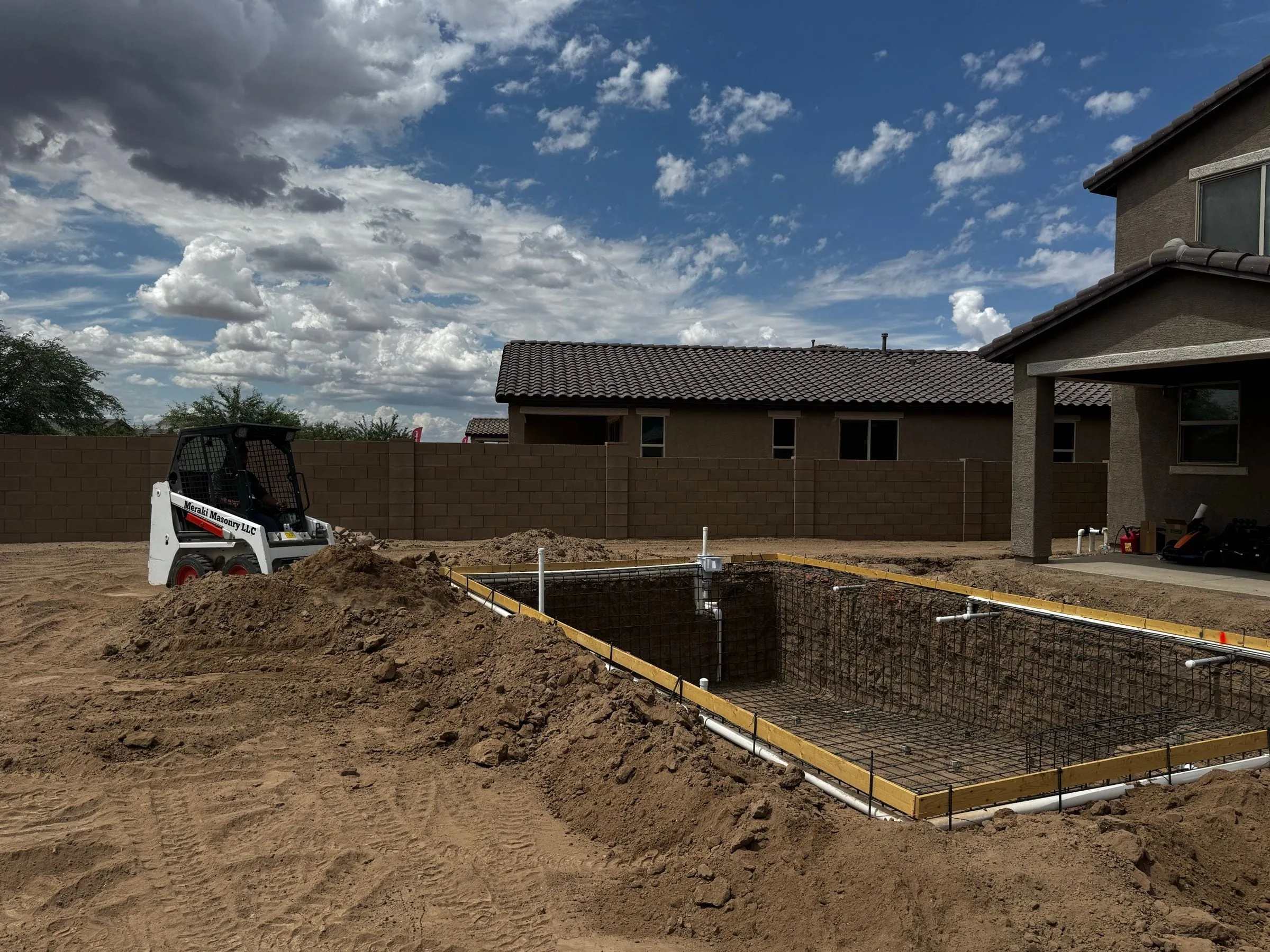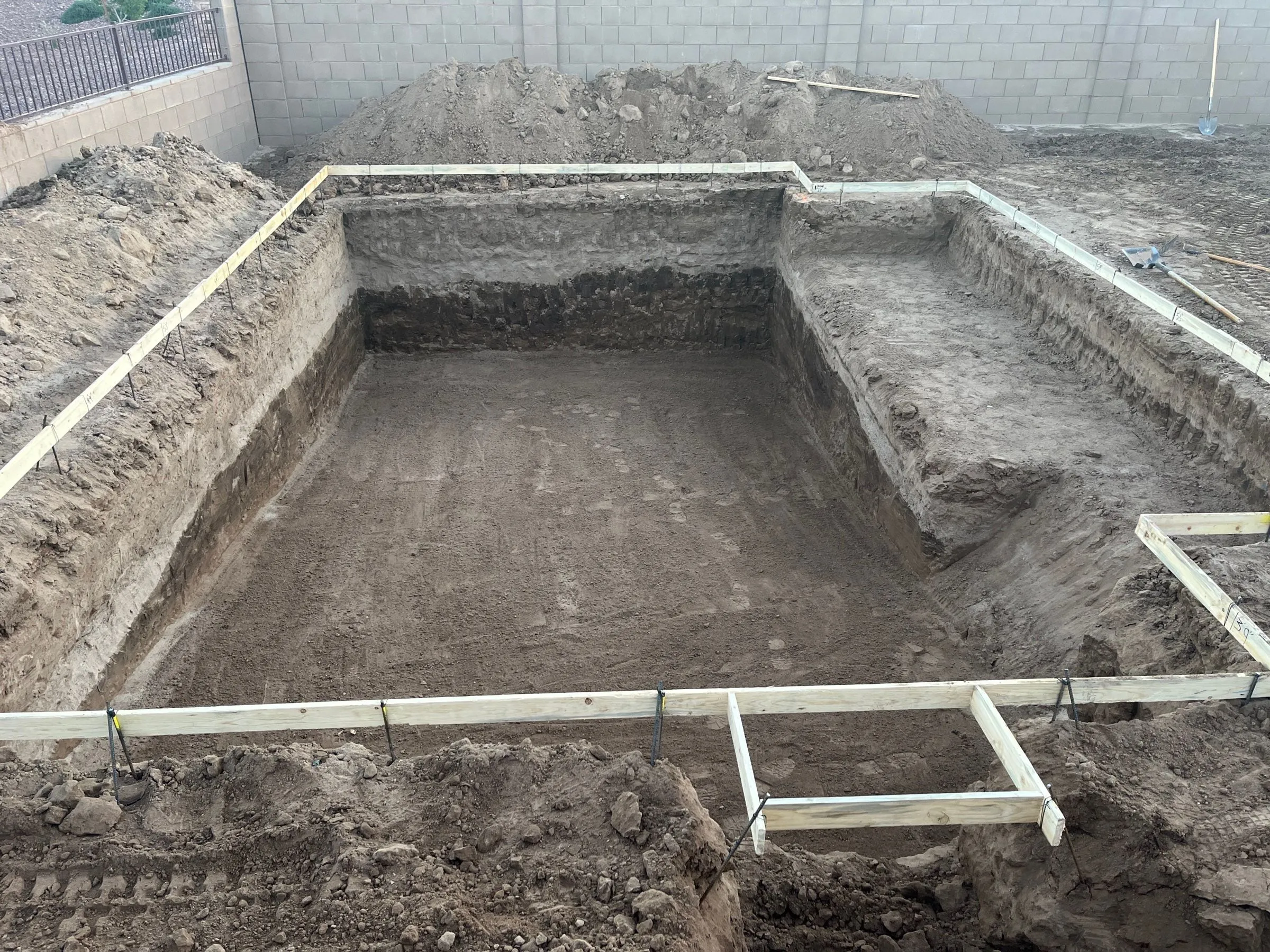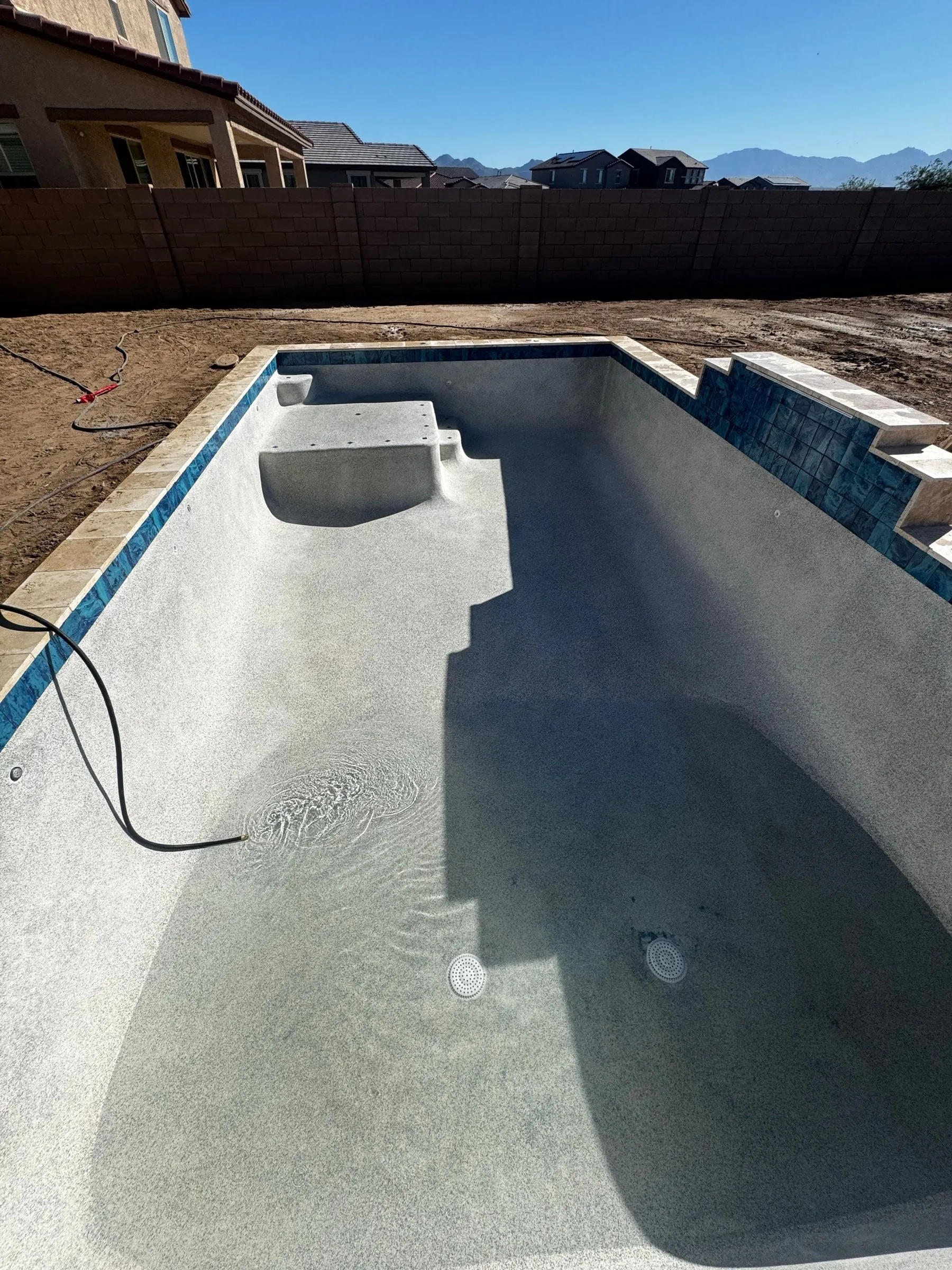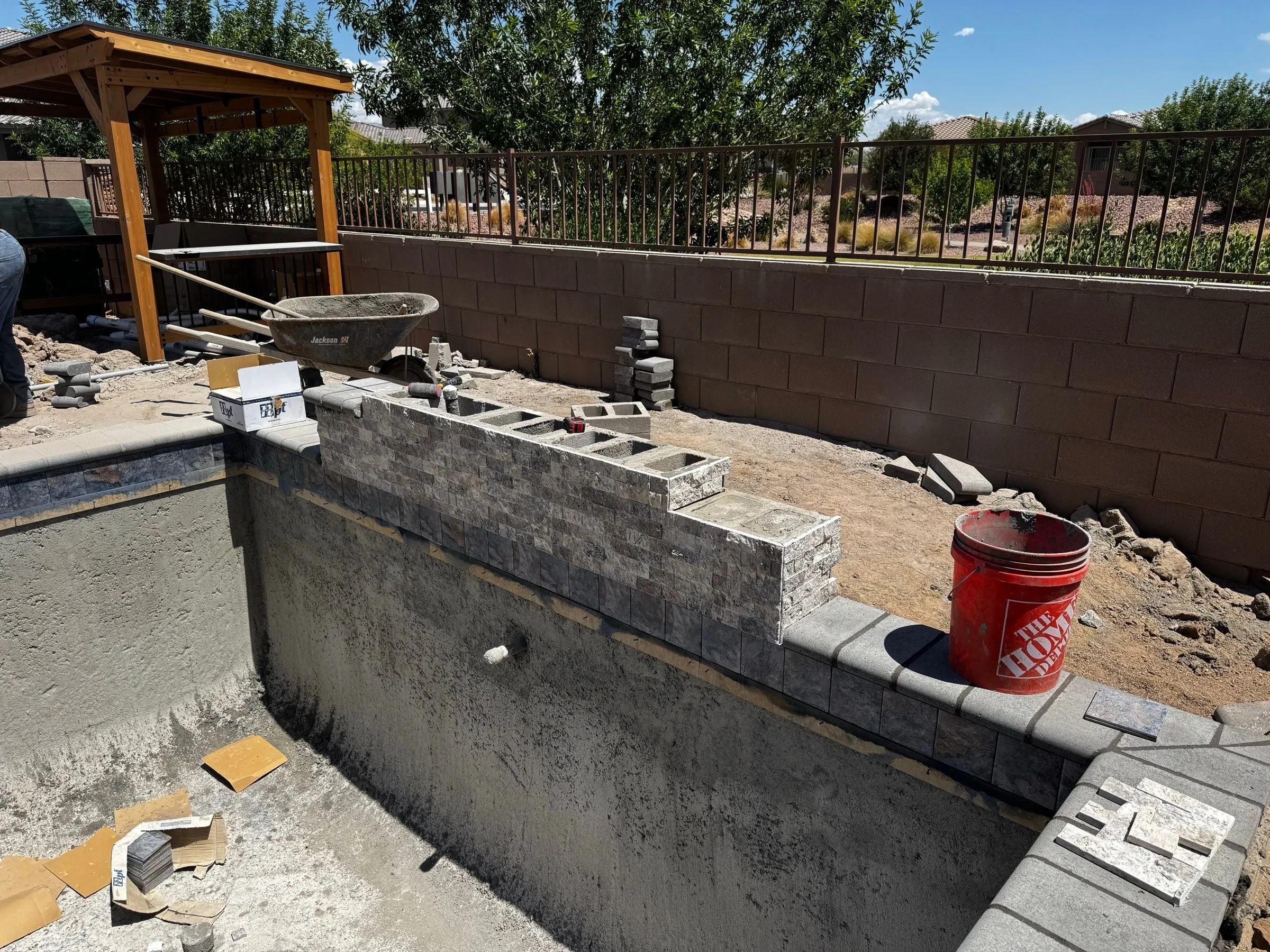
In Tucson and Pima County, a new pool must be surrounded by a barrier that keeps young children out: a wall or fence that is tall enough and hard to climb, with gates that close and latch on their own. The height to plan on is 5 feet. Arizona’s state law requires a 5-foot barrier and only gives way to local rules that are equal or stricter, so 5 feet is the standard across Tucson, Pima County, Marana, Oro Valley and Sahuarita, and it is what we build on every project. Local codes add their own details on gates, gaps and house walls, so those still depend on where you live.
We design the barrier into every pool plan from day one, because inspectors check it before final approval and because it is the most important safety feature in your backyard. Here is how the rules work in plain English.
Please note: Codes change, and this article is general information, not legal advice. Confirm current requirements with your city, town or county before you build or change a fence.
What does Arizona’s pool barrier law (A.R.S. 36-1681) require?
Arizona Revised Statutes 36-1681 sets a statewide barrier standard for residential pools. It covers any pool or contained body of water that is 18 inches or deeper at any point and wider than 8 feet, and that is meant for swimming. The main points:
- Height: at least 5 feet, measured on the outside of the barrier.
- Distance: the barrier sits at least 20 inches from the water’s edge.
- No climbing aids: no openings, handholds or footholds on the outside that a child could use to climb.
- Openings: nothing a 4-inch ball could pass through. Chain link mesh is limited to 1.75 inches.
- Gates: self-closing and self-latching, opening outward away from the pool. The latch is at least 54 inches above the ground, or on the pool side at least 5 inches below the top, with no openings over half an inch within 24 inches of the release. A padlock or key lock is another option.
- House as part of the barrier: if the house forms part of the enclosure, the law lists options such as a separate 4-foot interior fence, a key-operated motorized cover, or self-latching doors and windows with high latches or limited openings.
Who is exempt from the state law?
The statute lists several exemptions. The ones homeowners ask about most:
- Homes where all residents are at least six years old
- Pools and barriers that existed before the law took effect
- Public and semi-public pools, which fall under separate state rules
- Pools in cities, towns or counties that have their own barrier ordinance (adopted before the state law, or adopted after it and at least as strict)
That last exemption is the big one. In the Tucson area, the city, the towns and Pima County all enforce their own adopted codes. So for a new pool, your local code is what the inspector checks.
Which barrier code does each Tucson-area jurisdiction use?
Each office has adopted the 2024 International Swimming Pool and Spa Code (ISPSC) with local amendments. Section 305 of that code covers barriers.
| Jurisdiction | Code in effect | Notable local barrier points |
|---|---|---|
| City of Tucson | 2024 ISPSC with amendments, effective Jan. 1, 2026 | Adds the state “18 inches deep, 8 feet wide” definition to the barrier section; requires an evaporation cover before final |
| Pima County (unincorporated) | 2024 ISPSC with amendments, effective Jan. 1, 2026 | Same definition change and cover rule; the county’s barrier guidance repeats the model code’s 48 inches, but the state’s 5-foot rule is the stricter one |
| Marana | 2024 ISPSC with local amendments, for applications after July 18, 2025 | Checklist requires climbable equipment set back 3 feet from the property line |
| Oro Valley | 2024 ISPSC with amendments | Writes the 60-inch (5-foot) height into its local code; stricter chain link, gate and house-wall rules |
| Sahuarita | 2024 ISPSC, effective July 1, 2026 | Fiberglass pools need the barrier in place before the pool is set |
Why 5 feet everywhere? The model code (ISPSC) that these jurisdictions adopt starts at 48 inches, but Arizona’s statute (A.R.S. 36-1681) requires 5 feet and only exempts local ordinances that are “equal to or more stringent.” A 48-inch rule is not stricter on height, so the 5-foot state minimum still applies. Many Tucson-area homes already have 5- to 6-foot block walls, which makes this easy to meet.
What are the typical pool fence requirements?
Under the ISPSC, as summarized in Pima County’s barrier guidance, a compliant barrier generally includes the following.
Height and ground clearance
- At least 5 feet (60 inches) tall on the outside, per the state law. The model code alone says 48 inches, but 5 feet is the height to build to.
- No more than 2 inches between the ground and the bottom of the barrier
- No opening that lets a 4-inch sphere through
Gaps and fence style
- Solid walls (block, stucco): no ledges or protrusions beyond normal joints. Oro Valley clarifies that indentations under 1 inch do not count as handholds.
- Fences with horizontal rails less than 45 inches apart: rails go on the pool side, and vertical pickets can be no more than 1.75 inches apart.
- Rails 45 inches or more apart: pickets no more than 4 inches apart.
- Chain link: mesh limited by size, or fitted with slats. Oro Valley limits openings to 1 inch unless slats are attached.
Self-closing, self-latching gates
- Pedestrian gates open outward, away from the pool
- Gates are self-closing and self-latching
- If the latch release sits lower than 54 inches from the bottom of the gate, it must be on the pool side at least 3 inches below the top, with no opening larger than half an inch nearby (18 inches under the base code, 24 inches in Oro Valley)
Test your gate often. Open it a few inches and let go. It should swing shut and latch every time, from any position.
Climbable objects
A child can turn a pool pump, a planter or a bench into a ladder. The codes address this in a few ways:
- Pima County’s custom pool checklist calls for pool equipment to be at least 4 feet from required barriers.
- Marana requires equipment that could be climbed to sit at least 3 feet from the property line.
- Keep grills, chairs, trash cans and rocks away from the outside of the fence. Grade that is higher on the outside can also make a fence “shorter” than it looks.
Can the house be part of the pool barrier?
Yes, and in most Tucson backyards the house is one side of the enclosure. When doors or windows open toward the pool, the codes require added protection. Common options under the ISPSC as described by Pima County:
- Door alarms listed to UL 2017 that sound within 7 seconds, keep going for at least 30 seconds, can be heard through the house and have a pause switch at least 54 inches above the threshold
- Self-closing, self-latching doors with the release at least 54 inches above the floor
- Windows with sills at 48 inches or higher, or stops that limit openings to under 4 inches
- A powered safety cover that meets ASTM F1346
- Another method the building official approves
Oro Valley is stricter. It requires window latches and door handles at 54 inches or higher, with self-closing and self-latching doors. It also bans pet doors in a barrier wall. Alarms are only an option there by appeal to the code official, with detailed hardwired alarm rules, and are never allowed for multi-panel sliding “window walls.”
Barriers save lives, so treat them as one layer
A fence is the most important safety step, but it works best with others:
- Adults actively watching whenever kids are near water
- Swim lessons and CPR training for the family
- Pool alarms and door alarms as backup
- Keeping toys out of the pool when it is not in use, so kids are not tempted
We talk through all of this during design, especially with families who have young children or grandchildren visiting.
How we design barriers into your pool plan
Barrier rules affect the layout, so we plan them before anything else is drawn. In our 3D design, which you can walk through in VR, we show where fences, gates and equipment go. We check existing block walls for height and handholds, plan gate swings, keep equipment pads clear of the barrier and pick door hardware or alarms where the house is part of the enclosure. Then we put the barrier on the permit plans and get it through the final inspection. Our pool permit guide covers that process, and our pool designs page shows how fences and walls can blend with the yard.
Questions about fences come up often. Our FAQs cover more of them.
Plan a safe pool with us
Whether you are in Tucson, Oro Valley, Marana, Sahuarita or SaddleBrooke, we will design a barrier that fits your yard and meets your local code. Contact us or call (520) 342-8335, Monday through Friday from 8 to 4, with Saturdays by appointment.
Sources
- Arizona Revised Statutes 36-1681: Pool enclosures
- City of Tucson: Building Codes (2024 ISPSC effective Jan. 1, 2026)
- City of Tucson: 2024 ISPSC Amendments (Exhibit G)
- Pima County: Barriers for Residential Pools / Spas
- Pima County: 2024 ISPSC Amendments (Ordinance 2025-15, Exhibit J)
- Pima County: Building Permits Resources
- Pima County: Custom Pools submittal requirements
- Town of Marana: Building Safety Codes
- Town of Marana: Ordinance 2025.013 adopting the 2024 codes
- Town of Marana: Pool & Spa Application Checklist
- Town of Oro Valley: 2024 ISPSC Amendments
- Town of Oro Valley: Apply for a Pool or Spa Permit
- Town of Sahuarita: Building Codes
- Town of Sahuarita: Pool & Spa Submittal Checklist
Put this guide to work
Planning your own project? See our Block Walls & Pool Barrier Walls in Tucson.
Frequently asked questions
How tall does a pool fence need to be in Arizona?
Plan on at least 5 feet, measured on the outside. Arizona's state pool barrier law requires 5 feet and only steps aside for local rules that are equal or stricter, so a 5-foot barrier meets the standard in Tucson, Pima County, Marana, Oro Valley and Sahuarita. Every barrier we build is at least 5 feet tall.
Can my house wall count as part of the pool barrier?
Often, yes, but any door or window that opens toward the pool then needs extra protection. Depending on the code, that can mean self-closing and self-latching doors with high latches, listed door alarms, window latches at a set height, or a powered safety cover. Oro Valley also does not allow pet doors in a wall that serves as the barrier.
Does a pool safety cover replace a fence in Tucson?
Under the codes based on the ISPSC, a powered safety cover that meets ASTM F1346 can be one option where the house wall is part of the barrier. It is not a blanket replacement for a fence around the yard. Separately, Tucson, Pima County and Oro Valley now require an evaporation cover before final inspection, which is not the same thing as a safety cover.
Do I need a pool fence if I don't have kids?
Arizona's state law exempts homes where every resident is at least six years old, but that exemption only applies where the state law is the rule in force. In the Tucson area, the city, towns and county enforce their own adopted pool codes, and you should not assume the same exemption applies, so ask your permit office. Grandkids, neighbors and future owners are also a good reason to build a proper barrier.
Which way should a pool gate swing?
Pool gates should swing outward, away from the pool. That way, if a child pushes on the gate, it closes and latches instead of opening into the pool area. The gate must also be self-closing and self-latching.
Can I use my existing block wall as a pool barrier?
Often you can, as long as it meets the height and has no handholds, footholds or openings that break the rules. Problems include low spots where grade is higher on the outside, decorative cutouts, gaps under gates, and things stacked against the wall. We check existing walls during design and plan any fixes into the project.