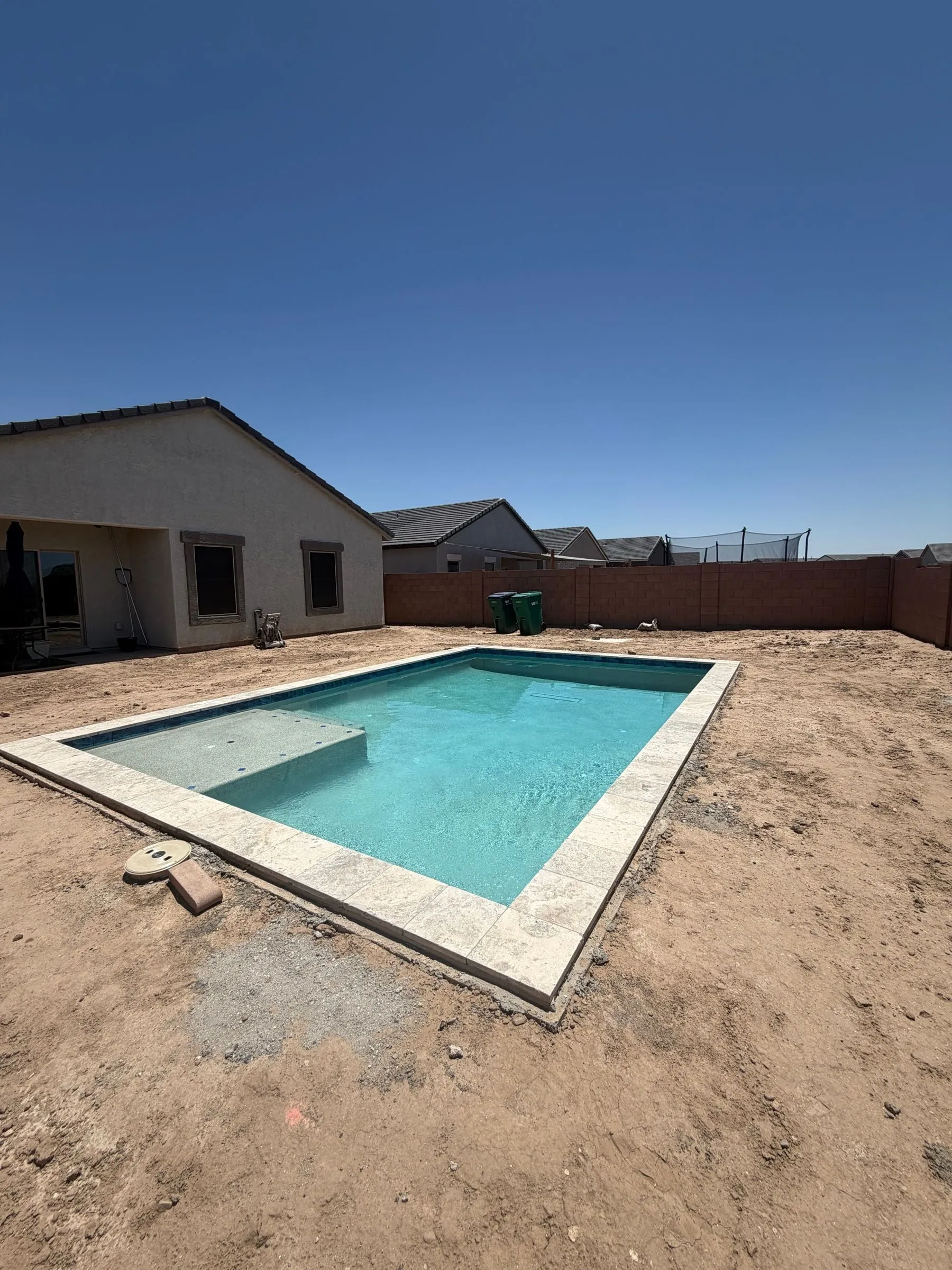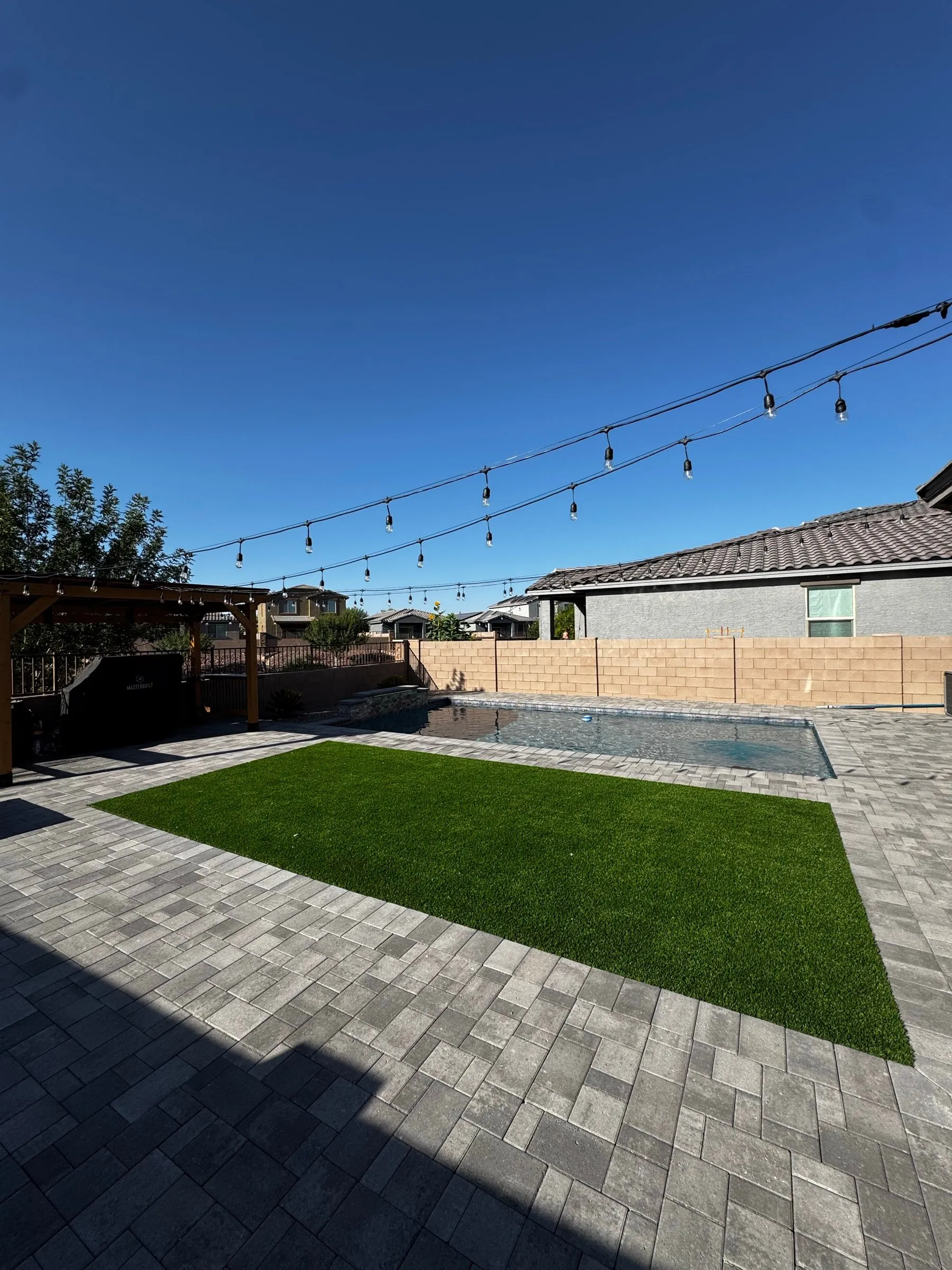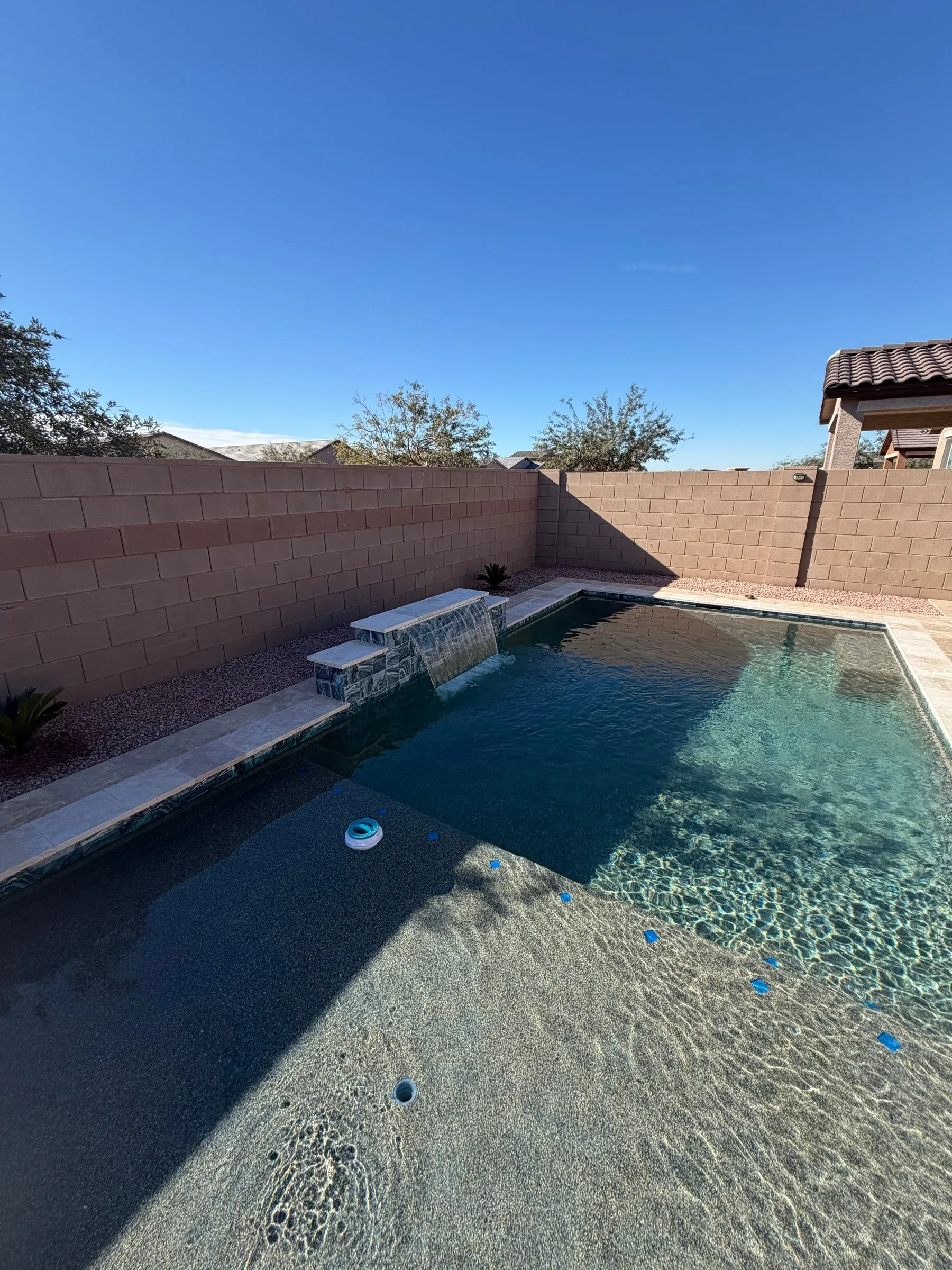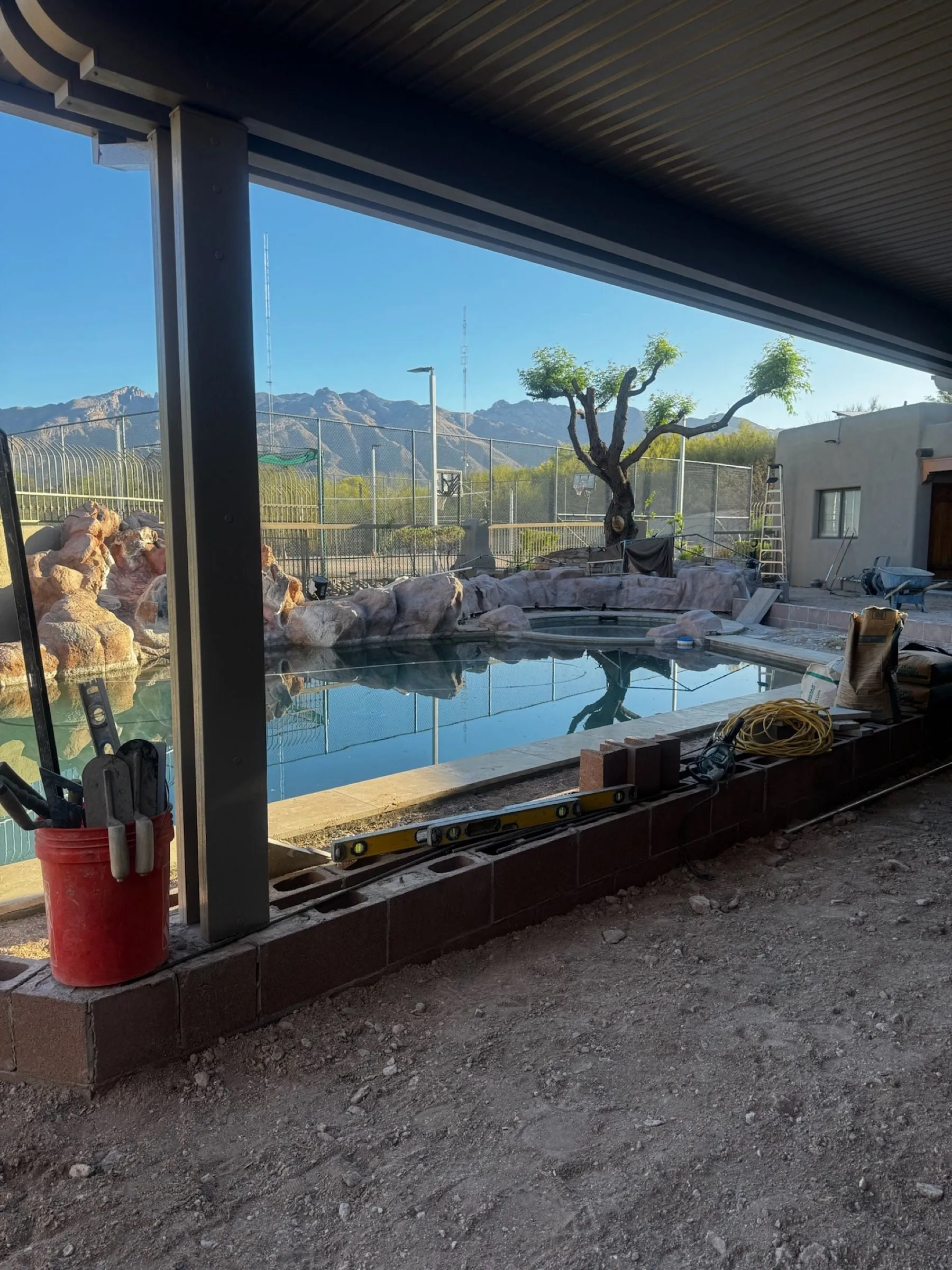
In the late 1920s, developer John Murphey bought land north of River Road and, working with architect Josias Joesler, laid out homes on large lots meant to keep the native desert, the natural terrain and the mountain views. Nearly a century later, that idea still defines the Catalina Foothills. The area runs from River Road north to the Coronado National Forest, between Oracle Road and Sabino Creek, and it remains unincorporated Pima County. For a pool, that history adds up to sloped ground, rock, washes, mature desert plants and a view worth framing.
Three reviews a foothills pool can need
On a flat subdivision lot, a pool usually needs one permit. In the foothills, it can need up to three separate reviews, and it helps to know which ones apply before you fall in love with a design.
1. The Pima County building permit. Every pool needs one. Pima County Development Services reviews the plans and inspects the build. The County’s barrier page points to chapter 3 of the 2018 International Swimming Pool and Spa Code. We go further and build every pool barrier to at least 5 feet under A.R.S. 36-1681. Our pool permits guide and pool barrier rules posts cover the basics.
2. Hillside review on steep lots. Pima County’s Hillside Development Overlay Zone, in Chapter 18.61 of the County code, covers slopes of 15 percent or greater on unincorporated parcels. On those lots, the County’s hillside checklist asks for a grading plan with the grading limits, existing and finished grades, slope stabilization methods, and the location of every structure, including fences, walls and the pool. If your lot is in the zone, we plan the grading and the pool together so they fit the limits.
3. Floodplain review near washes. The foothills are cut by washes running down from the Catalinas. The Pima County Regional Flood Control District requires a floodplain use permit for improvements in a regulatory floodplain, an erosion hazard area or mapped riparian habitat, and its list includes pools, walls and fencing. A regulatory floodplain includes land along any wash carrying a 100-year flow of 100 cubic feet per second or more, plus areas of sheet flooding.
None of these has to stop a project. They do affect where the pool can sit, how much grading is allowed and how long the permit stage takes, which is why we look at them on the first site visit.
Rock under the yard
The Santa Catalina Mountains are largely granite, and the foothills below them often have rock and caliche close to the surface. Hard digging is normal here, not a surprise. We own our excavation equipment, so we are not waiting on someone else’s machine, and we price the dig honestly up front. Our caliche guide explains what hard ground means for the schedule and the budget.
We only build concrete pools, shot as shotcrete. That matters on rocky, sloped ground because a concrete shell is formed to the site. A raised wall can hold the high side of a slope, a spa can step down to the pool, and a vanishing edge can use a drop that would be a problem for any pre-made shell.
Shaping the pool around the view
The best view on a foothills lot is often the Catalinas to the north or the city lights to the south, and it is not always where the back door points. A few approaches that work well here:
- A vanishing edge on the downhill side, so the water line meets the view. It needs a slope to work, and many foothills lots have one.
- A raised spa angled toward the mountains, set high enough to see over the deck from the water.
- Water level set from inside the house. We check sightlines from the living room as well as the yard, so the deck and any raised walls do not block the view you already have.
- A design that leaves the big plants alone. Mature saguaros, palo verdes and mesquites are part of why people live here. We plan the pool, deck and equipment pad around them where we can.
- Natural materials. Stone, travertine and earthy tile tones sit well against granite and desert. See our pool decks and luxury pools pages for ideas.
In VR you can stand where the spa will be and check the view before we dig.
Tucson Water outside the city limits
Even though the foothills are not in the City of Tucson, Tucson Water serves large parts of unincorporated Pima County, and the Catalina Foothills is one of the main areas it serves outside the city. If you are a Tucson Water customer, your pool fill comes from that system. Tucson Water customers in unincorporated areas have been the subject of separate rate decisions in recent years, so it is worth reading your own bill before you estimate a fill. Our post on what it costs to fill a pool in Tucson walks through it, and a pool cover is the best way to cut evaporation afterward.
Remodeling an older foothills pool
A lot of foothills homes already have a pool, some of them decades old. If the shell is sound, a remodel can change how it looks and works without starting over: new StoneScapes Mini Pebble interior, new tile and coping, a replaced travertine or paver deck, added deck jets or a fire feature. See our pool resurfacing page for finish options.
We are a family-owned company with our own crew and equipment. Every new pool gets a 3D design and VR walkthrough, a written line-item quote and a written warranty schedule. We are licensed under AZ ROC #352797 (KA-5 Dual Swimming Pool Contractor) and #342505 (CR-21).
Getting started in the Catalina Foothills
- Site visit. We walk the lot with you and note slope, rock, washes, access and where the best view is.
- Jurisdiction check. We confirm the parcel is unincorporated Pima County and look at hillside and floodplain maps.
- HOA check, if you have one. Some foothills neighborhoods have HOAs and some do not. If yours does, read its guidelines early.
- 3D design, VR walkthrough and line-item quote. Most new custom pools run about $40,000 to $120,000 or more. See our pool cost guide.
- Permits, then the build. We handle the County permit and any hillside or floodplain submittals.
Neighbors to the northwest can see our Oro Valley page.
Call (520) 342-8335 or request a free estimate, and we will come walk the lot.
Sources
- Catalina Foothills, Arizona (Wikipedia): unincorporated Pima County; John Murphey and Josias Joesler; large lots preserving desert vegetation, terrain and views; boundaries.
- Pima County: Barriers for Residential Pools / Spas: barriers per chapter 3 of the 2018 ISPSC.
- Pima County GIS: Hillside Development Overlay Zone impact areas: Chapter 18.61; slopes of 15 percent or greater on unincorporated parcels.
- Pima County: Hillside Development Checklist: grading plan items, including pool location.
- Pima County Regional Flood Control District: Floodplain Use Permit Application Guide: pools listed; regulatory floodplain definition; riparian habitat.
- KGUN 9: City proposes water rate hike for unincorporated Pima County: Catalina Foothills named as a major Tucson Water service area outside city limits.
- Santa Catalina Mountains (Wikipedia): granite.