Artificial turf in Tucson gives you a green, soft area with no mowing and no regular irrigation, but it gets hot in direct sun, needs a well-drained base and still needs some upkeep. We install 82 oz turf, a dense, full product, and we place it where it gets afternoon shade and pair it with pavers or travertine for walking paths. Here is what to know before you pick a product.
What does 82 oz mean on artificial turf?
The number is the face weight. MSI, which makes the Evergrass line of artificial turf, defines face weight as the weight of the fibers per square yard and calls it an indicator of density and durability.
In plain terms:
- Face weight counts only the grass blades (the yarn), measured in ounces per square yard.
- Total weight adds the backing and, on some products, infill. It is always higher than face weight, so do not compare one product’s total weight to another product’s face weight.
- Pile height is how tall the blades are. MSI notes that shorter piles suit sports, and taller piles suit lawns.
So 82 oz turf has 82 ounces of yarn in every square yard. More yarn means blades that stand up better, a fuller look and better wear in busy areas. Lower face weight products cost less but can look thin and mat down faster where kids and dogs run.
When you compare bids, ask each installer for the product name, face weight, pile height and warranty in writing.
Does artificial turf get hot in Tucson?
Yes, and it is the most important thing to understand before you buy.
Researchers from UNLV and the Desert Research Institute measured artificial turf in Las Vegas and found maximum surface temperatures as high as 169 degrees F. In that 2008 study, green artificial turf ran about 69 degrees hotter than irrigated natural grass. The lead researcher suggested looking at more reflective colors and comparing products before buying. Tucson summers are similar, so expect turf in full afternoon sun to be too hot for bare feet in June and July.
How to live with the heat:
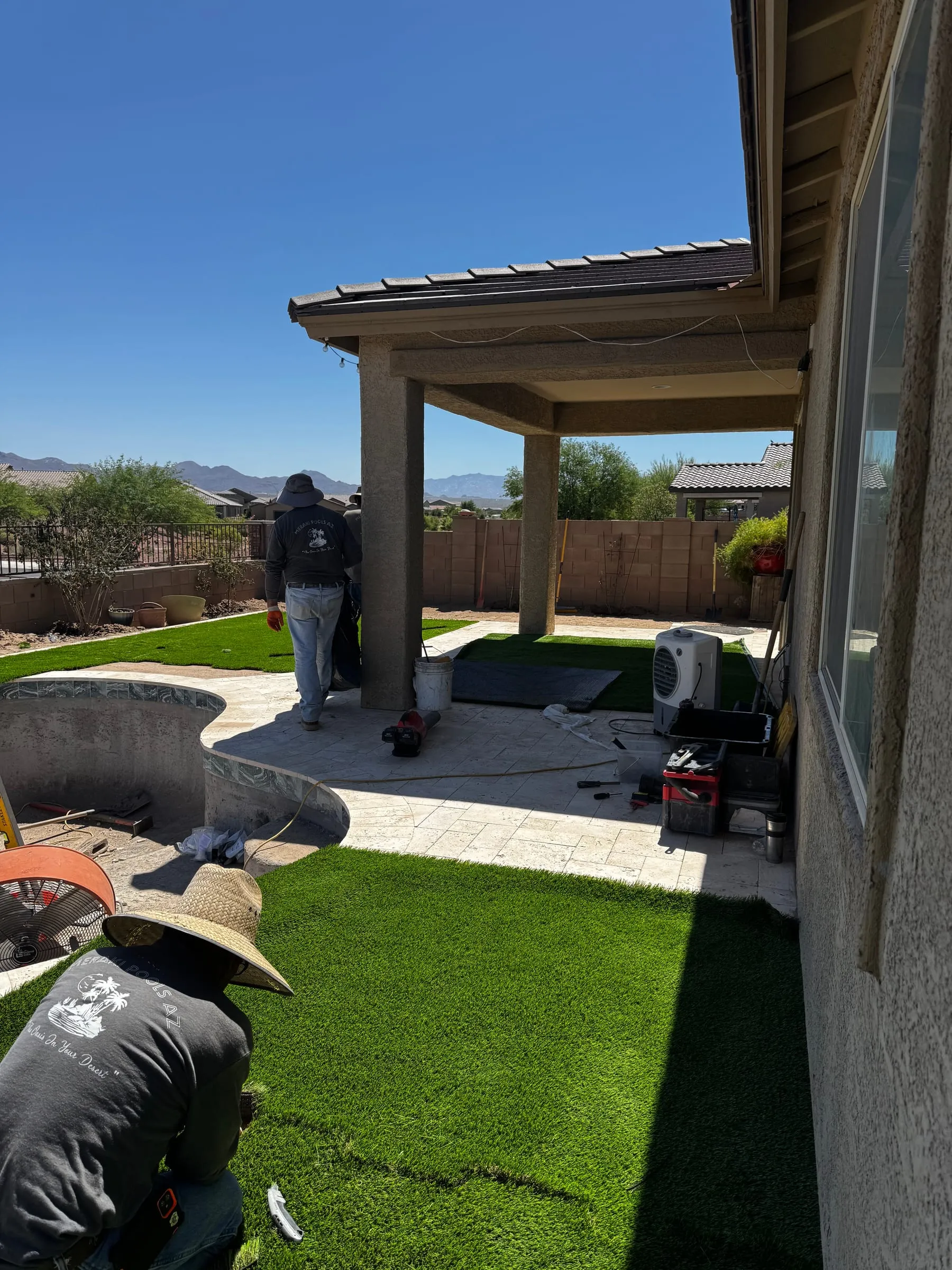
- Place turf in afternoon shade. The east side of the house, under a covered patio edge, or near shade trees.
- Keep paths on pavers or travertine. Use turf for play and lounging zones, not the main route from the door to the pool.
- Plan summer play for mornings and evenings.
- Ask about heat-reducing products. Some turf and infill products are designed to run cooler. Compare them during design.
- A quick rinse helps briefly. It cools the surface for a short time, but it does not last in full sun.
Our pool landscaping and turf page shows how we lay out turf with shade and decking in mind.
What is infill and do you need it?
Infill is material brushed down between the turf blades. It holds the blades upright, adds weight so the turf stays in place, and protects the backing from the sun.
Common types:
- Silica sand. The basic option. Adds weight and support.
- Coated sand. Sand with a coating that resists bacteria. A common choice for pet areas.
- Pet or odor-control infill. Designed to help with urine odor in dog runs and side yards.
- Cooling infill. Some products are designed to hold moisture or reflect heat to lower surface temperature for a while.
Infill slowly settles and washes out over time, especially after big monsoon rains, so it needs topping off now and then.
Why does the base matter so much?
Turf is only as good as what is under it. A poor base leads to dips, puddles, wrinkles and odor.
A good Tucson turf base includes:
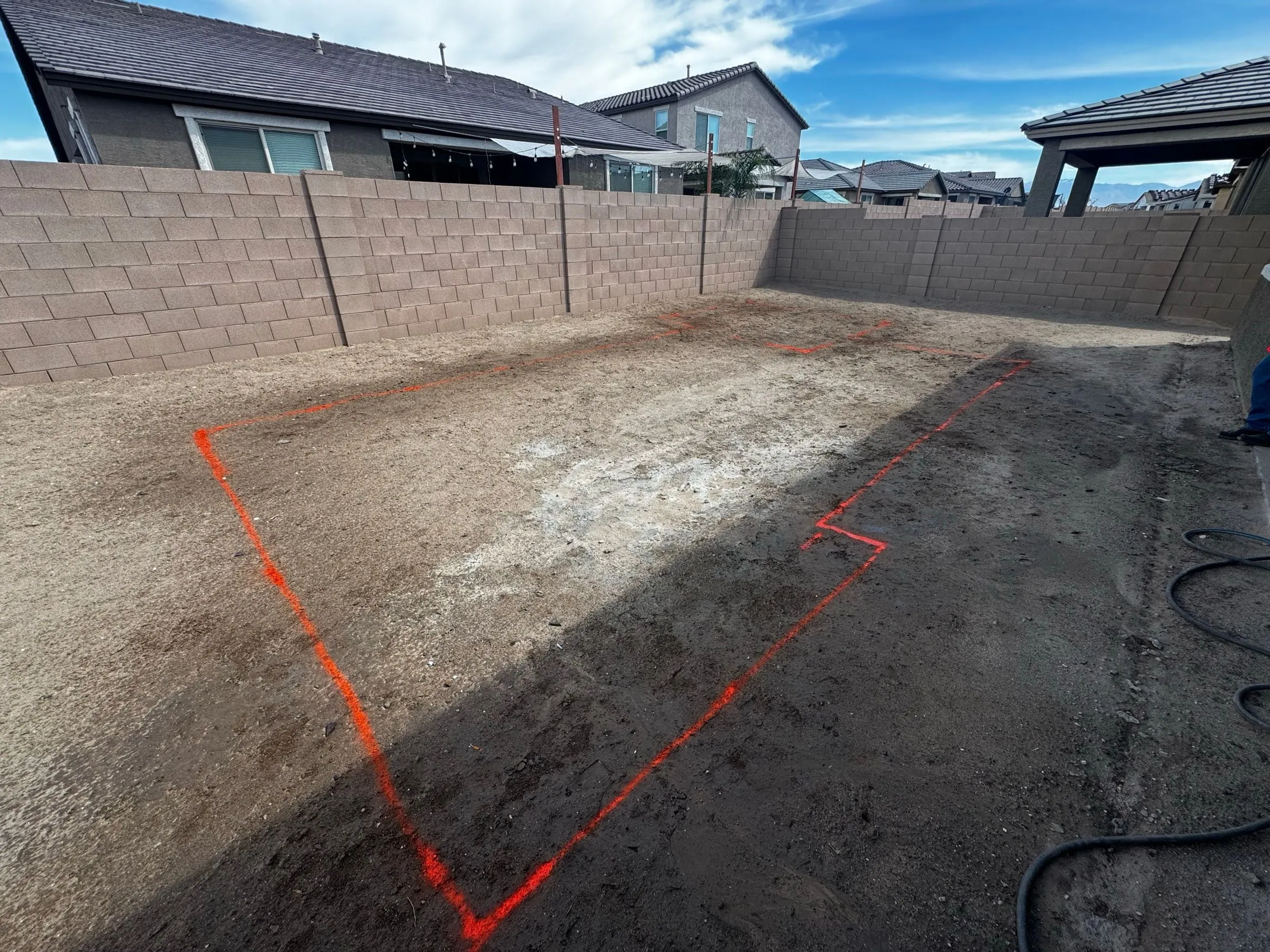
- Removing existing grass, roots and loose soil. Weeds and Bermuda grass will push up through a weak base.
- A compacted aggregate base graded smooth and firm.
- Slope for drainage. Turf backing is perforated so water passes through, but the base must carry it away. Grade away from the house, the pool and the patio.
- Solid edges. Turf edges are secured along pavers, curbing or bender board so they do not lift.
- Seams that are cut and glued with care so they disappear and do not open up in the heat.
Caliche and hard native soil can slow drainage under turf. During monsoon season, we want water to move through the turf and away, not sit under it. Our crew grades and compacts the base and installs the edges as part of our hardscape and landscaping work.
Is artificial turf good for pets?
For many Tucson dog owners, turf solves real problems: no mud tracked into the house, no dead brown spots and no holes from digging.
To keep it pleasant:
- The base must drain well so urine passes through quickly.
- Rinse pet areas often, more in summer when heat makes odors stronger.
- Pick up solid waste daily and rinse the spot.
- Use pet-friendly infill and an enzyme cleaner when needed.
- Give dogs shade. Hot turf is hard on paws, just like hot concrete.
Can you put artificial turf around a pool?
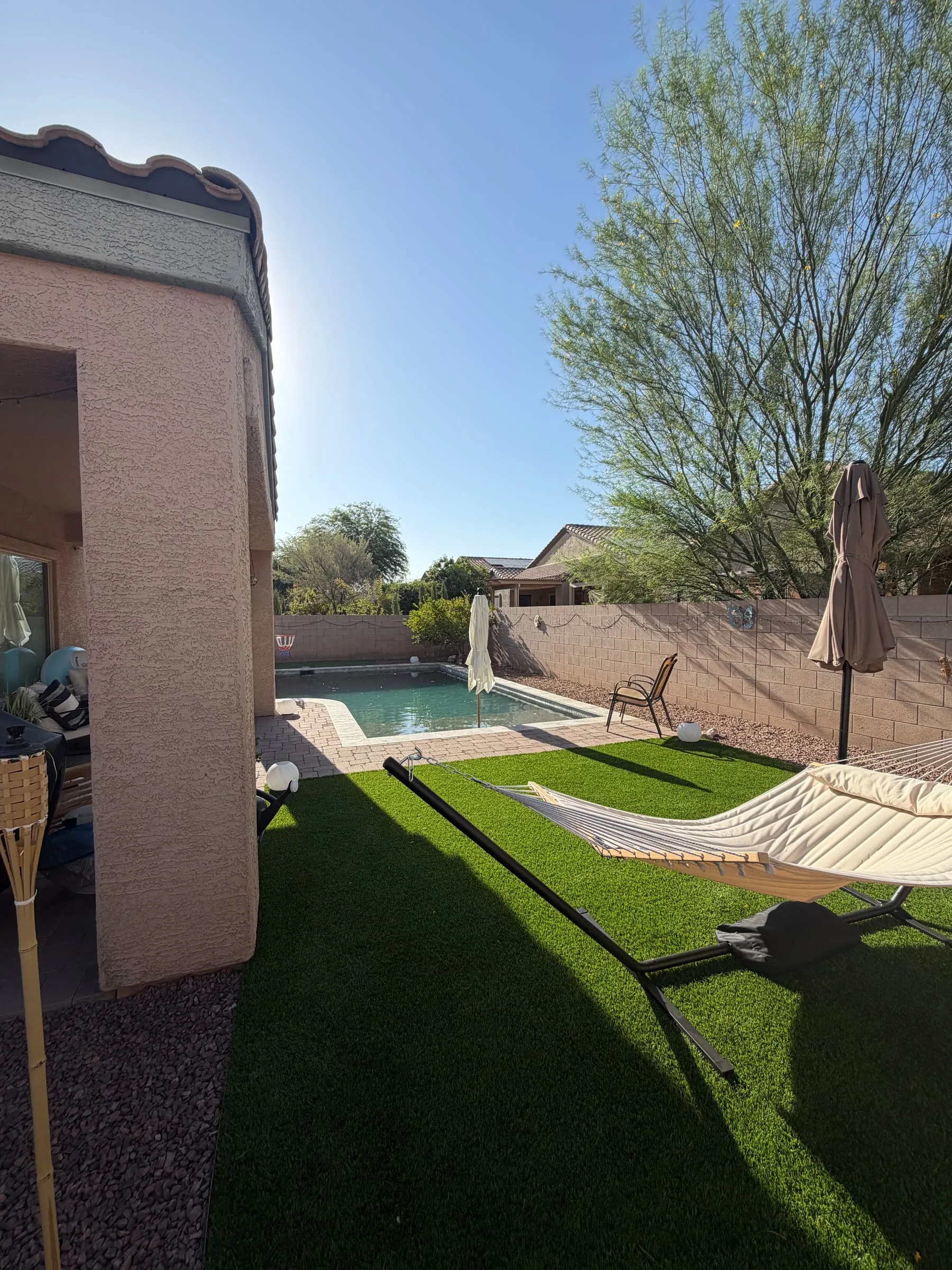
Yes. Turf around a pool is one of the most common requests we get, and it works well with a few details.
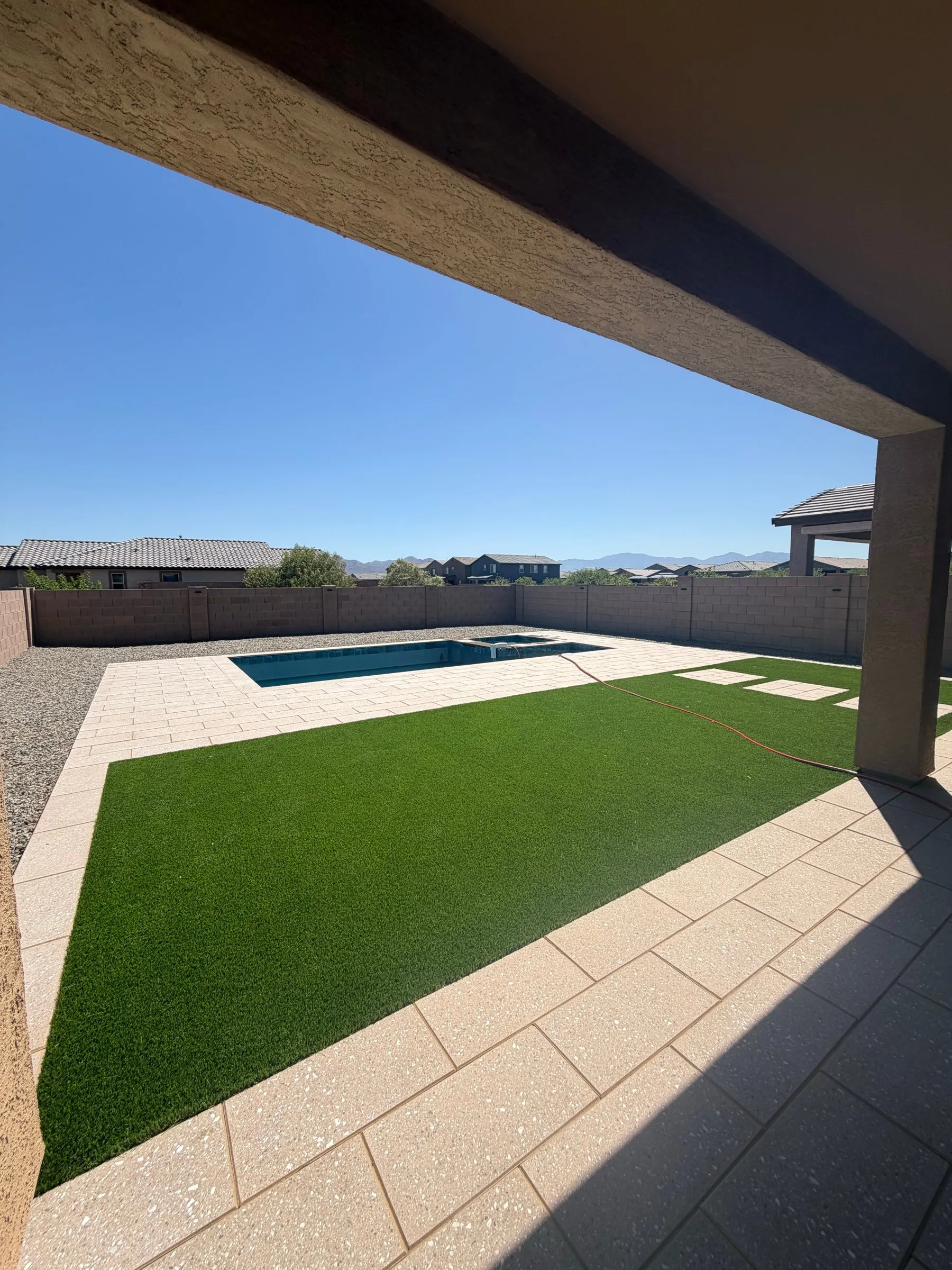
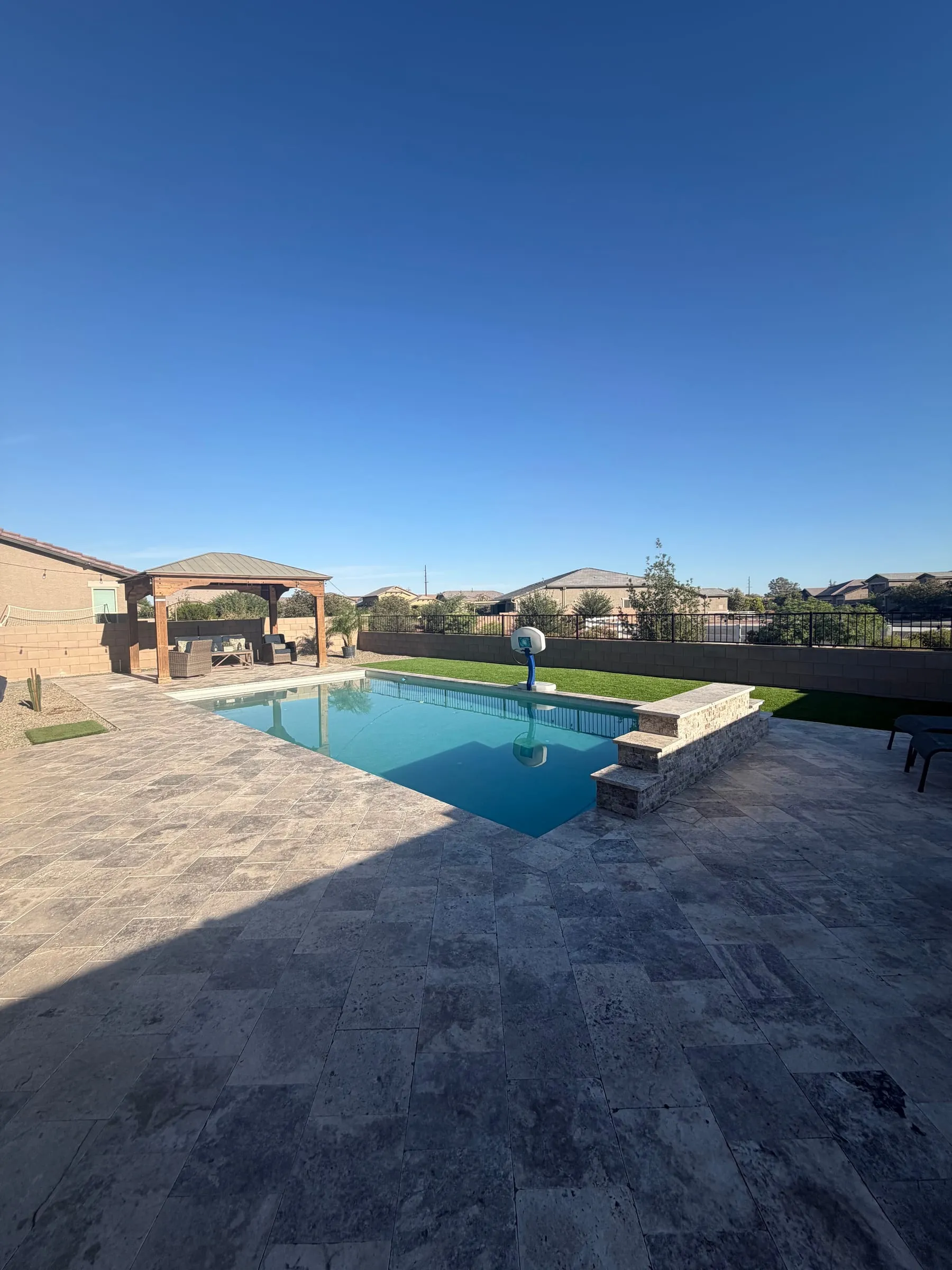
- Keep a deck band between the water and the turf. Pavers or travertine next to the coping stop wet feet from tracking infill into the pool.
- Drain away from the water. The turf base should never slope toward the pool.
- Mind chemicals and splash. Pool water splashing onto turf is normal. Rinse turf near the pool from time to time.
- Leave room for the pool barrier. Arizona requires pool barriers of at least 5 feet. Turf does not affect that, but planters or furniture near the barrier can. See our pool barrier rules guide.
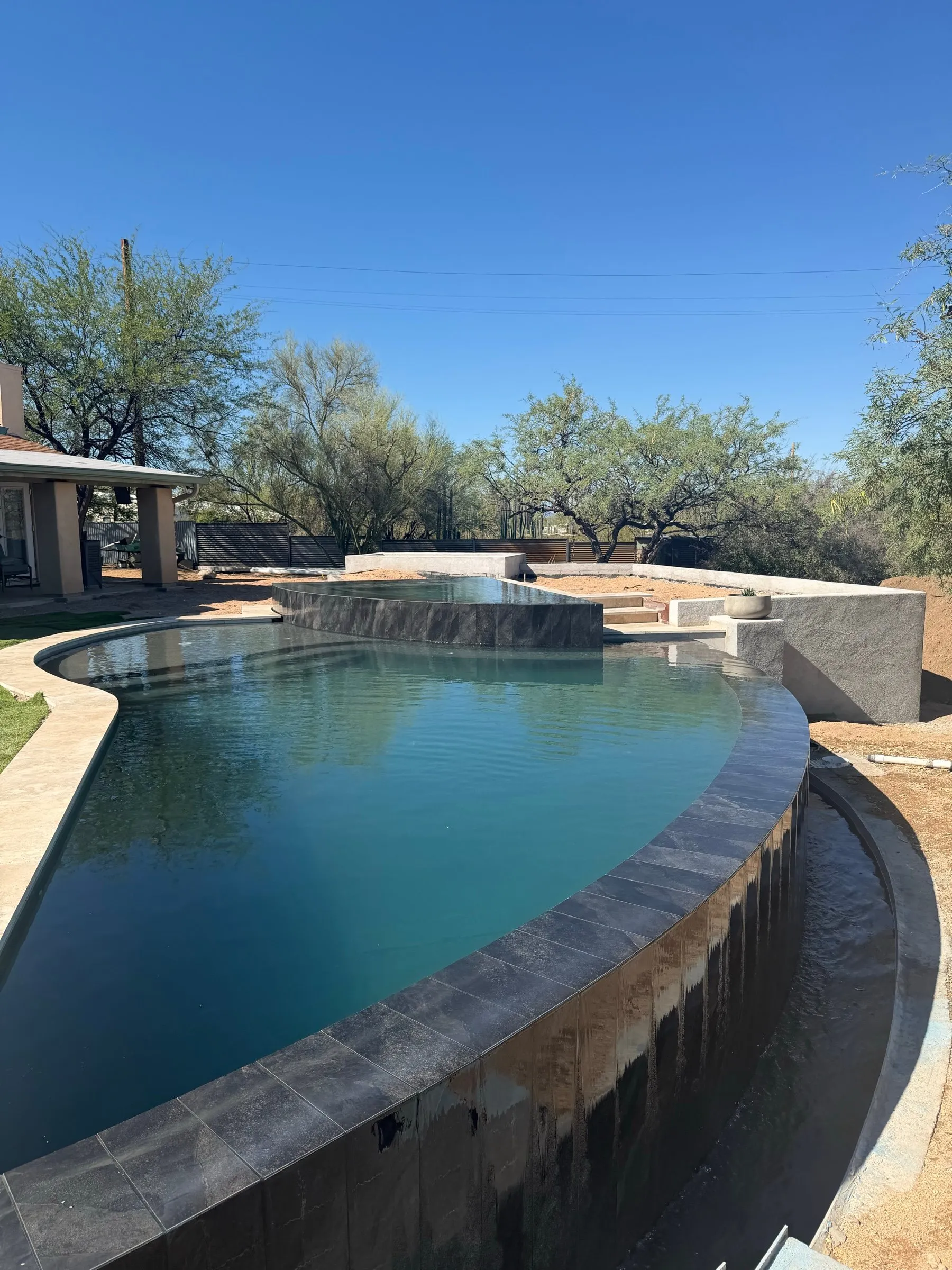
You can see 82 oz turf alongside light Artistic Pavers decks in our Gladden Farms pool and attached spa and Marana raised spa and fire trough projects, and with travertine in our southeast Tucson pool with a stone and tile wall.
Turf vs grass in Tucson: which is better?
| Artificial turf | Natural grass | |
|---|---|---|
| Water | No regular irrigation; occasional rinsing | Needs regular watering most of the year |
| Summer feel | Gets very hot in full sun | Stays cooler when watered |
| Upkeep | Brushing, rinsing, debris removal, infill top-off | Mowing, edging, fertilizing, overseeding |
| Mud and bare spots | None | Common in shade and dog areas |
| Pool cleanliness | No clippings | Clippings blow into the pool |
| Up-front cost | Higher | Lower |
Water is the big reason Tucson homeowners switch. Once installed, turf does not need the regular irrigation a lawn does. Even the UNLV researcher who measured the heat said the water savings of artificial turf cannot be disputed.
One thing to know: Tucson Water’s turf removal rebate is for commercial and multifamily customers, and its guidelines say replacement artificial grass will not be rebated. Do not count on a rebate for a residential turf project.
If you want the lowest water use of all, mix turf with desert plants on drip. Our guide to xeriscape landscaping in Tucson explains how.
How do you maintain artificial turf in Tucson?
Turf is low maintenance, not no maintenance.
- Blow or rake off leaves and debris, especially after monsoon wind.
- Brush the blades against the grain a few times a year to keep them standing.
- Rinse dust and pollen, and rinse pet areas more often.
- Top off infill in high-traffic areas when it gets thin.
- Pull any weeds that sprout at edges or seams.
- Keep sharp or hot objects off it. Grill embers, fire pit sparks and some lounge chair feet can melt or mark the fibers.
How long does artificial turf last?
There is no single number. Life depends on the product’s UV protection, face weight, traffic, pets and care. Arizona sun is hard on every outdoor material. Ask for the manufacturer’s warranty in writing, keep the infill topped off and brush it regularly.
Plan your turf with your pool and yard
We plan turf in the same 3D design as your pool, deck and planting beds, so you can see where shade falls and where paths run before we build. Learn more about our landscape design work or browse our hardscaping projects.
Meraki Pools AZ is a family-owned Tucson pool and hardscape builder, licensed under AZ ROC #342505 and #352797. Call (520) 342-8335 or request a free estimate.
Put this guide to work
Planning your own project? See our Pool Landscaping, Turf & Irrigation in Tucson, or read about building a pool in Marana or Gladden Farms.
Frequently asked questions
What does 82 oz turf mean?
It is the face weight, the weight of the turf fibers in one square yard, measured in ounces. It does not include the backing or infill. A higher face weight means more yarn per square yard, so the turf looks fuller and holds up better to foot traffic.
Does artificial turf get too hot in Tucson?
It can get very hot in direct summer sun. A UNLV and Desert Research Institute study measured artificial turf surfaces as high as 169 degrees F in Las Vegas. Place turf where it gets afternoon shade, keep main walking paths on pavers or travertine, and plan play time for mornings and evenings in summer.
Is artificial turf good for dogs?
Many Tucson dog owners use it because there is no mud and no dead spots. The base must drain well so urine passes through, and the turf should be rinsed regularly. Pet-specific infill and an occasional enzyme cleaner help control odor in hot weather.
Can you put artificial turf next to a pool?
Yes. We usually keep a band of pavers or travertine between the water and the turf so wet feet do not track infill into the pool. The turf base is graded to drain away from the pool and the deck.
Does Tucson Water give a rebate for artificial turf?
Not under its turf removal program. Tucson Water's turf removal rebate is for commercial and multifamily customers, and its guidelines say replacement artificial grass will not be rebated. Check the city's current rebate pages before you plan around any rebate.
How long does artificial turf last in Arizona?
It depends on the product, the UV protection in the fibers, how much traffic it gets and how well it is maintained. Strong sun is hard on any outdoor material. Ask for the manufacturer's warranty in writing and keep up with brushing and rinsing to get the most life from it.