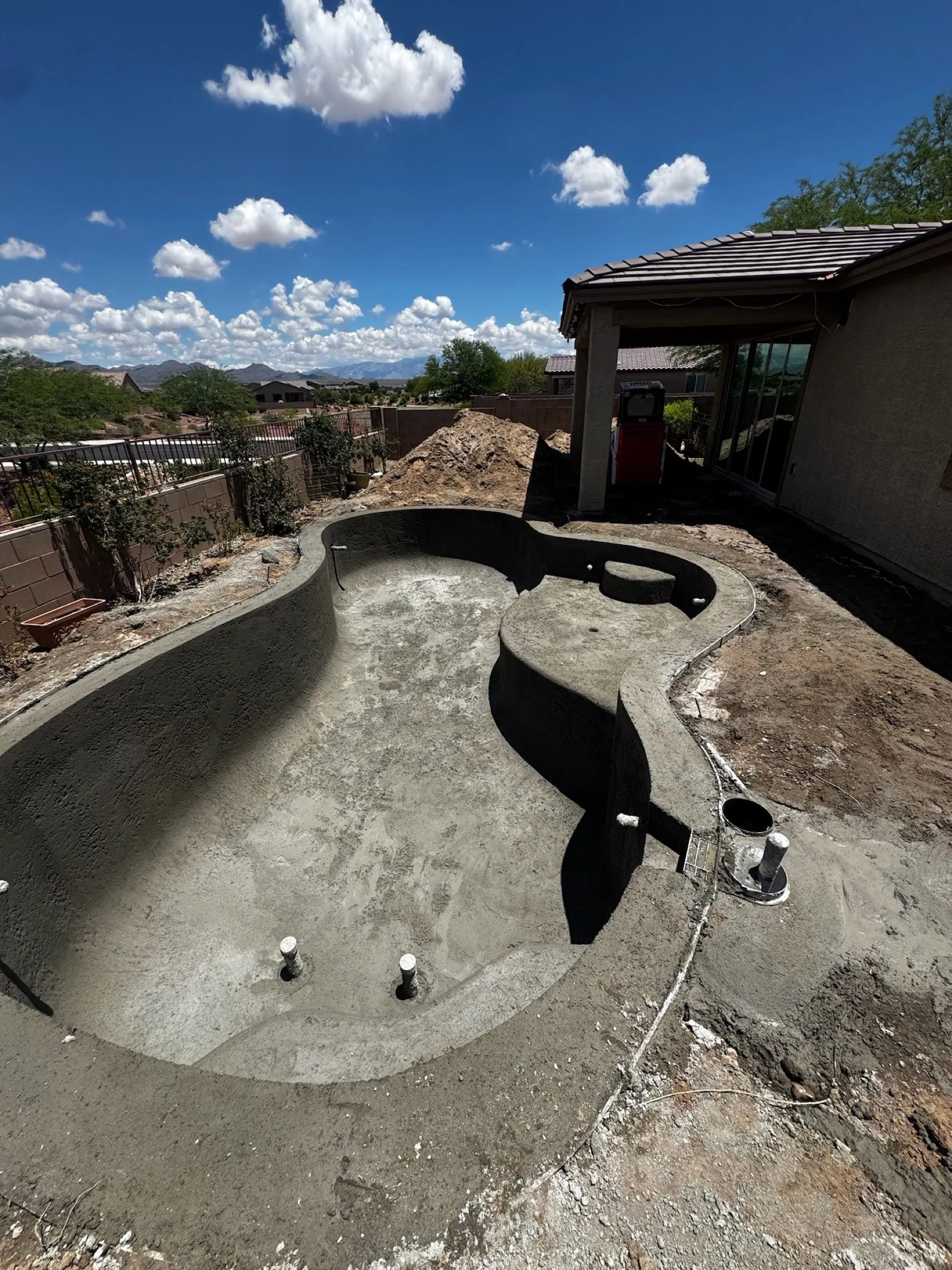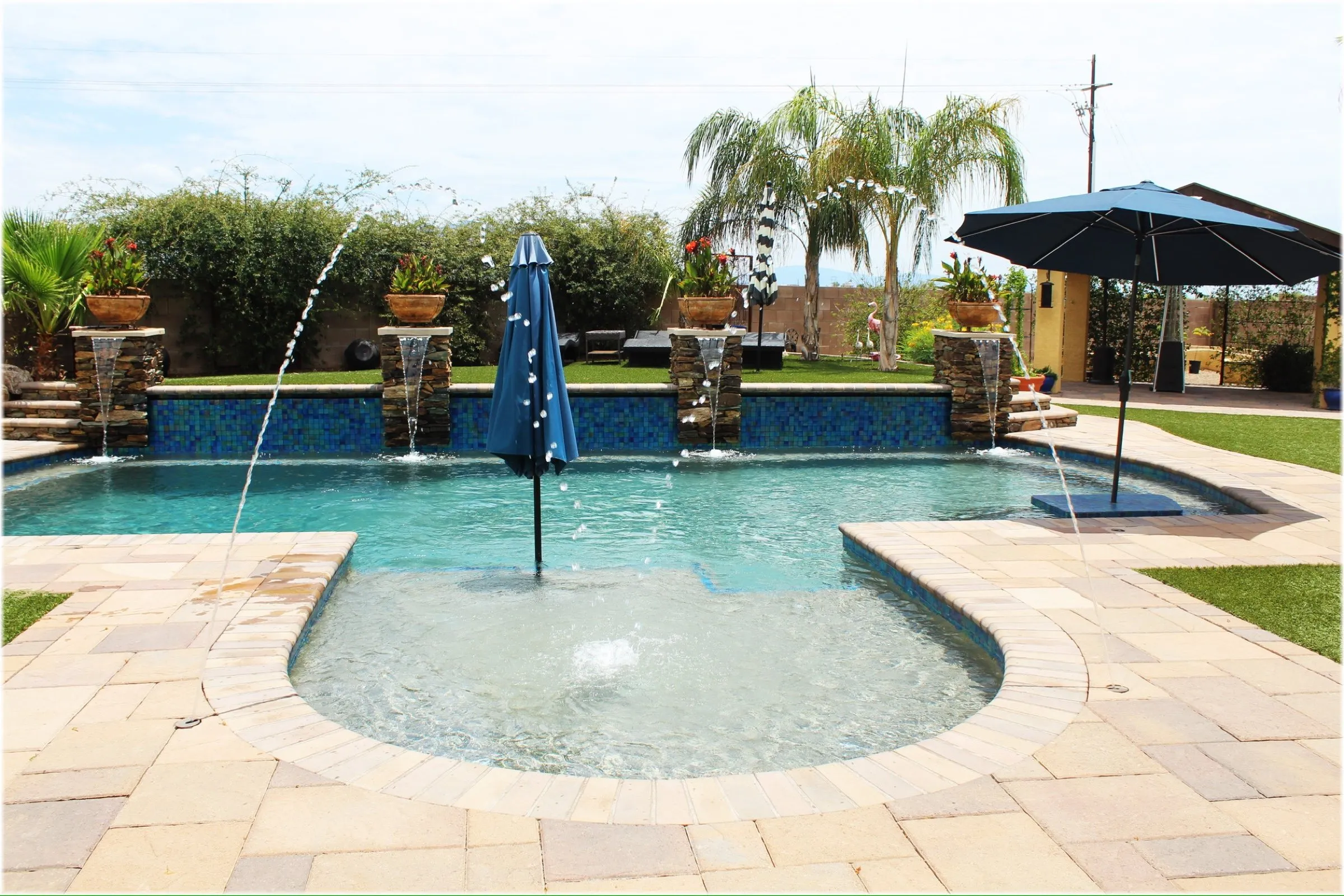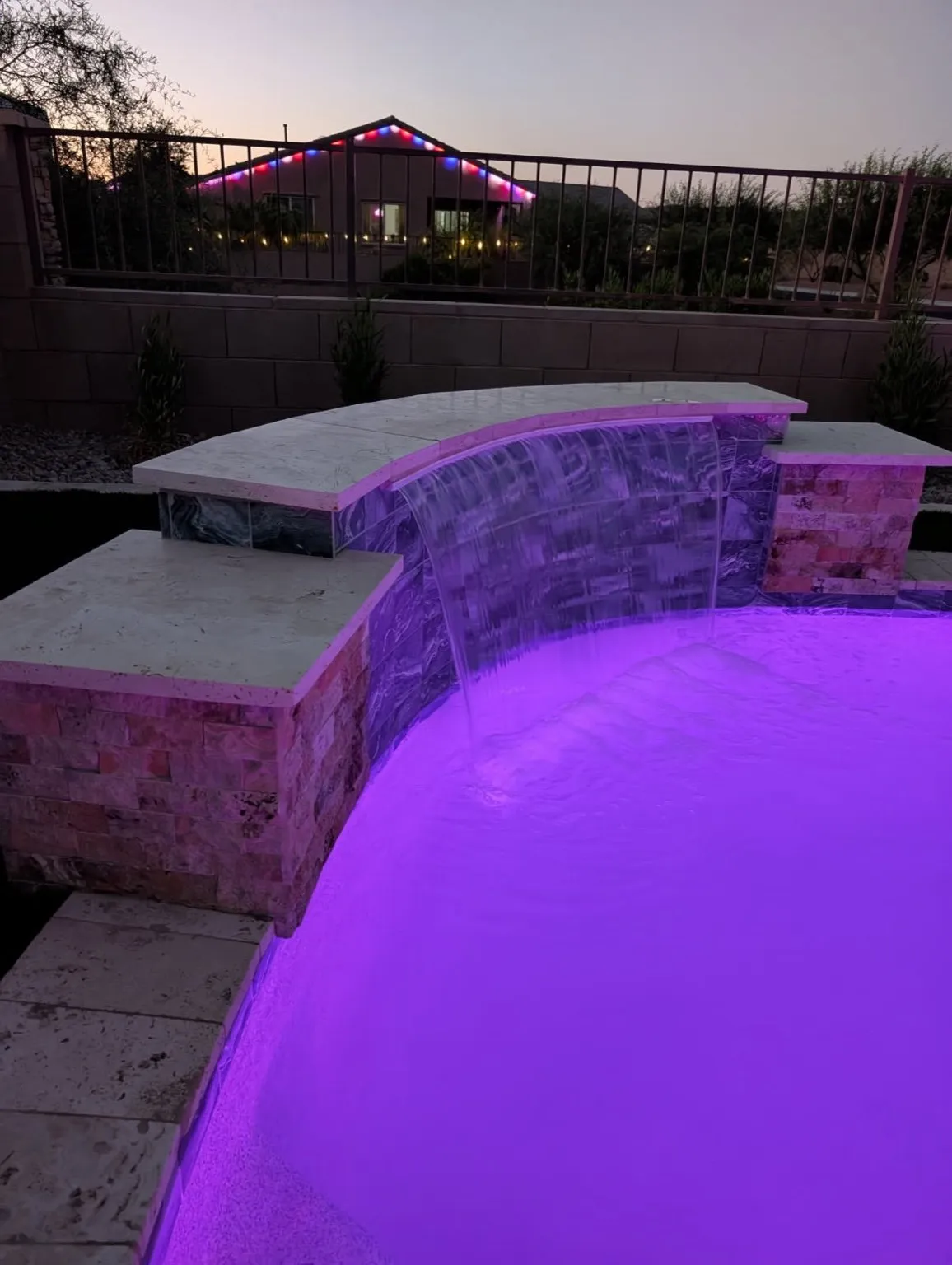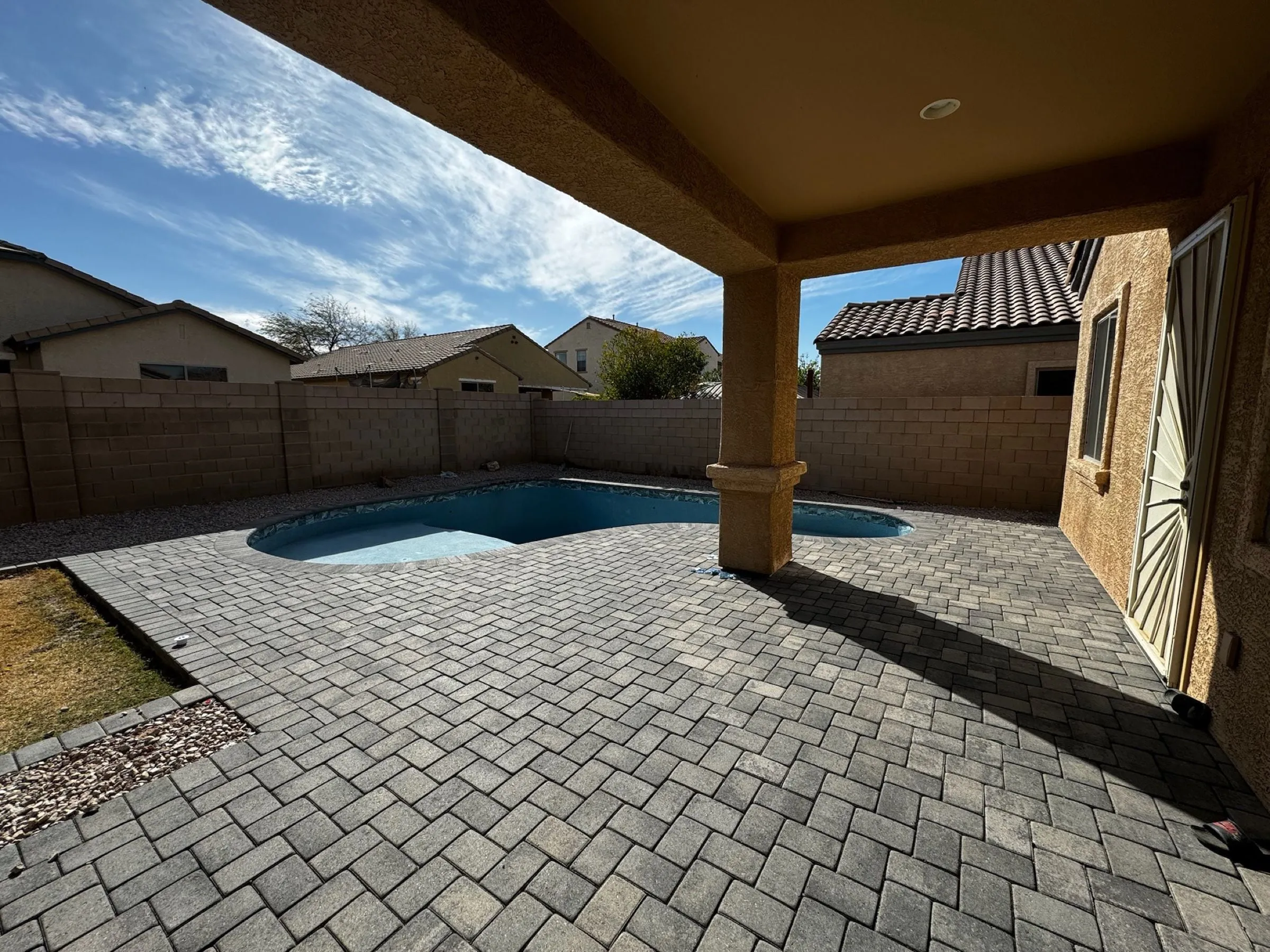
A custom pool is designed around your yard, your family and how you plan to use it, instead of being picked from a short list of set shapes. In Tucson, that usually means a gunite or shotcrete pool with a shape, depth, seating, spa and features chosen for you. At Meraki Pools AZ, we measure your yard, design the pool in 3D, let you walk through it in VR, and then give you a line-item quote before anything is built.
“Custom” gets used a lot in our industry. This guide explains what it should mean, what choices you will actually make, and the questions worth answering before you sit down with any pool builder in Tucson.
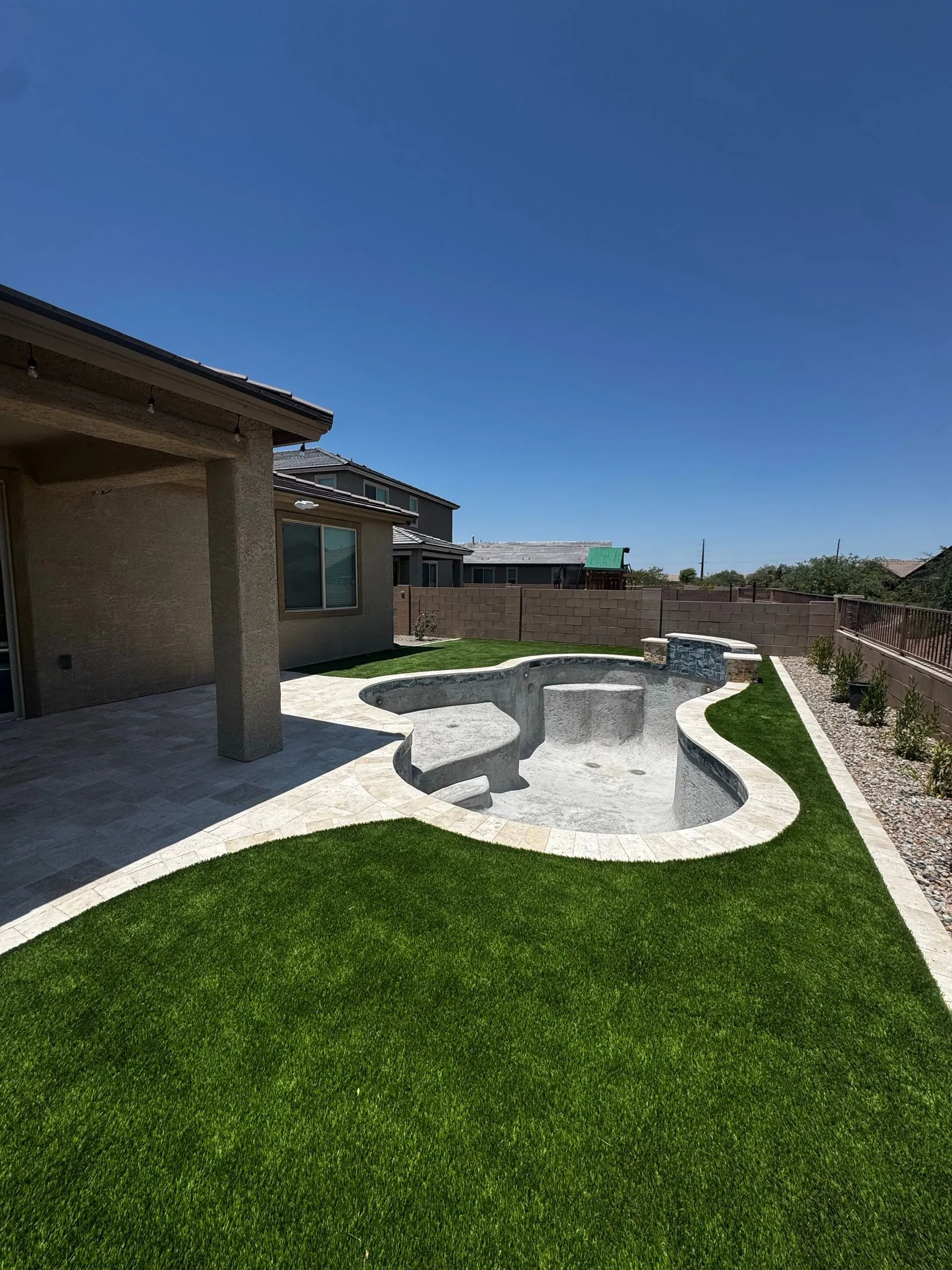
Gunite vs fiberglass in Tucson: which one is “custom”?
Most in-ground pools in Southern Arizona are built one of two ways. Here is how they compare.
| Pool type | How it’s built | Pros | Trade-offs |
|---|---|---|---|
| Gunite / shotcrete (concrete) | Steel rebar frame, sprayed concrete shell, then tile, coping and an interior finish | Any shape, size or depth; benches, ledges, spas and features built right in; fits odd lots and slopes | Longer build; interior finish will need resurfacing someday |
| Fiberglass | One-piece factory shell set into a dug hole | Faster install; smooth surface | Set shapes and sizes; width limited by what can be trucked; fewer built-in options |
| Pre-designed “package” concrete pools | Concrete, but from a fixed menu of layouts | Simple to pick | Not really designed for your yard; extras added later can look tacked on |
When we talk about custom pools in Tucson, we mean the first row, and it is the only kind of pool we build. Meraki Pools AZ does not install fiberglass pools. A concrete shell lets the pool follow your yard, not the other way around. That matters on pie-shaped lots, yards with a slope, or spaces that need to work around a patio cover, a tree or a view.
The concrete shell also gets a finish on the inside. We use StoneScapes Mini Pebble finishes on our builds. If you are comparing finishes, our guide to pebble vs plaster vs quartz goes deeper.
If your yard has hard caliche (common around Tucson), that affects digging but not what you can design. We own our own excavation equipment, and we cover that topic in building a pool in caliche.
What pool shapes work best in Arizona backyards?
Shape sets the tone for the whole yard. Most designs fall into three groups.
Geometric
Rectangles, L-shapes and clean squares. Geometric pools look modern, pair well with contemporary homes and paver or travertine decks, and make lap swimming easy. They also make automatic covers and straight sheer descents simple to add.
Freeform
Curved, natural-looking edges. Freeform pools fit well with boulders, desert plants and a more relaxed, resort feel. They are handy for working around trees or odd property lines. We showed one in our freeform pool design post.
Freeometric
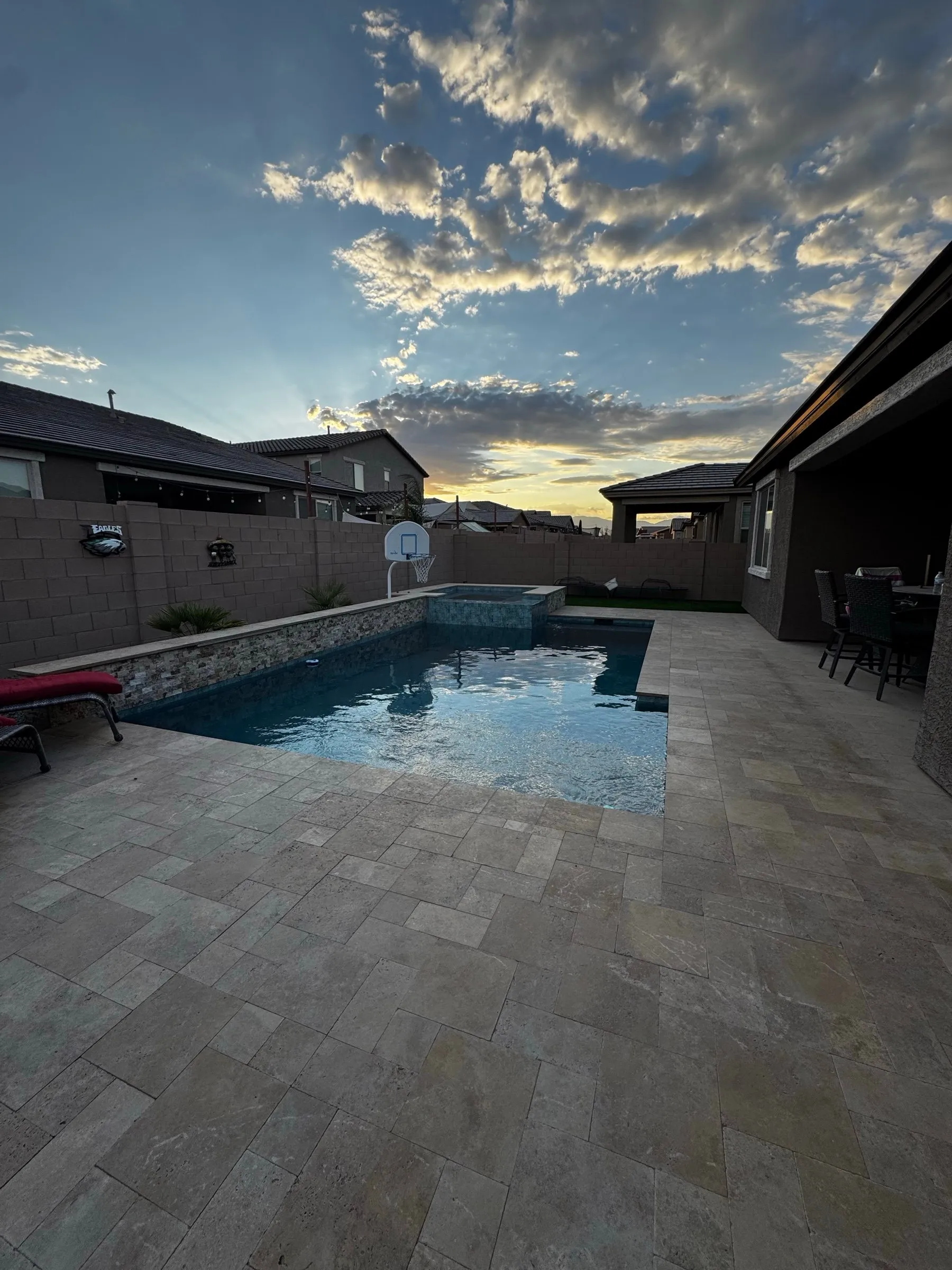
A blend of both. A common layout is a straight side along the house or patio with a soft curve on the far side. It is a popular choice because it looks clean up close but still feels at home in the desert.
You can browse layout ideas on our pool designs page and real builds in our gallery.
Depth, steps, benches and tanning ledges
Shape is what people notice first. How the pool feels to use comes from what is under the water.
- Depth. Many families now choose a “play pool” that stays at standing depth, or a gentle slope to a moderately deep end. Deep diving ends take more water and more digging, so only plan one if someone will really use it.
- Steps. Wide, full-width steps are easy for kids and older guests. Corner steps save swimming space. Wedding-cake (rounded, tiered) steps add a nice look to freeform pools.
- Benches. A built-in bench along a wall gives adults a place to sit and talk while kids swim. Benches in the deep end make it feel safer for new swimmers.
- Tanning ledges and baja shelves. A shallow, flat shelf, often just a few inches deep, where you can set a lounge chair in the water. This is one of the most-used spots in an Arizona pool. You can add bubblers and an umbrella sleeve for shade. See more in our pool water features guide.
Should I add a spa to my custom pool?
A spa is one of the most popular add-ons we build, and for good reason in Tucson. Winter nights get chilly, and a heated spa makes the backyard usable all year.
- Raised spa. Sits above the pool and spills over into it. It adds height, sound and a focal point.
- Flush spa. Level with the pool deck. It has a clean, open look and is easier for some people to step into.
- Spillover edge. The spa water flows into the pool, which keeps the two connected and adds a gentle waterfall.
Heating is a separate decision. Our pool heating guide compares heat pumps, gas and solar for Tucson.
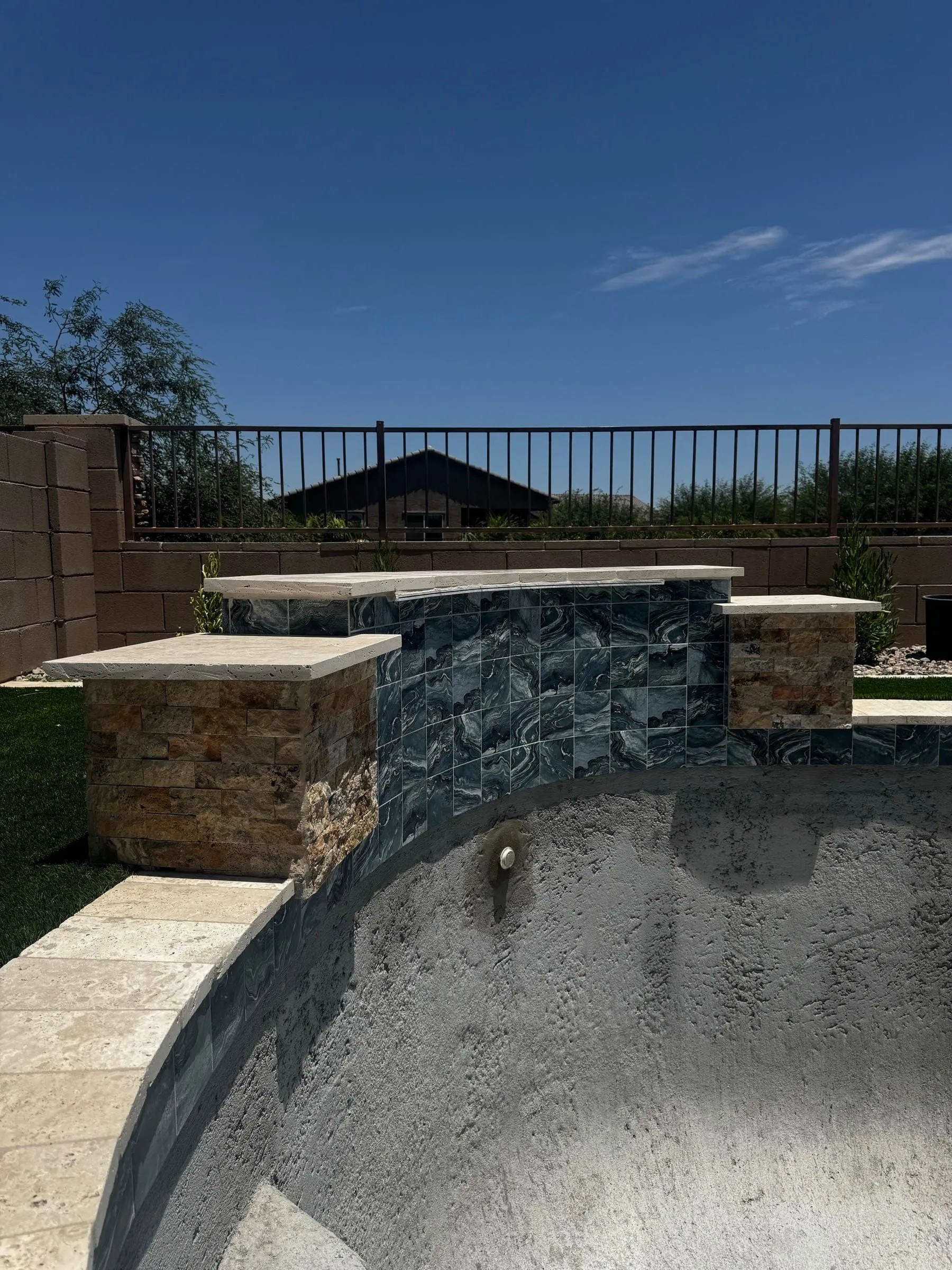
Water features, fire features and lighting
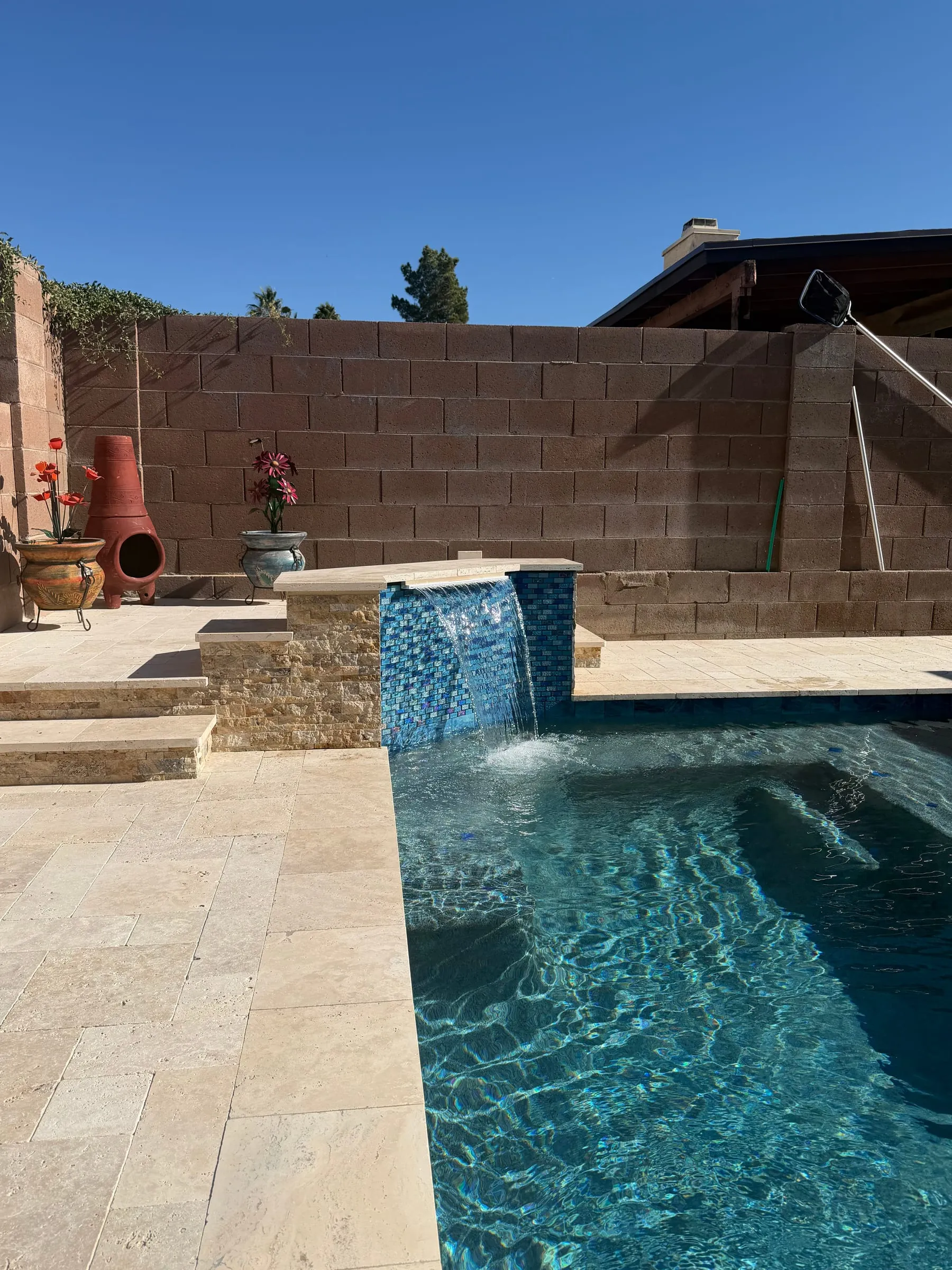
Features add movement, sound and night appeal. Common choices include sheer descents, scuppers, deck jets, bubblers and fire bowls. We use Luxe fire bowls and Pentair equipment on our builds. Each feature has plumbing, pump and gas needs that should be planned from day one, not added later.
Lighting and automation tie it all together. LED pool lights can change color, and a Pentair automation system lets you run pumps, lights, heat and features from your phone. Smart scheduling also helps keep pump run times in check during long Tucson summers.
Tile, coping and decking choices
These finishing materials make a big difference in how the pool looks and how hot the deck feels.
- Waterline tile. Runs around the top of the pool and hides the waterline. We offer tile from NPT, Aquabella and Bedrosians, from simple solid colors to glass and stone mosaics.
- Coping. The edge cap around the pool. Natural stone, travertine, pavers and poured concrete are common. Bullnose edges feel softer; squared edges look more modern.
- Decking. In Tucson, deck heat matters. Lighter colors and materials like travertine stay more comfortable on bare feet. We cover this in decking materials that beat the heat.
Our in-house crews handle tile, masonry and decking, so these details are built by the same team that built the shell.
How 3D and VR pool design works at Meraki
Here is how we take a custom pool from idea to a plan you can trust.
- On-site visit and measurements. We measure your yard, note slopes, access, utilities, the equipment location, setbacks and where the sun and shade fall.
- 3D rendering. We design the pool in 3D in your actual yard, with your shape, depths, steps, spa, features and materials.
- VR walkthrough. You can put on a headset and “stand” on your future deck. This is where people catch things a flat drawing misses, like a ledge that feels too small or a spa that blocks the view from the kitchen.
- Line-item quote. The final design turns into a quote that lists each part, so you can see what each choice adds and make trade-offs with real numbers.
From there, we handle the permits and inspections and build with our own crews. Read more about the design step in 3D, VR, IRL and see the full process on our step-by-step page.
Design questions to answer before you meet a pool builder
You do not need answers to everything, but thinking about these first will make your design meeting more useful.
How will you use the pool most?
Laps, kids splashing, floating with a drink, or hosting big groups? A family with young kids may want a large shallow area and a big tanning ledge. Someone who swims for exercise may want a long straight run.
Where do sun and shade fall?
In Tucson, afternoon sun from the west is strong. A ledge in full afternoon sun may be too hot in July. An umbrella sleeve built into the ledge, or placing the ledge where the house shades it in the afternoon, can help. We look at the sun path during our site visit.
What can you see from inside the house?
Most people see their pool from the kitchen or living room more than they swim in it. Placing the spa or a feature where you can enjoy it from indoors is a simple win.
Are there HOA rules or setbacks?
Many Tucson-area neighborhoods have HOAs that require architectural approval. Check your HOA’s guidelines early. Your city or town also sets setbacks and permit rules, and Arizona has pool barrier requirements. See our Tucson pool permits guide and Arizona pool barrier rules.
What views do you want to frame?
If you can see the Catalinas, the Tucson Mountains or a sunset sky, design the pool and seating to face them. A raised spa or a sheer descent can also block a view, so placement matters.
What is your budget range?
A rough range helps us show you what fits and where to spend first. Our pool cost guide explains the main cost drivers, and our financing page covers options through Lyon Financial and Credit Union West.
Is your yard small?
Custom does not have to mean big. Many of our favorite designs are compact. See small pools, plunge pools and spools for ideas.
Why work with a custom pool builder in Tucson who builds in-house?
When one team designs and builds the pool, the design stays buildable. Meraki Pools AZ is family-owned and hands-on. We are licensed under AZ ROC #342505 and #352797, we own our excavation equipment, and our own crews handle excavation, steel, masonry, tile and decking. As one client, Kendra H., put it in her Google review: “Carlos and his team actually did the work.”
If you are curious about timelines, see how long it takes to build a pool in Tucson.
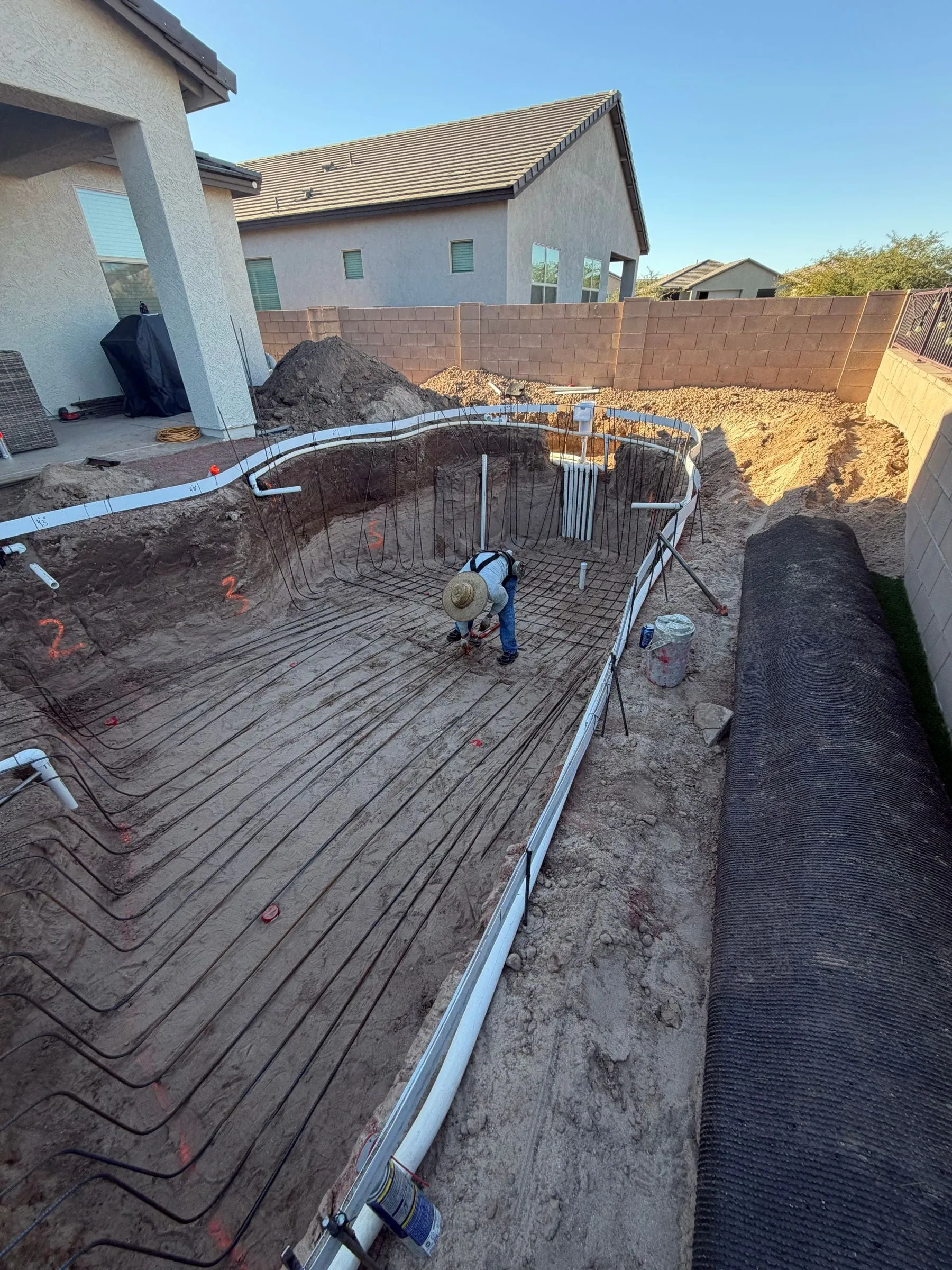
Ready to design your custom pool?
If you want a pool designed for your yard and the way you live, let’s start with a site visit and a 3D design. Contact us or call (520) 342-8335 to set up your consultation. We build across Tucson, Marana, Oro Valley, Vail, Sahuarita and nearby communities.
Put this guide to work
Planning your own project? See our Custom Pool Construction in Tucson, Pool Decks: Travertine & Pavers in Tucson and Custom Spas & Pool-Spa Combos in Tucson, or read about building a pool in Marana, Oro Valley or Vail.
Frequently asked questions
Is a gunite pool better than a fiberglass pool in Tucson?
Neither is better for every yard. Gunite or shotcrete lets you pick any shape, size, depth and feature, which helps on odd-shaped or sloped Tucson lots. Fiberglass shells install faster but come in set shapes and sizes that have to fit on a truck. If you want a design that fits your yard instead of a catalog, concrete is the way to go. It is the only type of pool we build; we do not install fiberglass.
What is a freeometric pool?
A freeometric pool mixes straight lines and curves. For example, one long straight side might run along a patio while the far side curves around a planter. It gives a modern look that still feels relaxed, and it works well in desert landscapes.
How deep should a custom pool be?
Most families today choose a play pool that stays around standing depth the whole way, or a pool with a gentle slope to a moderately deep end. Very deep diving ends are less common now. Think about who swims most often, whether anyone wants to dive, and how much water you want to heat and treat.
Do I need HOA approval before building a custom pool?
If you live in a community with an HOA, you almost always need architectural approval before work starts. Most HOAs want to see a site plan and sometimes material colors. Check your HOA's architectural guidelines early so the approval does not hold up your permit.
What does a 3D pool design include?
Our 3D design shows your pool in your actual yard, with the shape, depths, steps, spa, features, tile, coping and decking. You can then walk through it in VR to check sizes and sight lines before we build. The final design becomes a line-item quote, so you can see what each choice costs.
Can I add features to my pool later?
Some things are easy to add later, like a fire bowl on the deck or new LED lights. Anything that needs plumbing, gas or electrical lines under the deck is much easier and cheaper to plan up front. If you think you might add a feature later, it is smart to run sleeves or lines during the build so you are not cutting up a finished deck.