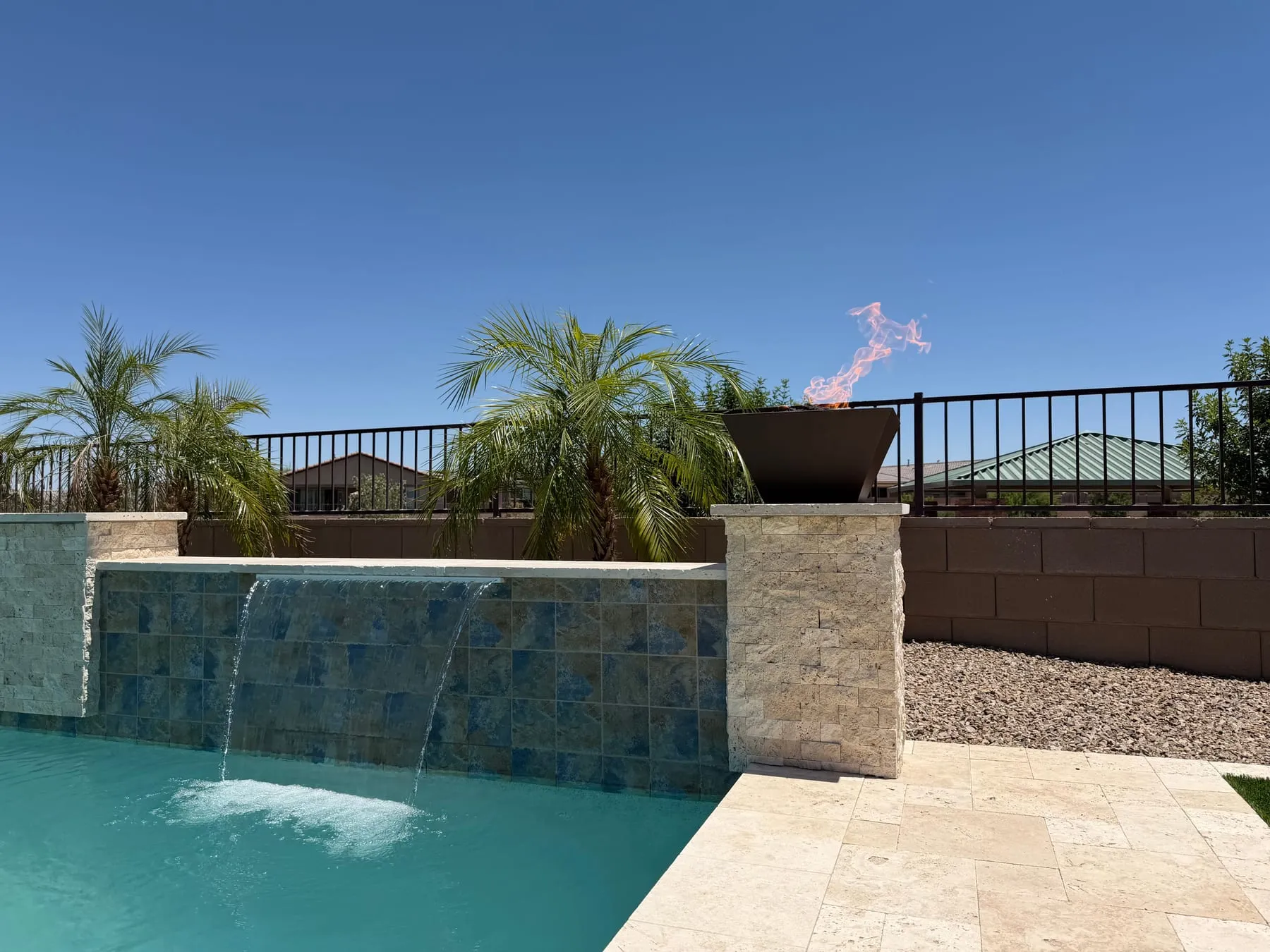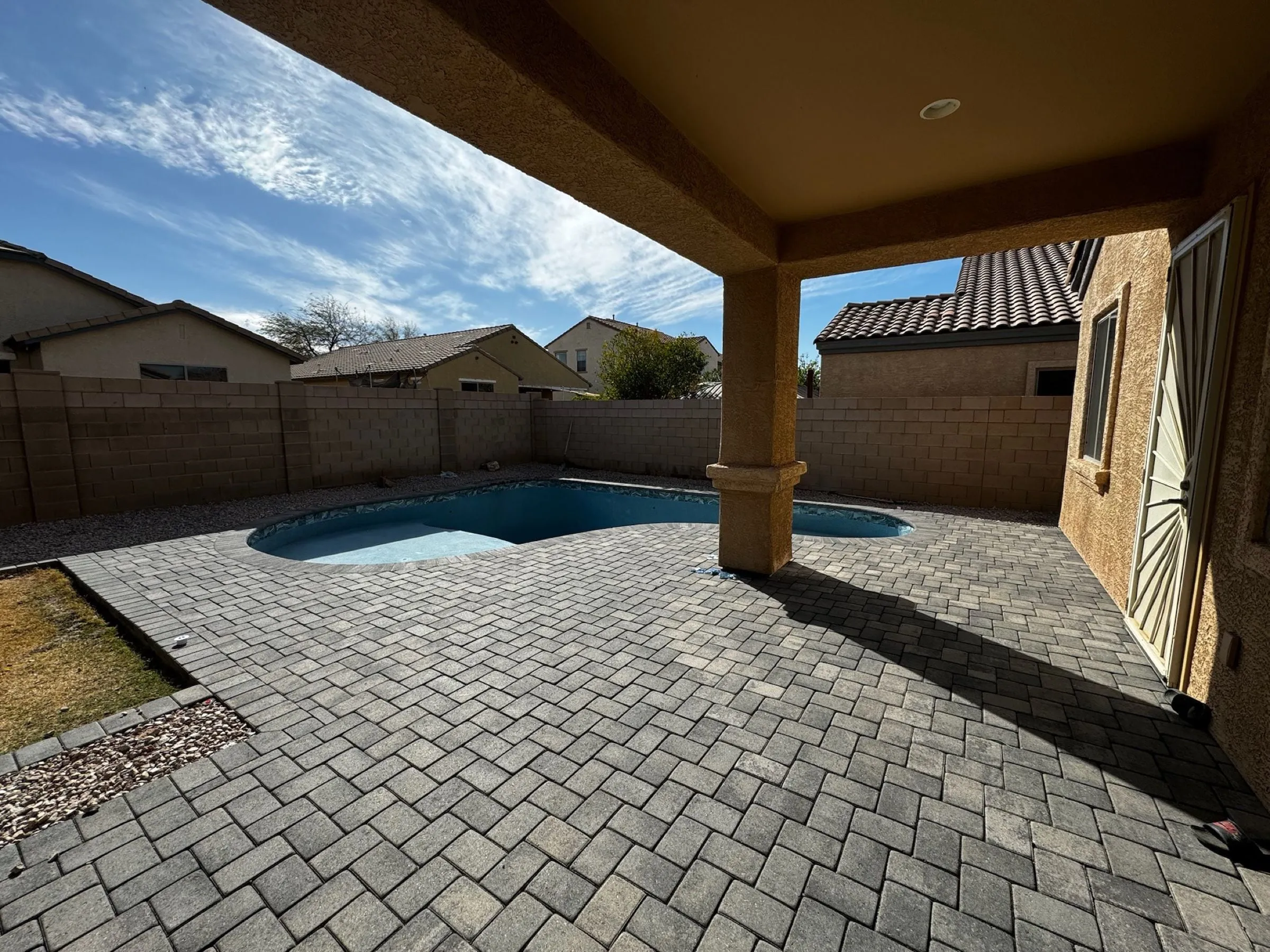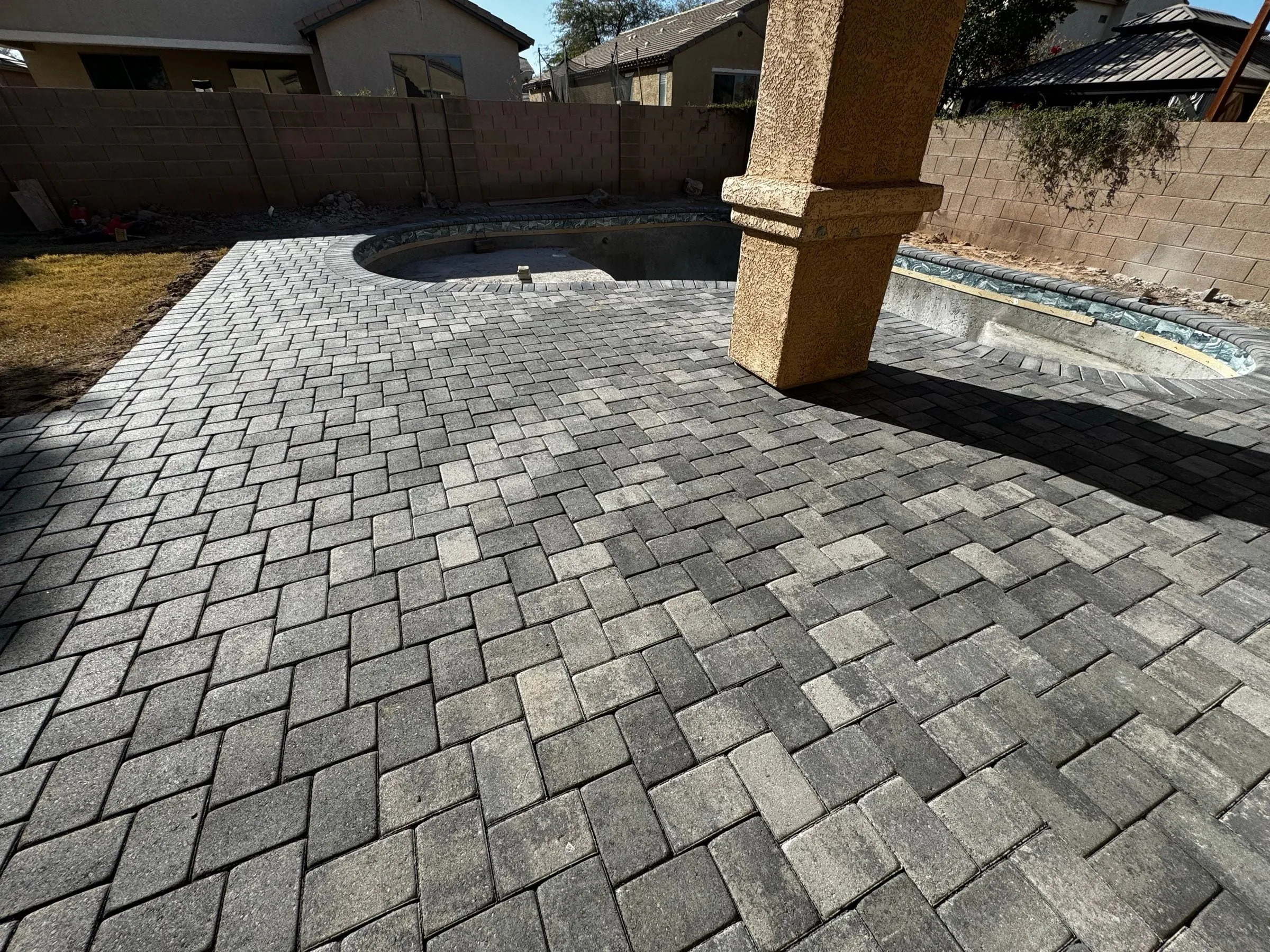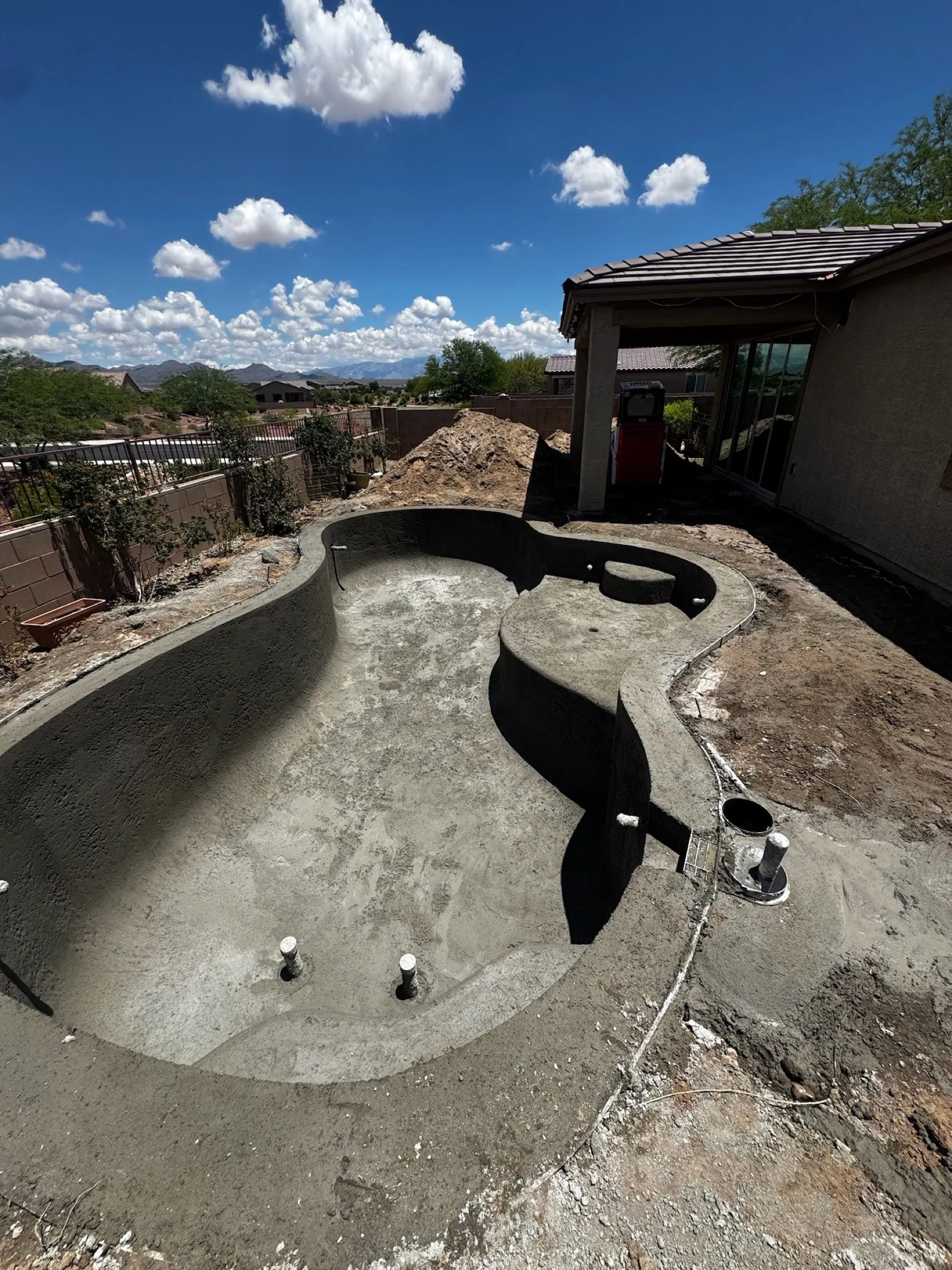
A geometric pool, built from straight lines and clean curves, usually suits modern and contemporary Tucson homes and narrow subdivision lots. A freeform pool, with loose organic curves, suits desert-natural, Santa Fe and ranch-style homes and irregular yards. A freeometric pool blends the two, and a raised wall or raised spa can be added to any shape to give it height and a focal point.
Here is how to pick the right shape for your house, your lot and your budget.
What are the main pool shapes?
Geometric pools
Geometric pools use straight lines, right angles and set curves. The rectangle is the classic, but this family also includes L-shapes, T-shapes, Roman and Grecian ends, and long lap pools. Edges are crisp, and the coping and tile lines read as clean architecture.
Freeform pools
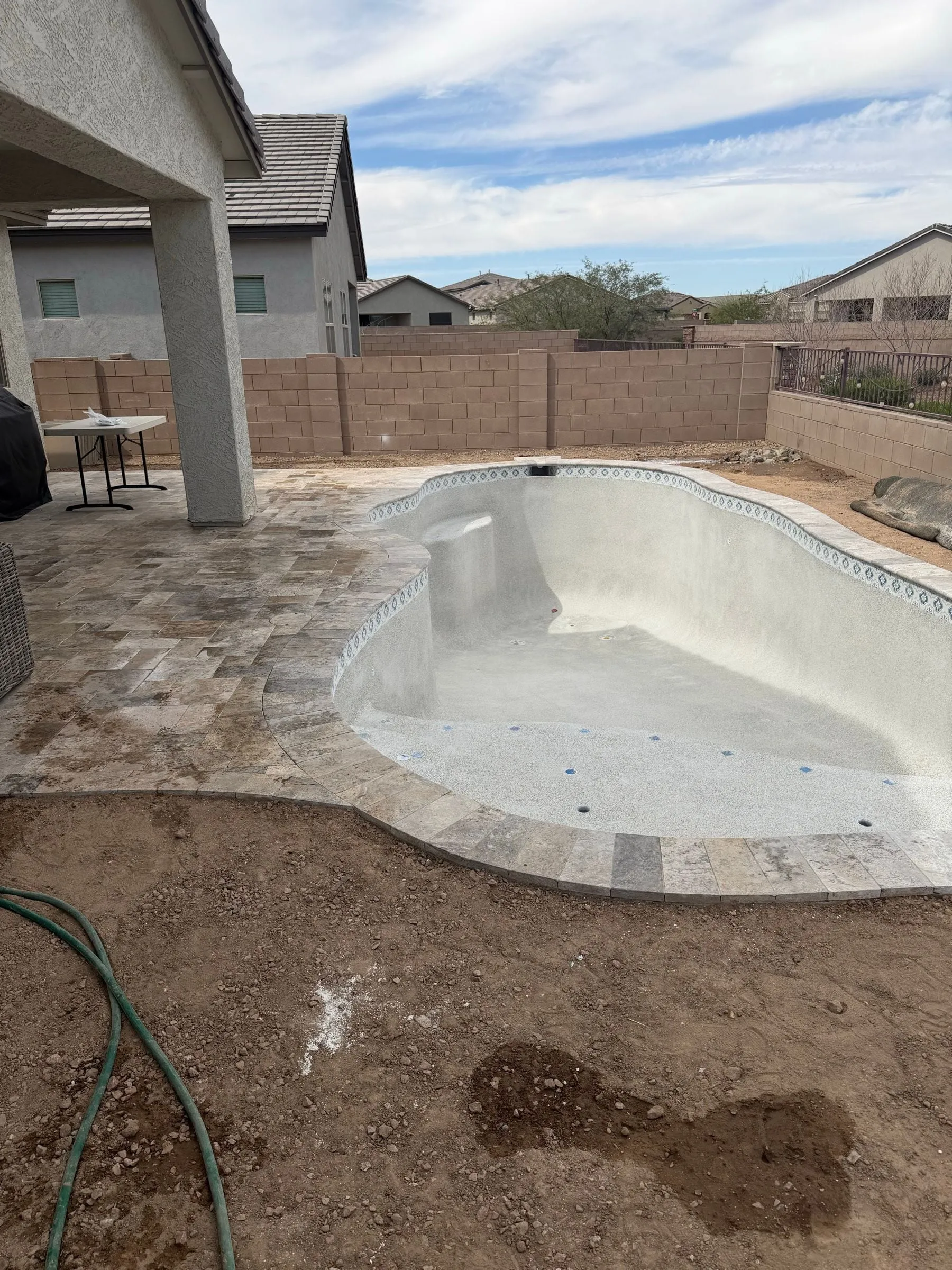
Freeform pools have no straight sides. The edges flow in soft curves, a bit like a natural pond or wash. They can wrap around a palo verde, follow a curved patio, or bend to fit an odd-shaped yard.
Freeometric pools
Freeometric pools borrow from both. A common version has one straight side along the house or covered patio and a curved far side that blends into the landscaping. It gives you a clean edge where you walk and sit, and a softer edge where you look out.
Raised pools and raised spa walls
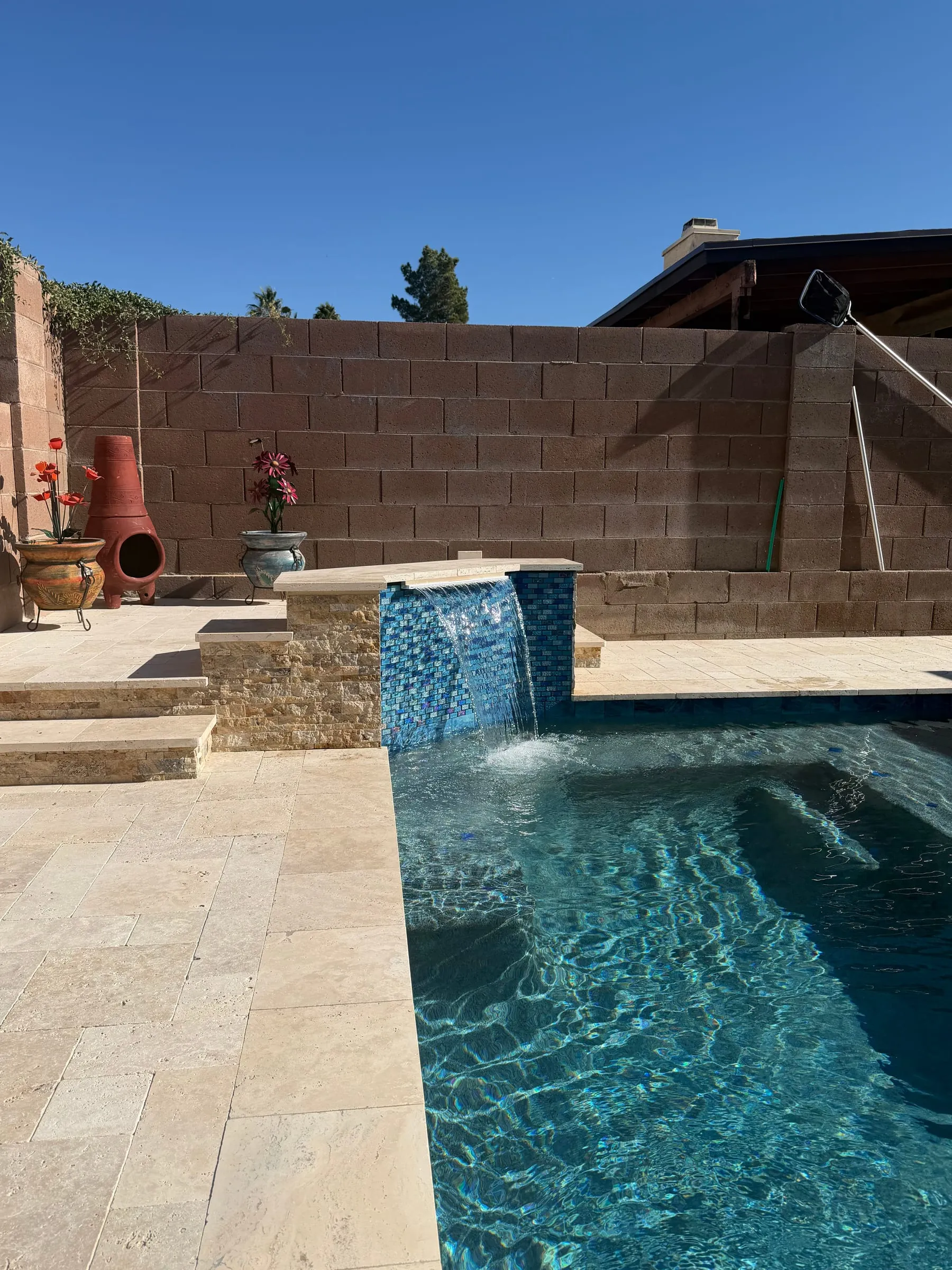
A raised wall lifts part of the pool edge above the deck, often a foot or more. It can hold tile, stacked stone or travertine, and it is a natural place for sheer descents, scuppers or a fire bowl. A raised spa sits above the pool and can spill into it. Both work with any shape.
| Shape | Best for | Look | Notes |
|---|---|---|---|
| Geometric | Modern, contemporary, narrow lots | Crisp, architectural | Easy to fit covers, lap lanes and a clean deck layout |
| Freeform | Desert-natural, ranch, irregular yards | Soft, natural | Blends with boulders, plants and curved patios |
| Freeometric | Modern homes with natural landscaping | Clean near the house, soft beyond | Good balance of usable deck and natural feel |
| Raised wall or spa | Any shape | Adds height and focus | Great spot for tile, stone and water features |
Which shape fits a modern Tucson home?
Newer homes in Marana, Gladden Farms, Dove Mountain and Rita Ranch often have flat roofs, stucco boxes, large sliding doors and simple lines. A geometric pool echoes that. Line the long side of the pool up with the back wall of the house or the covered patio, and the whole yard looks planned.
Modern geometric pools pair well with:
- large-format pavers or light travertine laid in a simple pattern
- a raised wall with dark or glass tile
- a linear fire trough along one side
- a raised spa set at the end or corner
- a darker interior finish for a reflective, mirror-like look
Our post on modern, low-maintenance backyard design has more ideas for this style.
Which shape fits a desert-natural home?
Older homes in the Catalina Foothills, Tanque Verde and Oro Valley often sit on larger, sloped or rocky lots with native plants, washes and mountain views. A freeform pool fits that setting. Curves can step around a saguaro you want to keep, follow the slope, and blend into boulders and desert plants.
Freeform pools pair well with:
- stacked stone or natural boulders
- curved travertine or flagstone-look decking
- a sweeping entry step or rounded tanning ledge
- native or low-water planting close to the edge
- earth-tone or blue pebble finishes that look like natural water
If the house is modern but the yard is natural desert, a freeometric shape is often the answer.
How does lot shape affect the pool shape?
Narrow and shallow subdivision lots
Many newer lots in Marana, Vail, Sahuarita and Rita Ranch are narrow, with only a modest space between the back of the house and the rear wall. You still need room for setbacks, the equipment pad, decking you can walk on, and the pool barrier, which we build to at least 5 feet on every pool.
On these lots, a rectangle or a slim geometric pool usually gives you the most swimmable water for the space. Freeform curves eat up corners you cannot use. If you want a softer look, a freeometric pool with a straight side against the house can work. Our guide to small pools and plunge pools covers tight yards in more detail.
Large, irregular or sloped lots
On bigger or sloped lots, a freeform or freeometric shape can follow the land. On a slope, a raised wall on the low side can turn the drop into a feature. And if you have a view, a vanishing edge on the downhill side is worth a look.
Do HOAs care about pool shape?
Most HOAs in the Tucson area care more about setbacks, wall heights, equipment placement, drainage and what neighbors can see than about the shape of the pool itself. Raised walls, fire features and anything that rises above the perimeter wall get more attention. Check your CC&Rs and design guidelines early, and plan the shape and any raised elements with them in mind. Our guide to HOA pool approval in Tucson and Marana explains the process.
How does pool shape affect cost?
Shape matters less than people expect. The biggest cost drivers are usually size, depth, the spa, raised walls, water and fire features, decking and the interior finish. Still, shape plays a part:
- Simple rectangles are efficient. Straight forms are quick to set, and straight coping is simple to cut.
- Complex geometric shapes with many corners, notches or Roman ends add forming, tile cuts and coping pieces.
- Freeform pools with gentle curves are not usually a big step up. Very wavy edges add perimeter, which means more coping and tile per foot of pool.
- Raised walls add steel, shotcrete, tile or stone, and coping on top. They are one of the bigger shape-related add-ons.
- Dig conditions count too. On caliche, a deep or oddly shaped dig takes more time with heavy equipment.
Because we build only concrete pools, any of these shapes is possible. The question is what fits your home and your budget. For overall ranges, our pool cost guide puts most custom concrete pools at about $40,000 to $120,000 or more.
Does shape change how you use the pool?
Yes, and this is worth thinking about before you fall for a look.
- Laps and games. A rectangle gives you a straight swim lane and a clear area for volleyball or basketball.
- Lounging. Freeform and freeometric pools make it easy to add a large, rounded tanning ledge or a curved bench.
- Covers. Straight-sided pools are the easiest to fit with an automatic cover.
- Cleaning. Gentle curves and smooth transitions help robotic cleaners. Tight corners and narrow fingers can trap monsoon dust and leaves.
- Depth. Every shape can have a shallow end and a deeper area.
How to choose your shape with a 3D design
It is hard to picture a curve or a raised wall from a sketch on paper. That is why every Meraki project includes a 3D design with a VR walkthrough. We can show you the same yard with a rectangle, a freeform and a freeometric layout, then walk you through each one so you can see the view from the kitchen, the patio and the spa.
Start with three questions:
- What style is the house, and what will you see from inside?
- How much flat, usable deck do you need around the pool?
- Will you swim laps, float and lounge, or mostly sit in the spa?
The answers usually point to one shape pretty quickly. You can also browse finished shapes in our project gallery for ideas.
Let’s find the right shape for your yard
Whether your home is modern in Gladden Farms or desert-natural in the Foothills, we will design a pool that fits it. Our design process starts with your yard and ends with a shape you have already walked through in 3D.
Call (520) 342-8335 or request a free estimate. Meraki Pools AZ is family-owned and licensed, AZ ROC #342505 and #352797.
Put this guide to work
Planning your own project? See our Custom Pool Construction in Tucson, Custom Spas & Pool-Spa Combos in Tucson and Pool Tile & Coping Replacement in Tucson, or read about building a pool in Marana, Gladden Farms or Oro Valley.
Frequently asked questions
What is the difference between a geometric and a freeform pool?
A geometric pool is built from straight lines and set curves, like a rectangle, L-shape or Roman end. A freeform pool uses loose, organic curves that look more like a natural pond. Both can be built in concrete at almost any size.
What is a freeometric pool?
A freeometric pool mixes the two styles. One side might be a straight line along the patio while the far side curves into the landscape. It is a good fit when the house is modern but the yard is desert-natural.
Which pool shape costs less?
Shape alone is rarely the biggest cost driver. Size, depth, raised walls, the spa, decking and water features usually matter more. That said, a simple rectangle is often the most efficient use of space, and very wavy freeform edges can add coping, tile and labor.
What pool shape is best for a small Tucson yard?
On narrow lots in Marana, Rita Ranch or Vail, a rectangle or a long, slim geometric pool usually gives the most swimmable water and leaves room for decking and the barrier. A small freeform can work too if the yard is irregular or you want a softer look.
Can I put a raised wall or raised spa on any pool shape?
Yes. Raised walls and raised spas work on geometric, freeform and freeometric pools. They add height, a place for tile or stone, and a spot for sheer descents or scuppers, and they often look best when they line up with the house or a view.