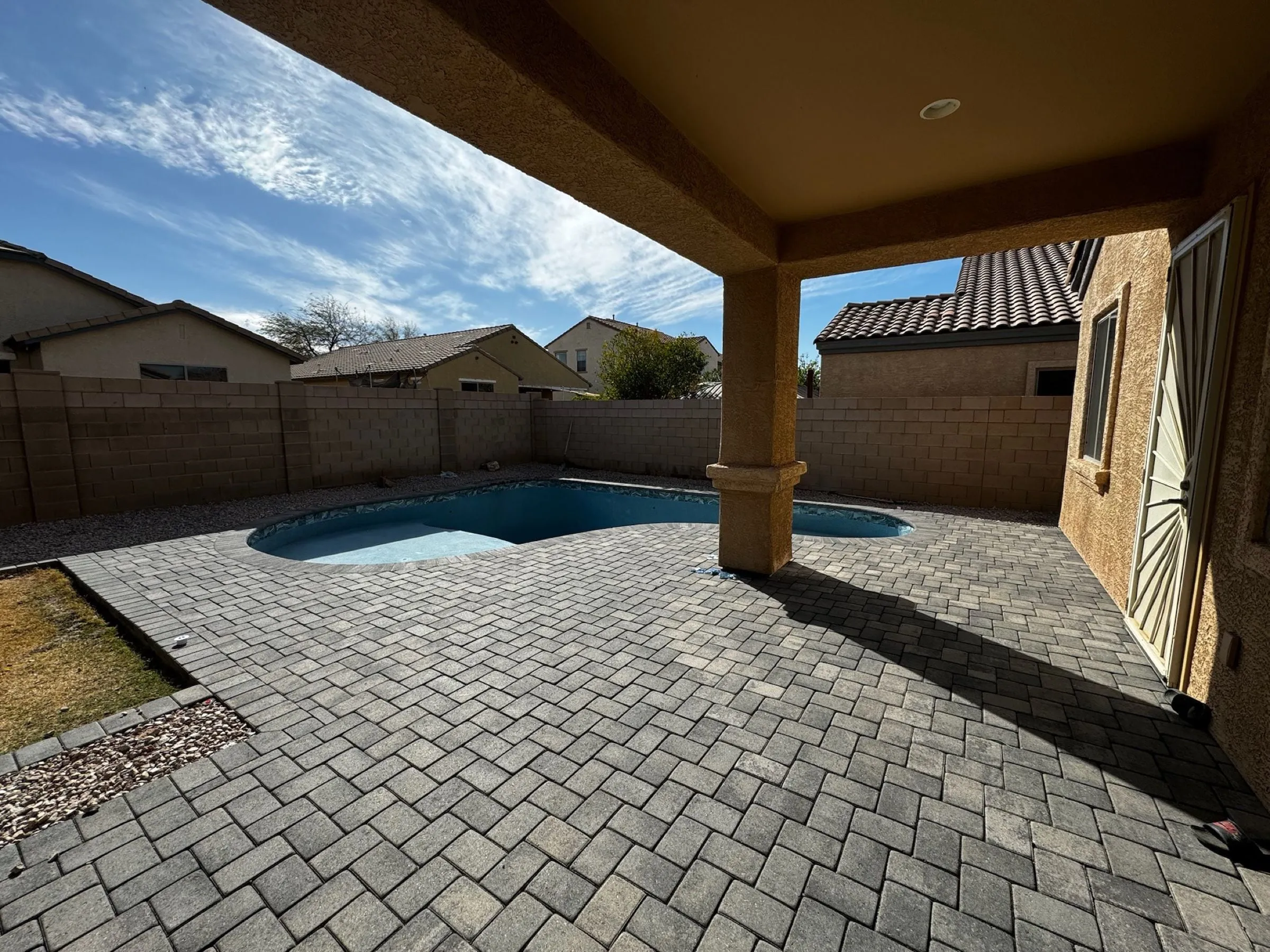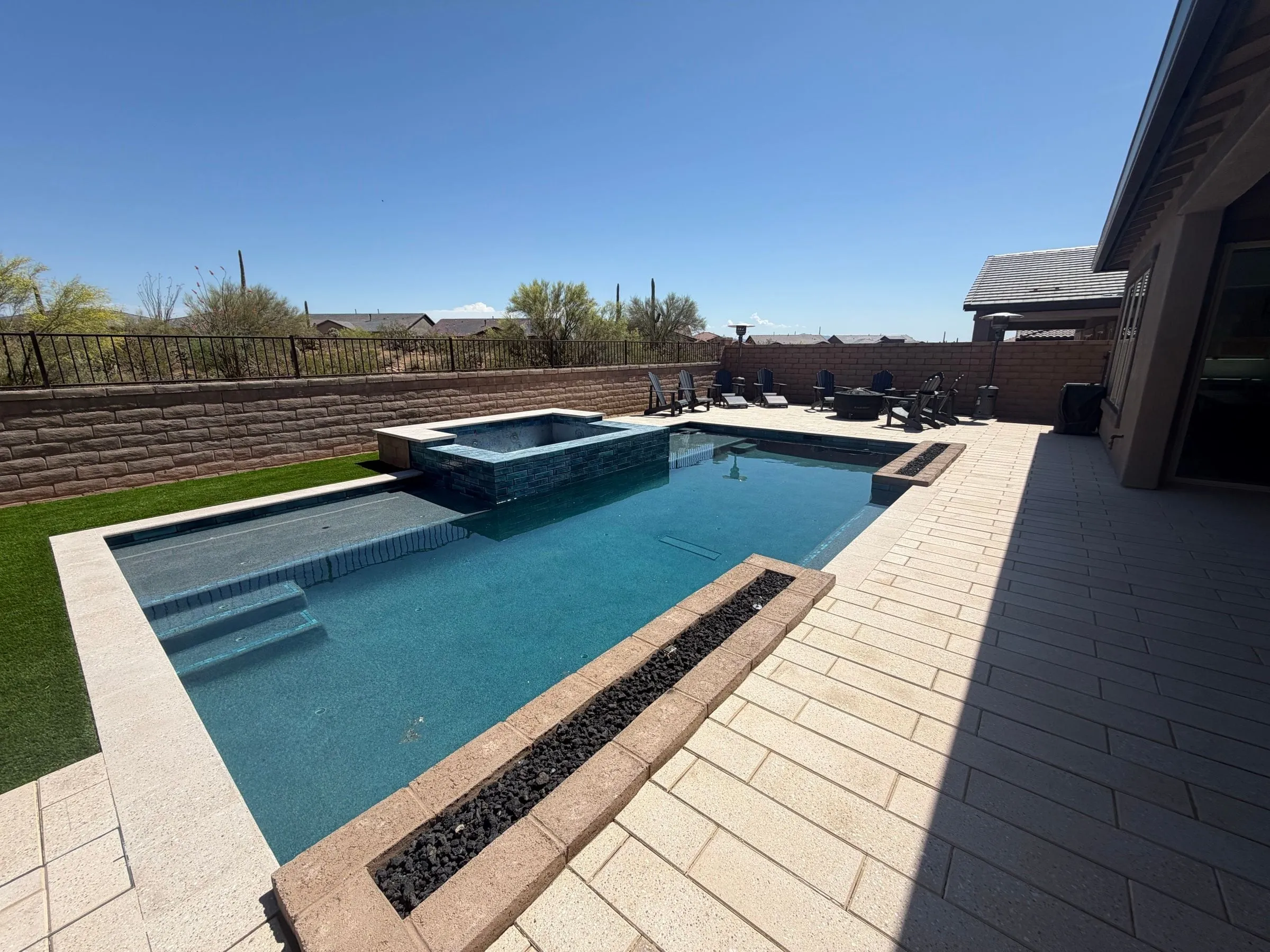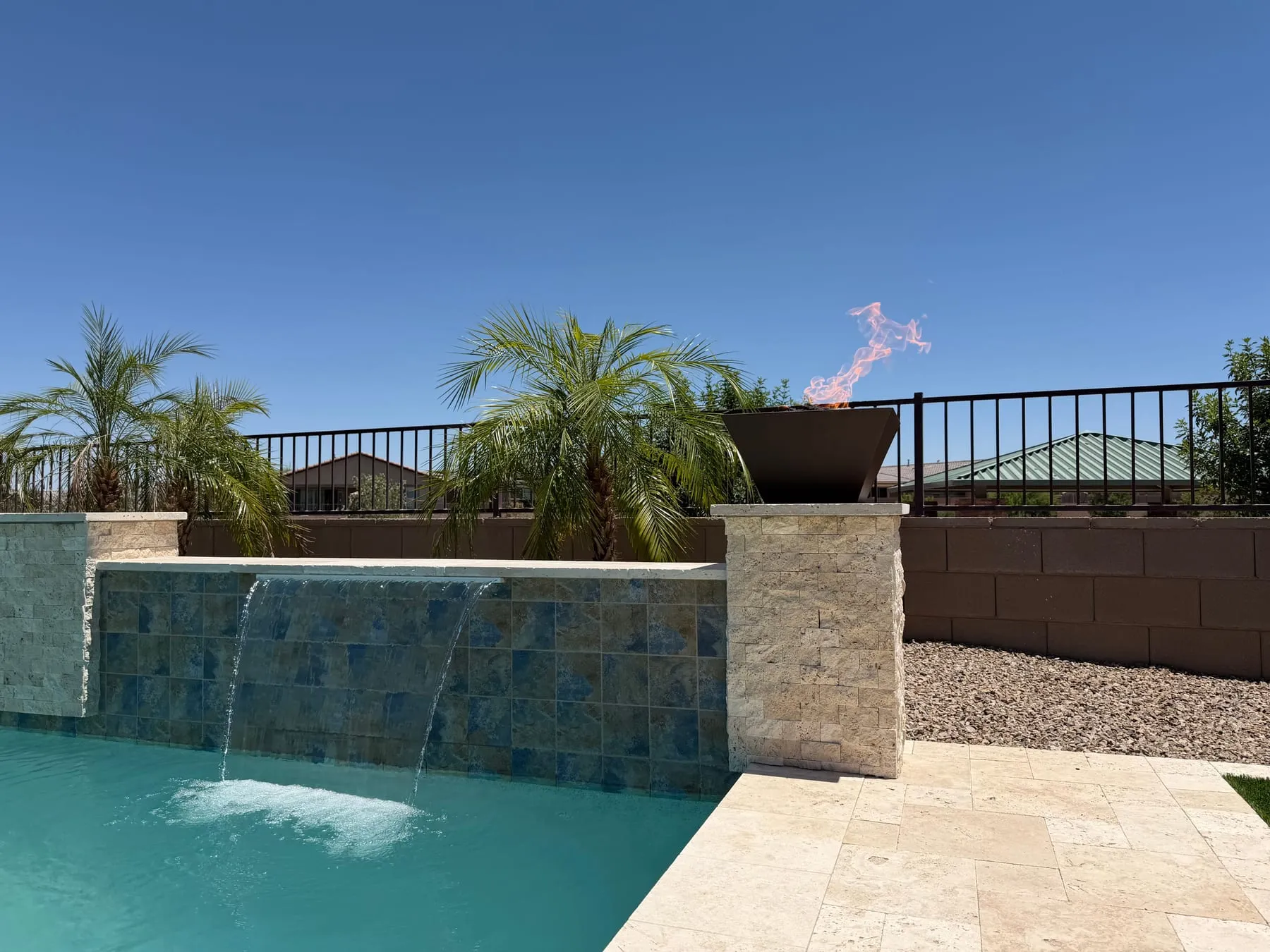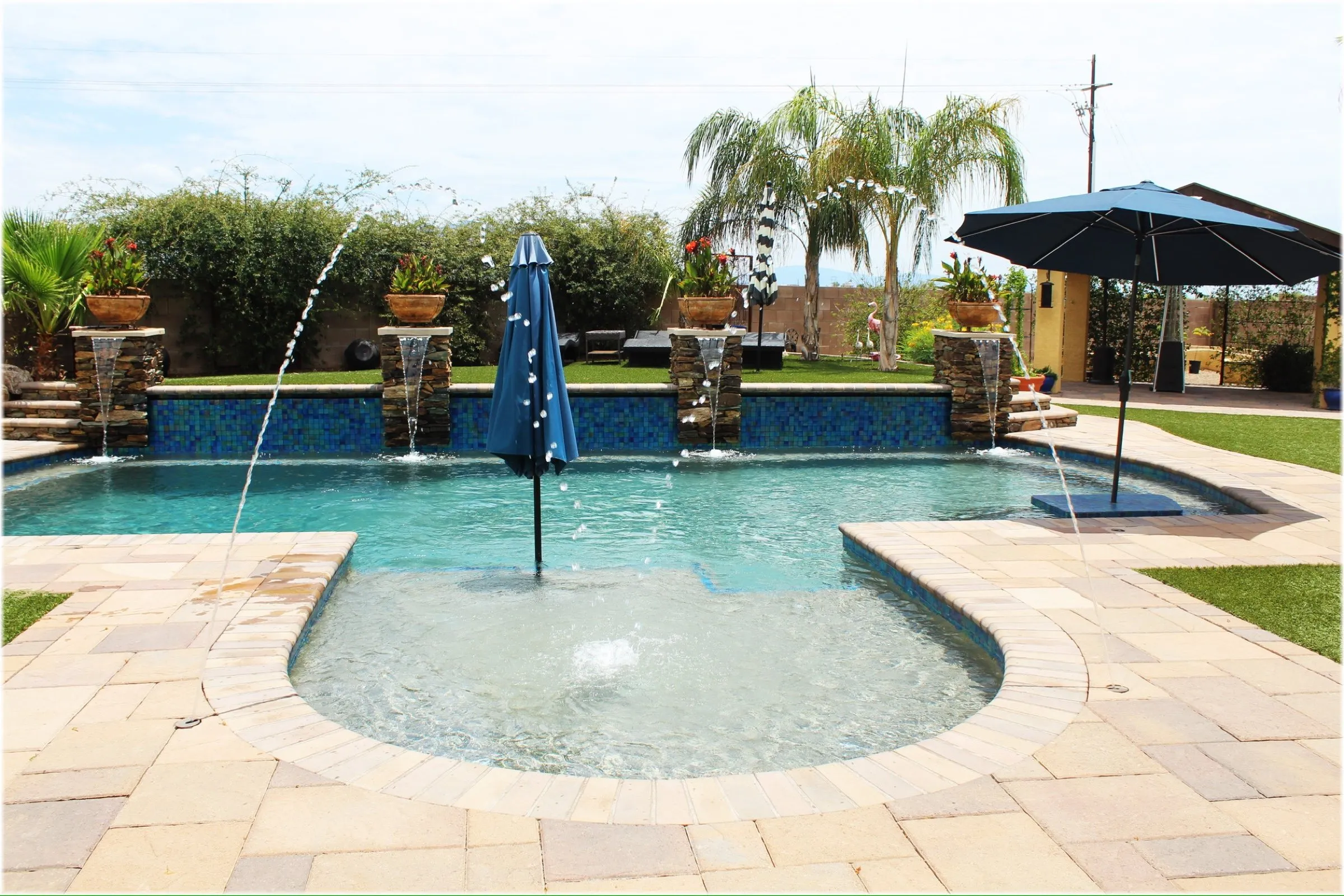
A tanning ledge, also called a Baja shelf or sun shelf, is a large, flat, shallow area inside the pool for lounging, usually built somewhere around 6 to 12 inches deep. Pair it with comfortable steps, a bench or two, and the right extras like an umbrella sleeve and a bubbler, and your pool becomes a place to sit and cool off, not only to swim. The best results come from planning all of these entries together in a 3D design before the dig.
Here is how each option works and how to plan them for a Tucson backyard.
What is a tanning ledge or Baja shelf?
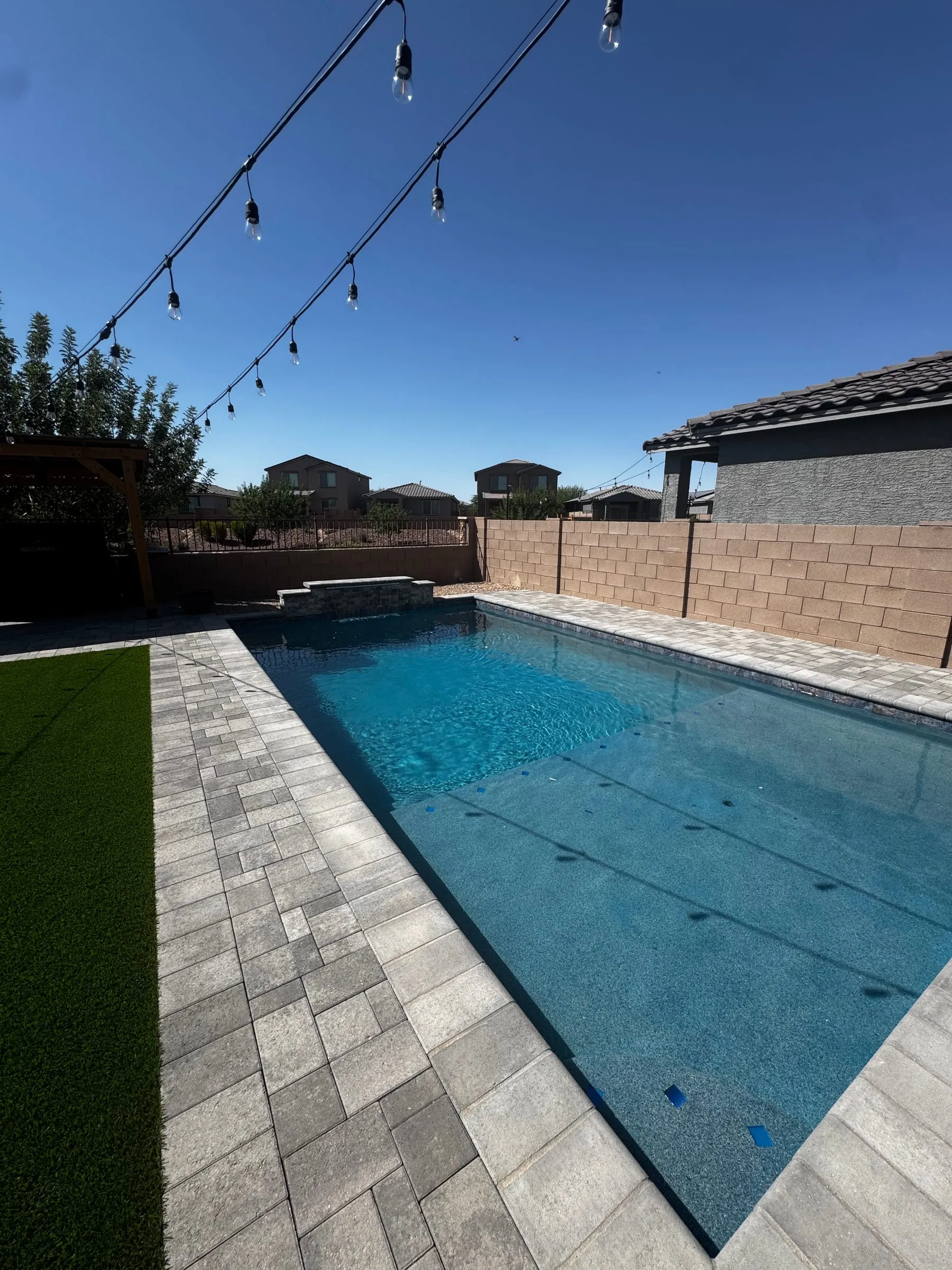
A tanning ledge is a wide, flat step at the shallow end, big enough to sit, lie or set lounge chairs in a few inches of water. The names tanning ledge, Baja shelf, sun shelf and sun deck all mean the same thing.
In Tucson, a ledge earns its keep. On a triple-digit afternoon, lying in shallow water under an umbrella feels a lot better than lying on a hot deck. Kids love it as a splash zone, and it gives adults who are not big swimmers a reason to get in.
How deep should a tanning ledge be?
There is no single right number, but most ledges land in a typical range of about 6 to 12 inches of water. Where you fall in that range depends on how you will use it:
| Depth (typical) | Best for |
|---|---|
| Shallower end of the range | In-pool lounge chairs, lying flat, toddlers splashing with an adult |
| Middle of the range | A mix of lounging, sitting and kids playing |
| Deeper end of the range | Sitting with more of your body under water, older kids, staying cooler in summer |
A few things to keep in mind:
- Lounge chairs. If you plan to use in-pool loungers, check the chair maker’s recommended water depth before you set the ledge.
- Water level. The water line moves a little with evaporation and monsoon rain. Ask how your ledge depth relates to the normal water level, which is set by the skimmer.
- Heat. Shallow water warms fast. That stretches your swim season in spring and fall, but in July it can feel like bath water. Slightly deeper water and shade help.
If you are also deciding on depths for the rest of the pool, our guide on how deep a pool should be covers the shallow end, deep end and the transition between them.
How big should a tanning ledge be?
Size it around the furniture and people you want on it, not around a number on a brochure. A small ledge works for sitting and kids playing. If you want two in-pool lounge chairs plus an umbrella, plan for a noticeably larger shelf with room to walk around them.
On narrow lots in Marana, Rita Ranch or Vail, a big ledge takes space from the swimming area. One fix is a ledge that runs across the full width of the shallow end, so it doubles as your entry. Our post on small pools and plunge pools has more tricks for tight yards.
What are the options for pool steps and entries?
Wedding cake steps
Rounded steps that fan out from a corner, layered like a cake. They are easy to sit on and look good in freeform pools.
Full-width steps
Steps that run the whole width of the shallow end. They make a wide, easy entry and work well on rectangular pools. Kids and older family members often like them because there is no edge to squeeze past.
Corner steps
Steps tucked into one corner. They save space and suit geometric pools on smaller lots.
Beach entry
A gradual slope from the deck into the water, like walking into a lake. It is easy on knees and fun for kids, but it takes up a lot of pool area and needs careful planning for the interior finish, coping and water level. It works best on larger lots.
Swim-outs
A swim-out is a bench or seat set into the wall of the deeper area, usually across from the entry steps. It gives swimmers a place to rest or get out without crossing back to the shallow end. In a longer pool, it is a good comfort and safety detail.
Benches
Benches run along the pool wall at seating height. They are great for chatting, resting between laps or keeping an eye on kids. Benches in the shade side of the pool get the most use in summer.
Whatever entry you choose, ask for step and bench edges to be marked so they are easy to see, especially with a darker finish. Some owners add tile trim on the step edges. Your builder will follow the codes your city or county has adopted for step size and handholds.
What extras make a tanning ledge better?
Umbrella sleeves
An umbrella sleeve is a small tube set into the ledge floor that holds a pool umbrella upright in the water. In Tucson sun, shade on the ledge is a big deal. Plan where the sleeves go so the shade falls where you sit during the hours you use the pool most. You can add more than one if you plan a few chairs.
Bubblers
A bubbler is a small jet in the ledge floor that pushes up a short column of water. It adds sound and movement, kids love playing in it, and the moving water helps a little with the warm, still water a ledge can have in summer. Bubblers need their own plumbing, so they have to be planned before the shell goes in.
Lighting
A light on or near the ledge makes it usable after sunset, when Tucson summers are at their best.
Deck jets and water features
Arcing deck jets aimed at the ledge give kids a target and add sound for adults. Sheer descents or scuppers on a raised wall nearby work too.
How do monsoon dust and hard water affect ledges?
A ledge is shallow and flat, so it collects dust, leaves and grit faster than steep walls, especially after a monsoon storm. Plan on brushing it more often. Running the pump a little longer after storms helps clear it.
Tucson’s hard water can leave scale at the waterline and on shallow surfaces. Keeping your water balanced protects the finish on your ledge and steps. Our post on pool water chemistry and hard water explains what to watch.
The interior finish matters too. A pebble finish is durable and adds grip underfoot on steps and ledges. Many of our builds use StoneScapes Mini Pebble, which is a good fit for the areas people sit and stand on.
Are tanning ledges good for families with young kids?
They can be. A shallow ledge keeps little ones close to the edge and gives them a place to play. But it is still part of the pool, right next to deeper water, so it is never a substitute for supervision. The CDC’s drowning prevention guidance calls for close, constant supervision by a responsible adult, swimming lessons, and a barrier that separates the pool from the house.
Arizona also requires a barrier around residential pools. We build every pool barrier to at least 5 feet. See our guide to Arizona pool barrier rules for details, and our kid-friendly pool design guide for more family layout ideas.
How do you plan ledges and steps in 3D?
Ledges, steps and benches are easy to get wrong on paper. A ledge that looked huge in a sketch can feel small once the chairs are on it, or block the walkway to the spa. That is why every Meraki project includes a 3D design with a VR walkthrough.
In the 3D model we can:
- set the ledge size and test it with lounge chairs and an umbrella
- place umbrella sleeves where the afternoon shade will fall
- line up steps with the patio door so you walk straight in
- add benches on the shade side
- position bubblers and deck jets so they look good from the house
- check how the ledge, steps and spa connect
Then you walk through it in VR before we dig. Changes at this stage are easy. Changes after shotcrete are not.
How do these features affect cost?
Every ledge, bench, swim-out and step adds forming, steel, shotcrete and finish. Umbrella sleeves and bubblers add plumbing and fittings. A beach entry adds the most because of its size. None of these are usually the biggest line on the bid, but they add up, so pick the ones you will really use. For overall budget ranges, our pool cost guide puts most custom concrete pools at about $40,000 to $120,000 or more.
Let’s design your ledge and steps
Whether you want a big Baja shelf with two loungers and an umbrella or a simple bench and wide steps, we will plan it with you in 3D so it fits how your family uses the pool.
Call (520) 342-8335 or request a free estimate. Meraki Pools AZ is family-owned and licensed, AZ ROC #342505 and #352797.
Put this guide to work
Planning your own project? See our Custom Pool Construction in Tucson, or read about building a pool in Marana, Vail or Rita Ranch.
Frequently asked questions
How deep should a tanning ledge or Baja shelf be?
Most tanning ledges are built somewhere around 6 to 12 inches deep. Shallower water is better for lounge chairs and warms up fast, while a little deeper lets small kids splash and adults sit with more of their body in the water. Your builder should set the depth around how you plan to use it.
What is the difference between a tanning ledge and a Baja shelf?
They are the same thing. Tanning ledge, Baja shelf, sun shelf and sun deck all mean a large, shallow, flat area inside the pool where you can sit, lounge or set chairs in a few inches of water.
How big should a tanning ledge be?
Size it around what you want to put on it. A small ledge can fit a person sitting or a couple of kids playing, while room for two in-pool lounge chairs and an umbrella takes a noticeably bigger shelf. A 3D design is the easiest way to test the size before anything is dug.
Is a tanning ledge safe for kids?
A shallow ledge gives young kids a place to play close to the edge, but it is still part of the pool, and kids on it are next to deeper water. The CDC advises close, constant adult supervision whenever children are in or near water, along with a proper pool barrier.
Do tanning ledges get too hot in Tucson?
The shallow water on a ledge warms up faster than the rest of the pool, which is great in spring and fall. In midsummer it can feel warm, so many owners add an umbrella sleeve for shade and a bubbler to keep the water moving.