In Tucson, a heat pump is usually the best choice for stretching your swim season in spring and fall, a gas heater is best for fast heat and for spas, and solar is the lowest-cost way to add a few comfortable weeks if you have good roof space. Many of our clients pair a heat pump with gas, or choose a hybrid unit, and use a pool cover to hold the heat in.
Here is how each option works, when it makes sense in our climate, and what to ask before you buy.
Do you even need a pool heater in Tucson?
Our summers do a lot of the work for you. From late spring into fall, most Tucson pools are warm without any help. In July and August the water can get too warm.
The trouble is the edges of the season. Tucson’s desert air cools off fast at night, even when afternoons are pleasant. Water loses heat overnight, and a pool that felt fine at 3 p.m. can feel cold the next morning. A heater lets you swim comfortably in March, April, October and November, and a spa heater lets you soak all winter.
How does each type of pool heater work?
Heat pump
A heat pump does not burn fuel. It uses electricity to run a fan and compressor that pull heat out of the outside air and move it into the pool water, much like an air conditioner running in reverse.
Because it moves heat instead of making it, a heat pump can deliver several units of heat for each unit of electricity it uses. That ratio is called the coefficient of performance, or COP. A COP of 5 means about five units of heat out for one unit of electricity in. The higher the COP, the more efficient the unit.
The catch is that COP depends on the air. Heat pumps do best when the air is mild and lose output as it gets colder. Manufacturer COP ratings are measured under set test conditions, so expect lower numbers on a cold Tucson night.
Gas heater
A gas heater burns natural gas or propane in a combustion chamber and transfers that heat to the water. It works the same whether it is 40 or 80 degrees outside, and it heats quickly.
Gas heaters are rated by thermal efficiency, the share of fuel energy that ends up in the water. Pentair rates its MasterTemp heaters at 84 percent (82 percent for the heavy-duty cupro-nickel version), and the gas side of its UltraTemp ETi hybrid at 93 percent.
Solar
Solar pool heating pumps pool water through collectors, usually on a roof, where the sun warms it before it returns to the pool. Your existing pool pump does the work, and a controller sends water to the panels only when they are warm enough to help.
The Department of Energy describes solar pool heaters as cost competitive with gas and heat pumps, with low yearly operating costs. Tucson’s sunshine is a big advantage. The limits are roof space, roof direction, and the fact that solar gives the least help on the coldest, shortest days of the year.
Heat pump vs gas vs solar: which is best for Tucson?
| Heater type | Pros | Cons | Best for |
|---|---|---|---|
| Heat pump | Usually lower running cost than gas over a season. No fuel line. Some models also cool. | Slower to heat. Output drops on cold nights. Needs proper electrical service. | Extending the pool season in spring and fall. Owners who heat often. |
| Gas (natural or propane) | Fast heat-up in any weather. Great for spas and quick weekend swims. | Highest cost per hour to run. Needs a gas line sized for the heater. | Spas, winter use, and pools heated only now and then. |
| Hybrid (heat pump + gas) | Uses the heat pump when it makes sense and gas when you need speed. | Higher upfront cost and more equipment. | Pool and spa combos used year-round. |
| Solar | Lowest operating cost. Uses Tucson sunshine. | Needs suitable roof area. Least help in mid-winter. Slow. | Adding a few comfortable weeks on each end of summer. |
None of these work as well without a cover. More on that below.
What about spa heating?
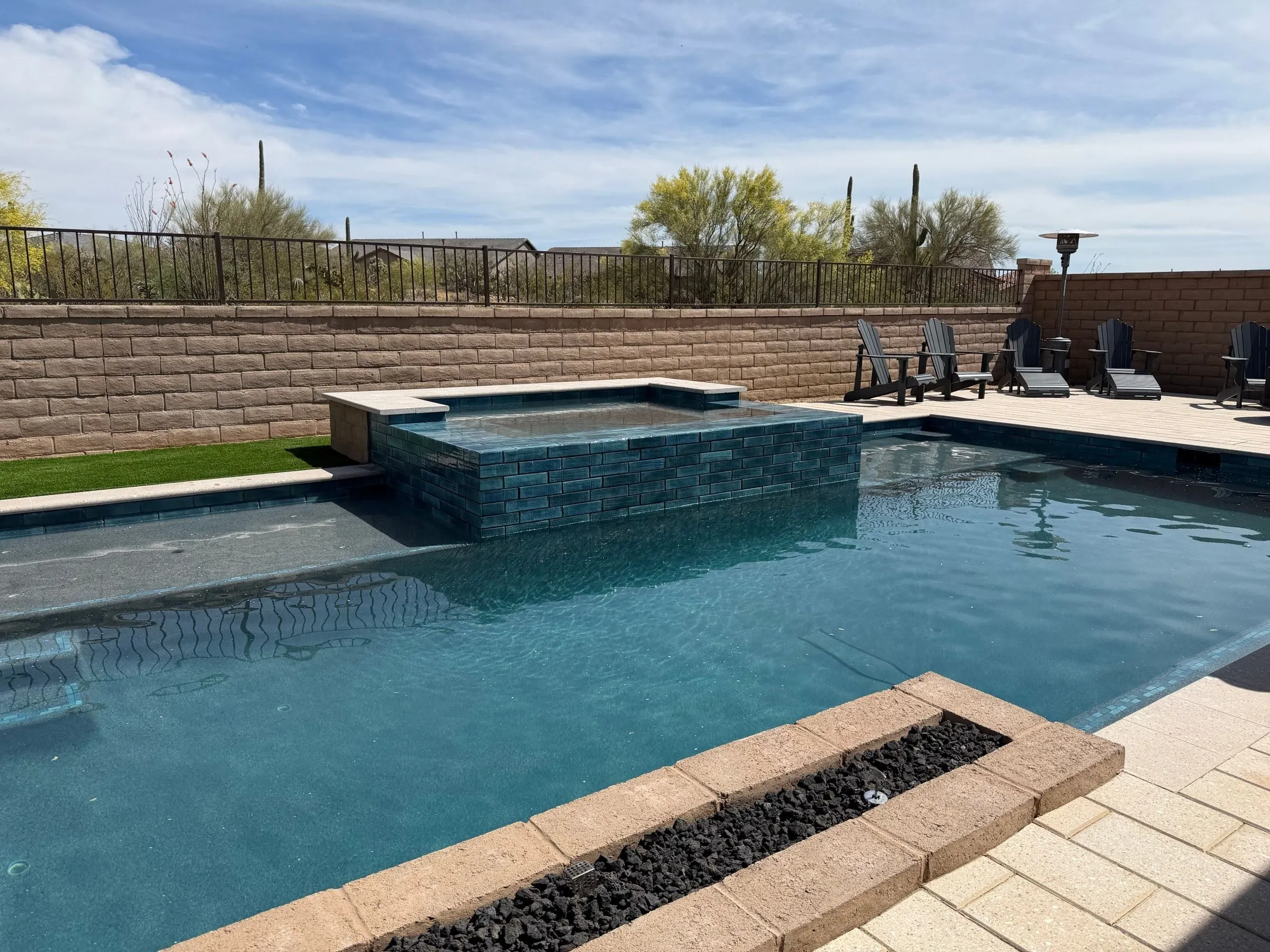
If you have a spa, you almost certainly want gas or a hybrid. Spas are small, so a gas heater can bring them up to soaking temperature quickly, and you only run it when you plan to use it. A heat pump can heat a spa, but on a cold January evening it would take much longer.
A common setup is a pool and attached spa with a Pentair gas heater, sometimes paired with a heat pump for the pool. Automation lets you switch to spa mode and start heating from your phone before you get home.
Which Pentair heaters do we install?
We use Pentair equipment on our builds and upgrades. The current Pentair lineup includes:
- UltraTemp heat pump. Uses a titanium heat exchanger for corrosion resistance and works with Pentair automation.
- GulfStream heat pumps. A Pentair brand with heat-only and heat/cool models. Pentair lists a COP of 6.0 to 6.1 across the line. The heat/cool option is useful in Tucson when summer water gets too warm.
- MasterTemp gas heaters. Available for natural gas or propane in several sizes, with copper or heavy-duty cupro-nickel heat exchangers.
- UltraTemp ETi hybrid. Combines a heat pump and a high-efficiency gas heater in one unit. It can run on the heat pump, on gas, in an automatic hybrid mode, or both at once for the fastest heat-up.
The right size and type depend on your pool’s volume and surface area, whether you have a spa, how often you plan to heat, and whether gas is available at your home. We size heaters as part of your 3D pool design so the equipment, gas line and electrical are planned together.
How do you heat a pool in winter in Arizona without wasting energy?
Use a pool cover
A cover is the single best heating upgrade. Evaporation is the biggest source of heat loss from a pool, and our dry air and afternoon winds make it worse. The Department of Energy’s Better Buildings program says pool covers can cut pool heating costs by 50 to 70 percent. A cover also keeps out dust and leaves, which helps after monsoon storms.
Keep the temperature reasonable
The DOE suggests keeping pool water at the lower end of the 78 to 82 degree comfort range. Turning the heater down when you are not using the pool, or on vacation, saves energy.
Pair the heater with an efficient pump and automation
A variable-speed pump, like Pentair’s IntelliFlo3, can run slower and quieter for daily filtering. Automation lets you schedule heating for the hours you swim instead of heating all day.
Consider how you use the pool
If you only want a warm spa on winter weekends, gas alone may make the most sense. If you want to swim three seasons a year, a heat pump or hybrid with a cover is usually the better fit.
What should you ask a pool builder about heating?
- What size heater does my pool and spa need, and why?
- Is my gas line big enough, or will it need an upgrade?
- Does my electrical panel have room for a heat pump?
- Will the heater work with my automation system?
- Where will the equipment sit, and how loud will it be near bedrooms or neighbors?
- Do you recommend a cover, and what type fits my pool shape?
- Can the heat pump also cool the water?
Planning a new pool or an equipment upgrade?
We install heaters on new builds and add them during remodels and resurfacing projects. If you are still choosing your interior, our guide to pebble vs plaster vs quartz finishes explains how dark and light colors look in Tucson sun. For budgeting, see what a pool costs in Tucson and our financing options. Have more questions? Check our FAQs.
Talk with us about heating your pool
Whether you are in Tucson, Marana, Oro Valley, Vail, SaddleBrooke or Green Valley, we can look at your pool, spa and equipment pad and recommend the right setup. Contact us or call (520) 342-8335.
Sources
- U.S. Department of Energy, Better Buildings: Pool Efficiency fact sheet (PDF)
- U.S. Department of Energy / NREL: Solar Heated Pools for Your Home (PDF)
- Pentair: Pool Heaters & Heat Pumps
- Pentair: UltraTemp High Performance Heat Pump
- Pentair: GulfStream Heat Pumps
- Pentair: MasterTemp High Performance Heater
- Pentair: UltraTemp ETi Hybrid Heater
- Pentair: IntelliFlo3 Variable Speed & Flow Pool Pump
Put this guide to work
Planning your own project? See our Custom Spas & Pool-Spa Combos in Tucson, or read about building a pool in Marana, Oro Valley or Vail.
Frequently asked questions
What is the cheapest way to heat a pool in Tucson?
A pool cover is the cheapest first step because it keeps in heat you already have. After that, solar has the lowest running cost, and a heat pump is often cheaper to run than gas over a full season. Gas costs more per hour but heats fastest, which is why it is common for spas.
Can you swim in a heated pool in Tucson in winter?
Yes, but it takes the right heater and a cover. Winter days in Tucson are often mild, but nights get cold and the water loses a lot of heat overnight. A gas heater or a hybrid unit can keep the pool comfortable on cold days, while a heat pump alone works best in the milder months on either side of summer.
Does a heat pump work in Arizona winters?
A heat pump pulls heat from the air, so it works best when the air is mild. On most Tucson fall and spring days it does well. On cold winter nights it slows down, so many owners run it during the warmer part of the day or pair it with gas.
Can a pool heat pump cool the water?
Some can. Models with a heat/cool option can run in reverse and pull heat out of the water. That can be handy in a Tucson July when pool water gets too warm to feel refreshing.
What temperature should I keep my pool at?
The U.S. Department of Energy notes that keeping pool water at the lower end of the common comfort range, about 78 to 82 degrees, helps control energy use. Every degree higher takes more energy to hold, especially on cool nights. Spas are usually heated much warmer for short soaks.
How much does a pool cover help with heating?
A lot. The Department of Energy's Better Buildings program says pool covers can save 50 to 70 percent of pool heating costs, mostly by stopping evaporation. In dry, windy Tucson weather, evaporation is a big source of heat loss.