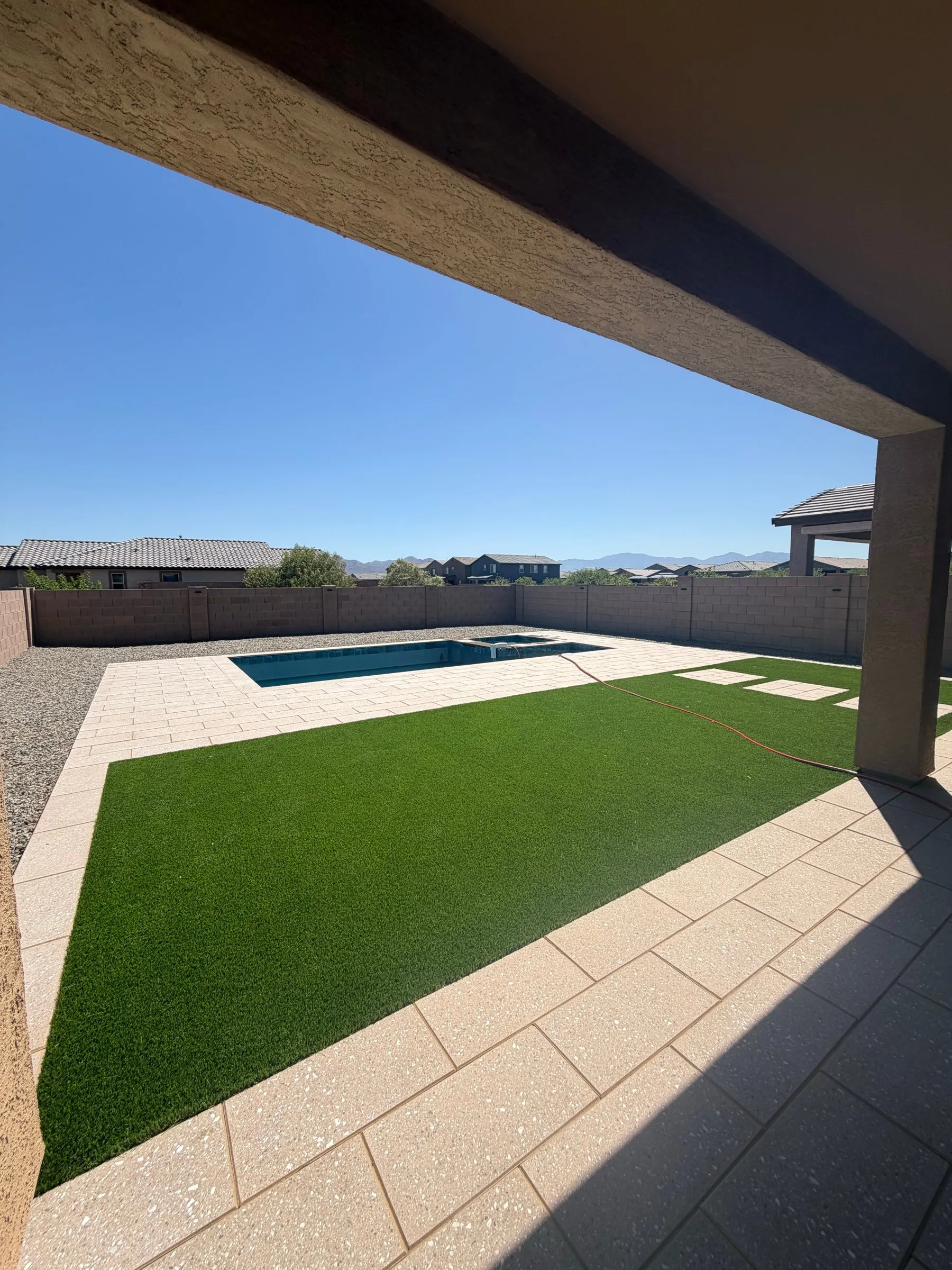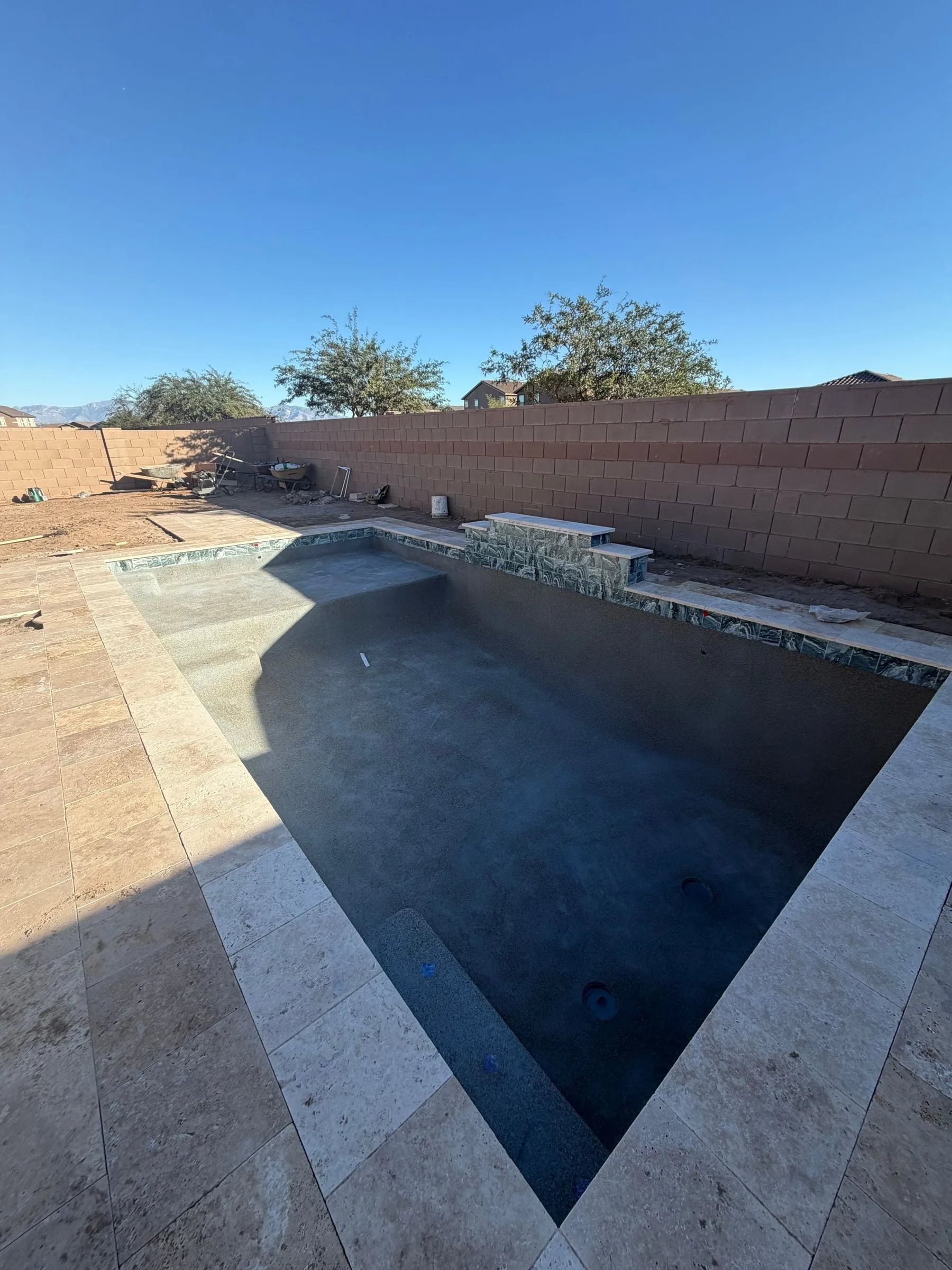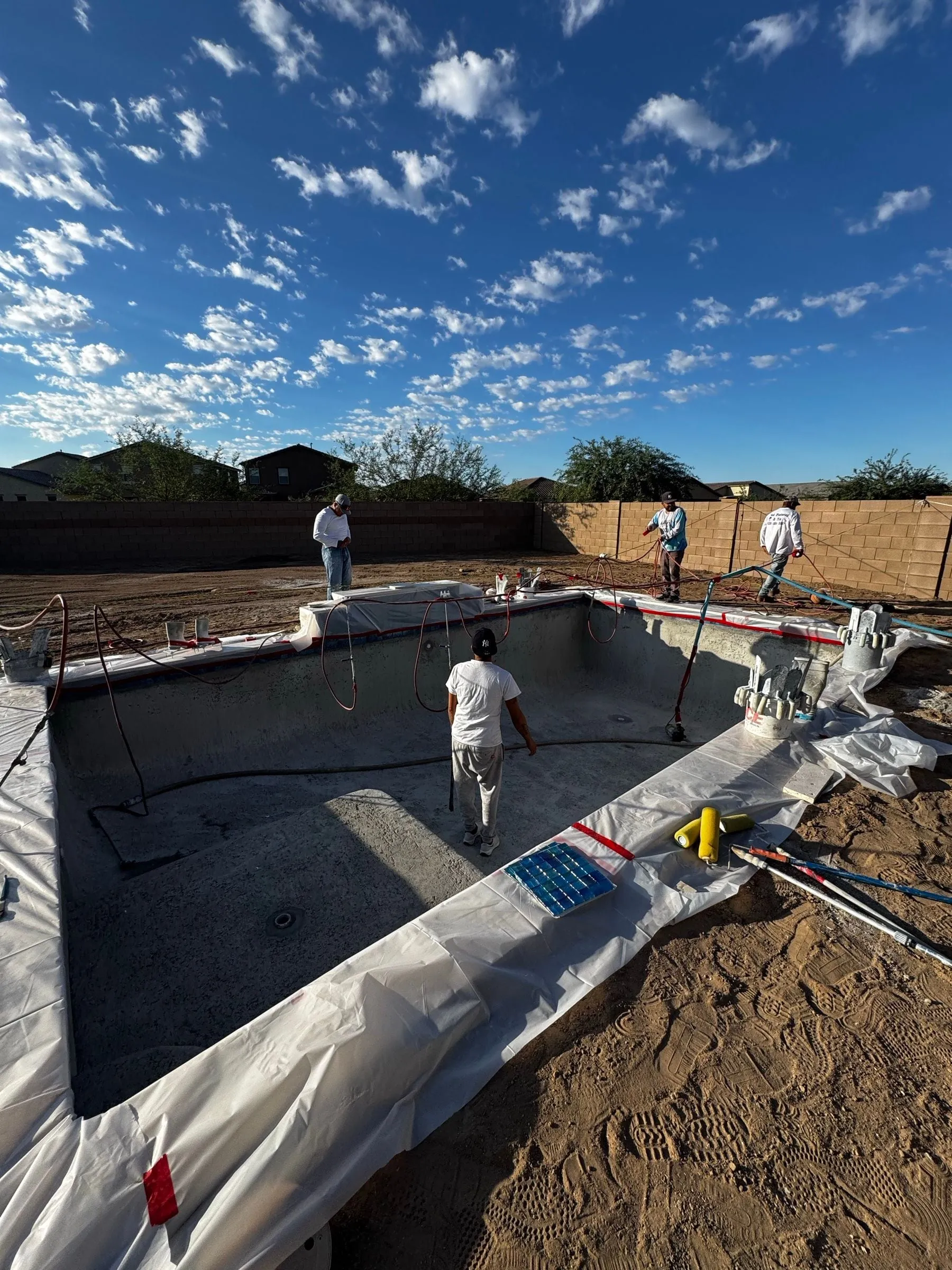
For most Arizona pools, a pebble finish is the best mix of durability, comfort and looks. Plaster is the lowest-cost option but wears faster in our heat and hard water, and quartz sits in the middle. We finish our pools in StoneScapes Mini Pebble because it holds up well in Tucson conditions and still feels comfortable on bare feet.
Below we walk through how each finish is made, what it feels like, how long manufacturers say it lasts, and what upkeep looks like in Southern Arizona.
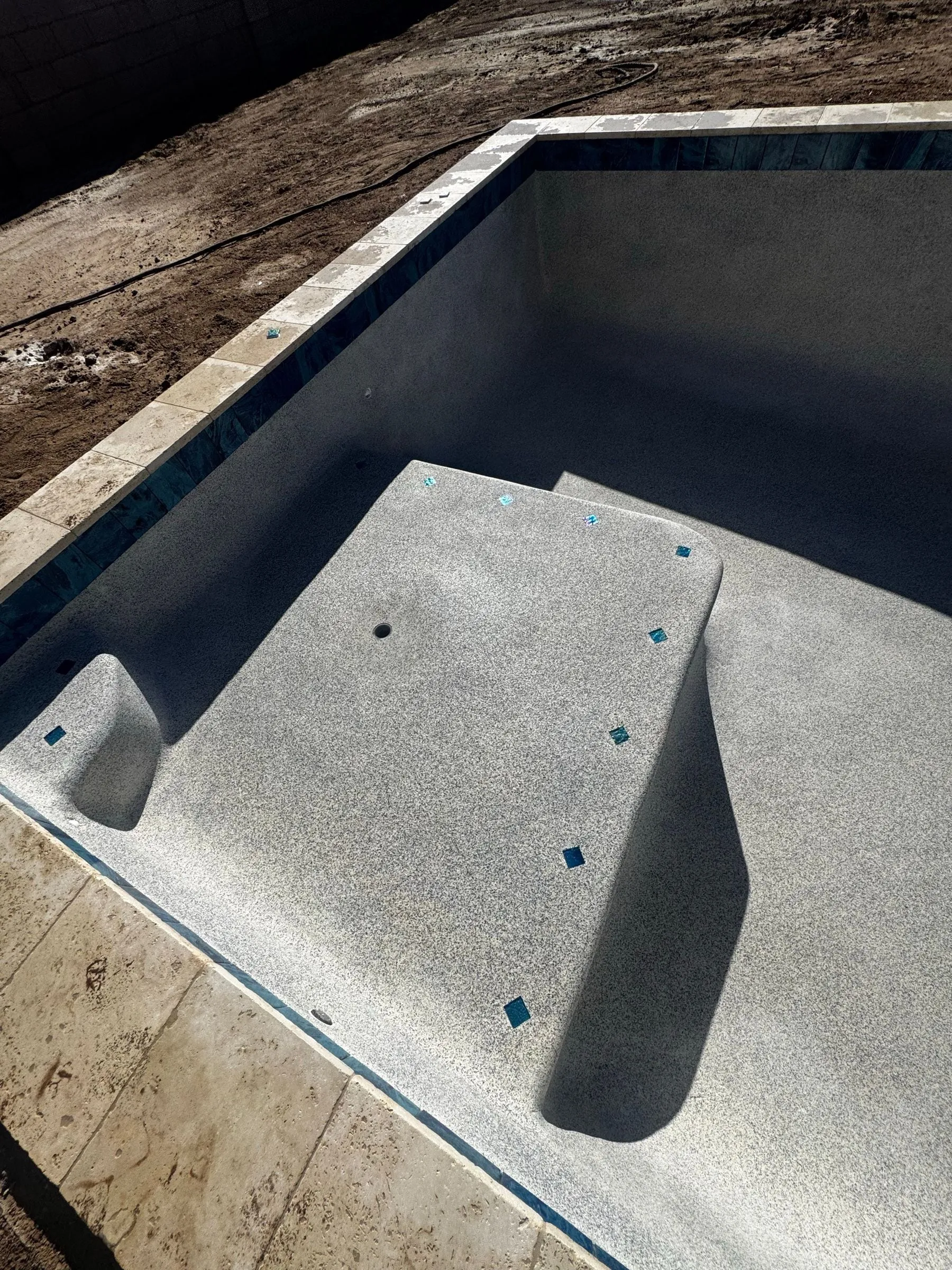
What is a pool finish, and why does it matter so much here?
The finish is the thin layer that covers the concrete shell of your pool. It is what you see through the water and what you touch when you sit on a step or push off a wall. It also seals the shell and takes the brunt of the water chemistry every day.
In Tucson, that layer works harder than it would in many places. Our water is hard, so calcium scale builds easily. Summer water temperatures climb, which speeds up chemical reactions. Strong UV fades colors over time. Monsoon storms blow dust and debris into the water. A finish that resists these things will look better longer and need fewer repairs.
Plaster, quartz and pebble: how are they made?
All three are cement-based. The difference is what gets mixed in with the cement.
Plaster
Traditional pool plaster is mostly white cement and marble dust or similar fine aggregate. It is hand-troweled to a smooth surface. White plaster is classic, and colored plasters are available too.
- Feel: Smooth when new.
- Look: Clean and uniform. White plaster gives bright, light blue water.
- Watch out for: Plaster is softer than quartz or pebble. Over time it can etch, stain and get rough, and colored plaster can show mottling.
Quartz
Quartz finishes add crushed, colored quartz to the cement. NPT’s QuartzScapes line, for example, blends colored quartz with white cement and mineral pigments. Quartz is a very hard mineral, so it helps the surface hold up better than plain plaster.
- Feel: Smooth, with a slight texture.
- Look: Small flecks of color and more color options than plaster.
- Watch out for: It is still a troweled cement surface, so chemistry and scale can wear it down over the years.
Pebble
Pebble finishes use small, rounded natural stones mixed with cement and pigment. After the finish is applied, the top layer of cement is removed to expose the stones. NPT describes its StoneScapes finishes as a blend of natural quartz pebble, specialty aggregates, pigments and white Portland cement.
- Feel: Textured, like a smooth riverbed. Smaller pebbles feel smoother.
- Look: Natural and varied, with depth and sparkle in the water.
- Watch out for: Higher upfront cost than plaster. Larger pebble sizes can feel rough to some swimmers.
Pebble vs plaster vs quartz: side-by-side comparison
Lifespan ranges below are as reported by finish manufacturer Pebble Technology International. Real life depends on installation quality and water care.
| Finish | How it feels | Look | Reported lifespan | Upkeep in Tucson heat and hard water |
|---|---|---|---|---|
| Plaster | Smooth when new, can roughen with age | Clean, uniform, classic white or soft colors | About 5 to 15 years before resurfacing | Most sensitive to etching, staining and scale. Needs steady chemistry. |
| Quartz | Smooth with slight texture | Colored flecks, wider color range | About 7 to 15 years | Holds up better than plaster but still a troweled surface |
| Pebble | Textured, rounded stones | Natural, varied, deep water color | 20+ years with good chemistry and care | Hides minor wear and resists stains and fading better. Still needs balanced water. |
For a deeper look at total project budgets, see our guide on what a pool costs in Tucson.
How does finish color change the water color?
This is the question we hear most at design meetings. The finish color is the biggest factor in what color your water looks.
- White and light finishes give bright, tropical blue or light aqua water.
- Gray and blue-gray finishes give a cooler, crisp blue.
- Tan or sand finishes can push the water toward teal.
- Dark finishes like black or midnight blue give deep blue, lagoon-style water.
Depth matters too. The deep end will always look darker than a tanning ledge or steps. Sun vs shade changes things, and so do your deck, landscaping and even the sky. A pool under a bright Tucson noon sun will look different than the same pool at dusk in Oro Valley with the lights on.
NPT offers an online water color tool that lets you preview finishes, which is a good starting point. Then we like to show real samples in your yard, since our sunlight is strong and can change how a color reads.
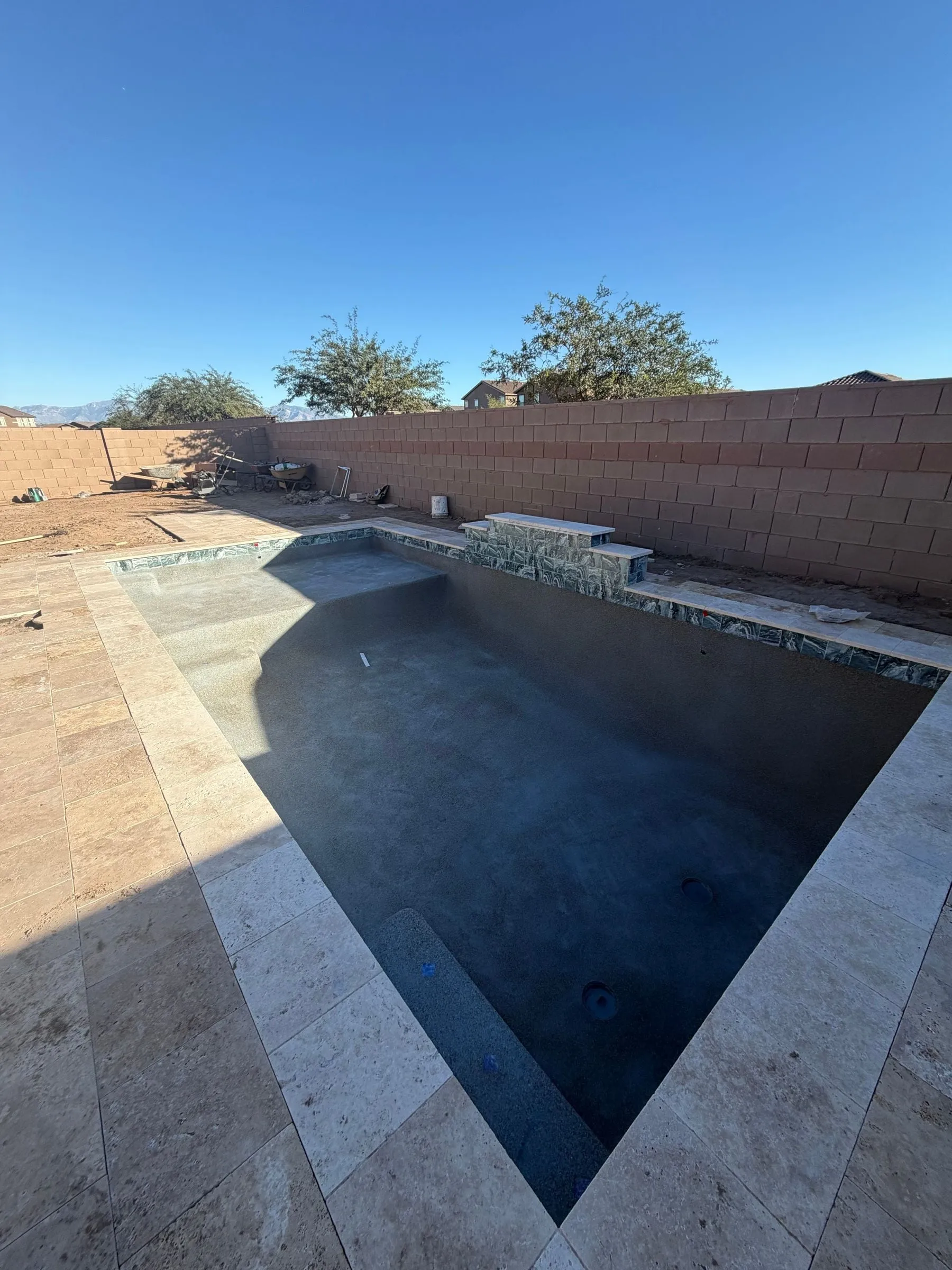
Popular pool plaster and pebble colors in Tucson
Desert homes often pair well with sand, gray and blue blends that echo the landscape and a travertine deck. Lighter colors also show less contrast with the hard-water haze and dust that can settle after a monsoon storm. If you love deep, dark water, that works too. Just know that dark finishes can make white scale lines and debris easier to spot, so good chemistry and brushing matter more.
Pairing finish, tile and deck colors is part of every design we do. Our post on decking materials that beat the heat covers the deck side.
Why we use StoneScapes Mini Pebble from NPT
We finish our pools with StoneScapes Mini Pebble, made by NPT. Here is why.
- The right texture. NPT offers Micro, Mini and Regular pebble sizes. Mini sits in the middle. It gives you the durability of pebble with a smoother feel than the larger Regular size, which matters for kids, ledges and spa seats.
- Durability for our climate. Pebble finishes resist staining, fading and wear better than plaster, which is a real plus with Tucson’s heat, UV and hard water.
- Color range. Mini Pebble comes in many colors, from White and Aqua Blue to French Gray, Tahoe Blue, Midnight Blue and Black, so it fits modern and classic desert styles.
- A trusted supplier. We also use NPT tile on many projects, so the finish and tile can be planned together. You can see more of the brands we work with on our partners page.
Every finish choice is shown in your 3D design and VR walkthrough before we build, so you can see how the color reads with your tile and deck.
What is an acid wash at startup, and what happens after the pool is filled?
A new pebble finish is not quite done when the crew walks away. A thin film of cement usually covers the tops of the stones. We acid-wash StoneScapes finishes at startup to remove that film and expose the pebbles. This brings out the true color and texture. It is a careful, one-time step, not something you repeat as regular cleaning.
After the pool is filled, the cement in the finish keeps curing for the first few weeks. The National Plasterers Council publishes a start-up procedure that focuses on:
- Brushing often to move fine cement dust into the filter before it settles and sticks.
- Testing and balancing the water regularly, including pH, alkalinity and calcium.
- Holding off on some equipment and chemicals until the finish is ready, such as automatic cleaners or adding salt. Your builder will tell you when.
We walk you through startup in person so you know what to do each day. If you are still choosing a sanitizer, our posts on salt vs chlorine and ozone systems explain the options.
How do you keep a pool finish looking good in Tucson?
A few habits go a long way for any finish:
- Keep water balanced. Low pH or low calcium can etch cement finishes. High pH and high calcium cause scale, which is common with our hard water.
- Brush weekly, more after dust storms.
- Watch the waterline. Hard water leaves white scale at the tile line, especially in summer when water evaporates fast.
- Run a cover when you can. It cuts evaporation and keeps out debris.
- Clean the filter on schedule so fine dust from monsoon season does not settle on the floor.
If your current finish is rough, stained or flaking, read our guide on pool resurfacing and remodeling in Tucson. And if you are thinking about adding warm water to the mix, see heat pump vs gas vs solar pool heating in Tucson.
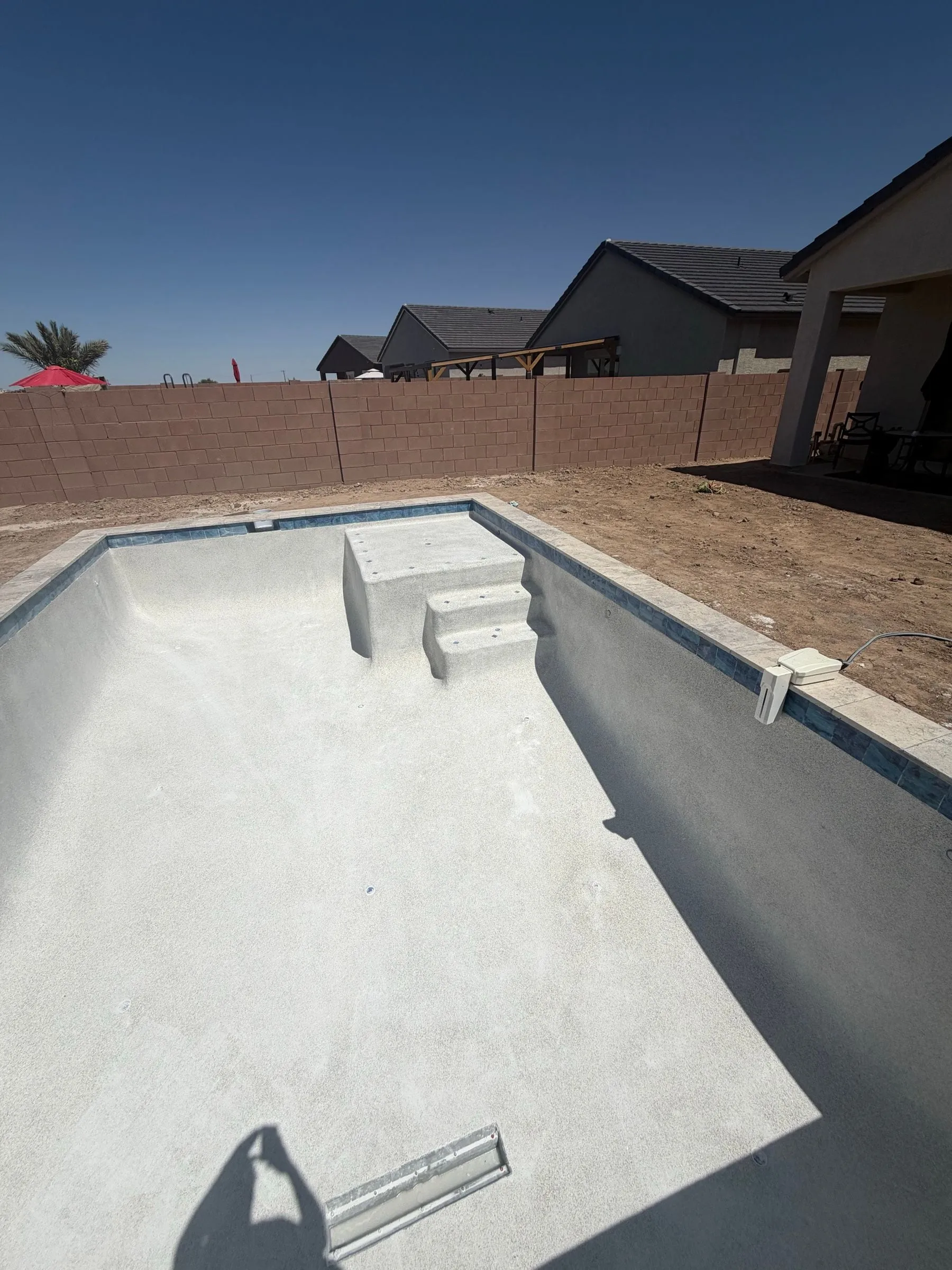
Ready to pick a finish?
We are happy to bring samples to your yard in Tucson, Marana, Oro Valley, Vail, Sahuarita or nearby, and show you each color in your 3D design. Contact us or call (520) 342-8335 to set up a time.
Sources
- NPT: How to Pick the Perfect Pool Finish
- NPT: Pool Finish Types
- NPT: StoneScapes Mini Pebble colors (example: Aqua Blue Mini)
- NPT Water Color App
- NPT: National Plasterers Council Start-Up Procedure
- Pebble Technology International: How Long Does a Pebble Pool Finish Last?
- Pebble Technology International: Plaster vs. Pebble Pool Finishes
- Pebble Technology International: Choosing a Finish for the Best Water Color
Put this guide to work
Planning your own project? See our Pool Resurfacing & Replastering in Tucson and Pool Tile & Coping Replacement in Tucson, or read about building a pool in Marana, Oro Valley or Vail.
Frequently asked questions
What pool finish lasts the longest in Arizona?
Pebble finishes are generally the longest lasting of the three common cement-based finishes. Manufacturers report that a well-installed pebble finish can last 20 years or more with good water care, while plaster and quartz usually need resurfacing sooner. In Tucson, balanced water chemistry matters a lot because hard water and heat speed up scaling and etching.
Is a pebble pool finish rough on your feet?
It depends on the pebble size. Larger pebbles feel more textured, while smaller pebbles like StoneScapes Mini Pebble feel smoother and more even underfoot. Most swimmers get used to the texture quickly, and the stones are rounded, not sharp.
What pool finish color makes the water look the bluest?
Lighter finishes such as white, light blue and aqua blends tend to give bright, tropical blue water. Gray finishes push the water toward a cooler blue, and dark finishes like black or midnight blue give a deep blue or lagoon look. Depth and sunlight also change the shade you see.
Do dark pool finishes make the water warmer?
Many people feel dark finishes hold a little more warmth from the sun, but the effect is small compared to air temperature, a pool cover or a heater. In Tucson summers, the water often gets warm enough on its own. Pick a dark finish for the look, not as a heating plan.
Why does a new pebble pool need an acid wash?
After a pebble finish is applied, a thin film of cement can sit over the stones. A careful acid wash at startup removes that film and exposes the pebbles so the color and texture show the way they should. It is a controlled step done once at startup, not a regular cleaning method.
How do I take care of a new pool finish?
The first few weeks matter most because the cement is still curing. Brush the whole pool often to remove dust, keep the water balanced, and follow your builder's startup steps for when to add salt or run an automatic cleaner. Good habits early help prevent stains, scale and blotchy color later.