For most Tucson families, a pool does not need a deep end. A play pool that stays shallow enough to stand in everywhere is the most popular choice, because kids and adults can both use the whole pool. A deeper section only makes sense if you want room to dive or a specific kind of swimming, and diving requires a pool built to a specific depth and shape.
Depth also affects cost, water use and heating. Here is how to choose.
What are the main pool depth styles?
Most residential pools fall into one of three types.
Play pool (consistent shallow depth)
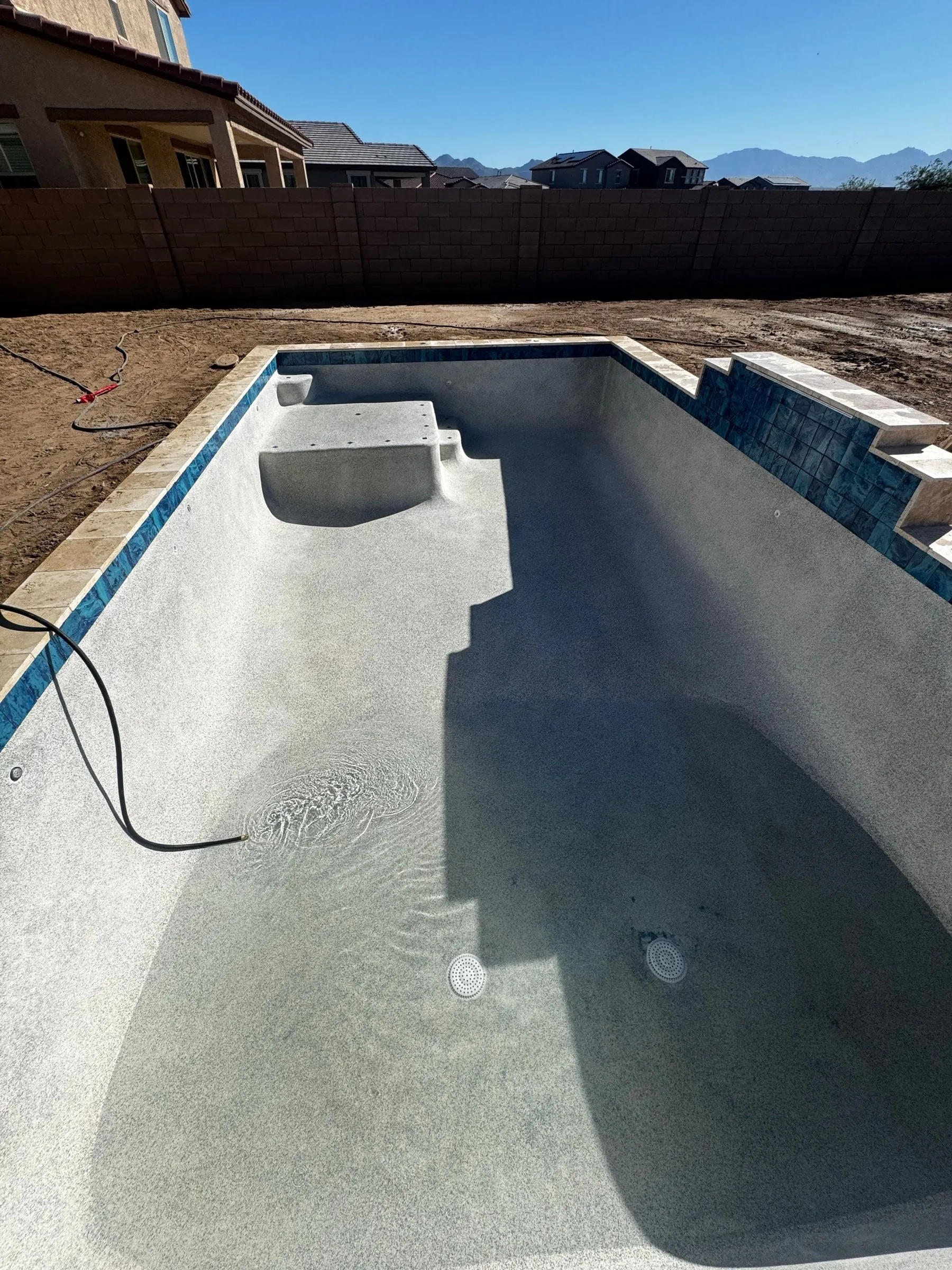
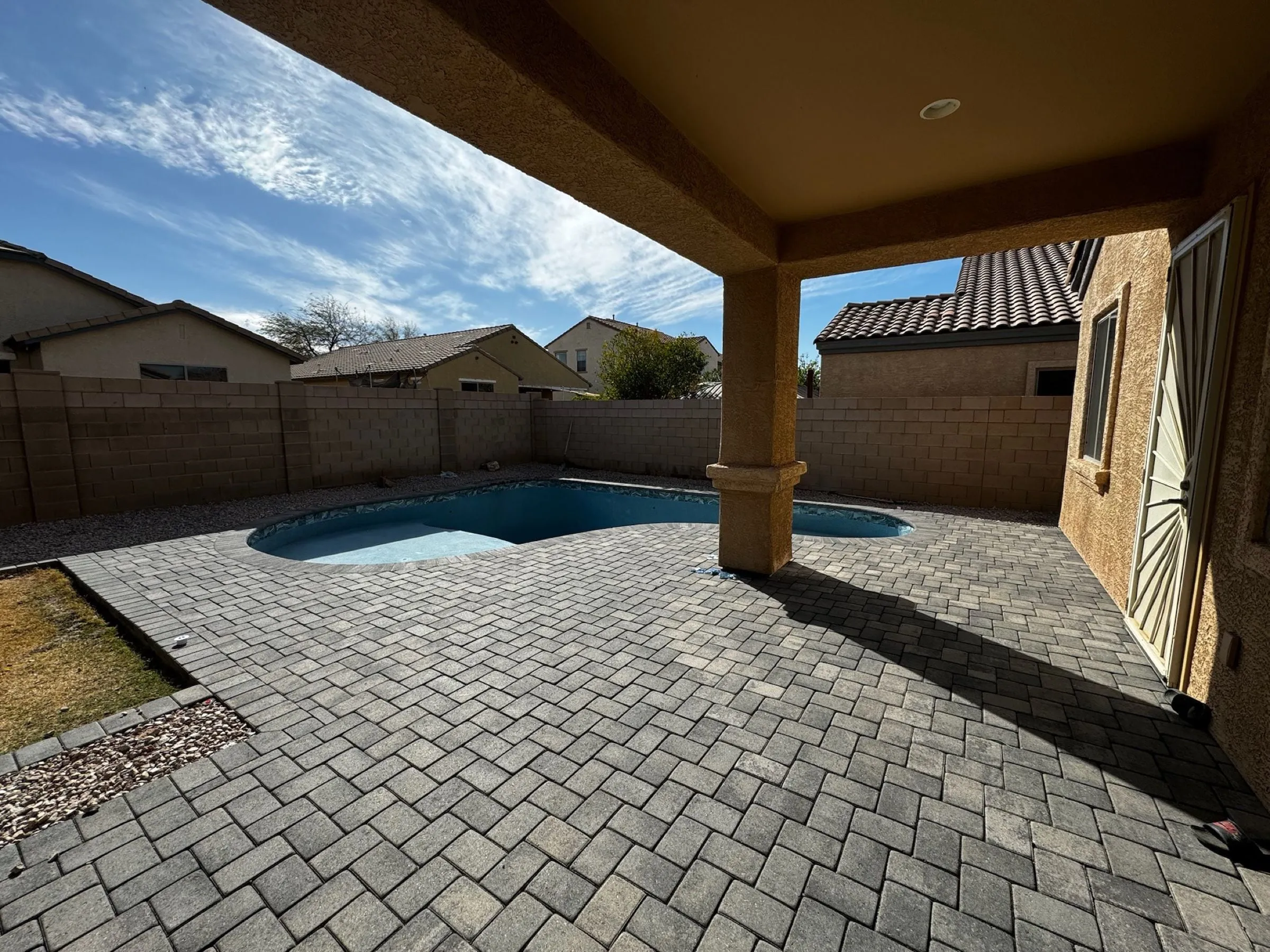
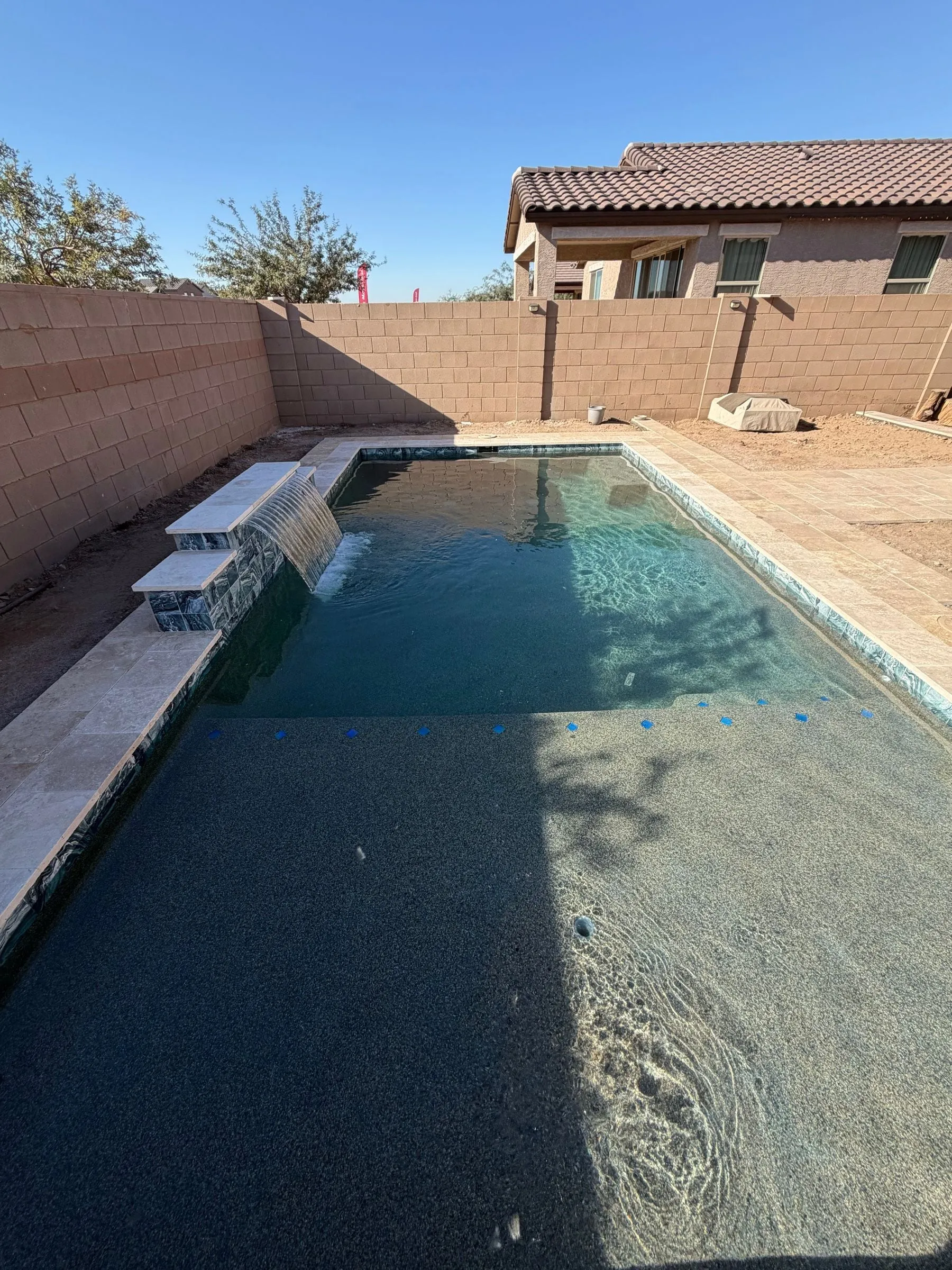
A play pool keeps an even, shallow depth across most of its floor, usually with steps or a tanning ledge at one end. Adults can stand anywhere, which makes it easy to play games, watch kids and lounge in the water.
This is the most common choice for families with young kids, for adults who use the pool to cool off, and for smaller yards. Our guide to kid-friendly pool design covers how to lay out a shallow play area.
Sport pool
A sport pool is shallow at both ends and a bit deeper in the middle. It works for volleyball and basketball at the ends and swimming in the middle. It suits families with older kids who want a little more depth without a full deep end.
Pool with a deep end
A traditional pool slopes from a shallow end to a deep end. Some owners want deep water for jumping, treading water or simply the feel of it. If the deep end is meant for diving, it has to be designed and built for that from the start.
How deep should a pool be for kids?
Think about who will use the pool now and in ten years.
- Toddlers spend most of their time on steps and the tanning ledge, with an adult beside them.
- Young swimmers need a large area where they can touch bottom and build confidence.
- Teens like to jump, swim laps and play games, which a shallow or sport pool still handles well.
Whatever depth you choose, safety starts with the barrier. Arizona’s pool barrier law applies to any pool that holds water 18 inches or more deep at any point and is wider than 8 feet, so even a shallow pool needs a full barrier. We build every barrier to at least 5 feet. Our pool barrier guide explains the local rules.
Why do many new residential pools skip diving?
Many homeowners decide a diving area is not worth it. The reasons are practical:
- Diving needs a specific shape. A safe diving area is about more than one deep spot. The floor has to stay deep far enough out from the board, and then slope up gently. This shape is often called the diving envelope.
- Diving boards have their own requirements. Board and platform makers set minimum water depths and pool dimensions for each model. Local pool codes also have rules for diving areas. If you want diving, the pool has to meet both, and you should follow the code and the manufacturer’s instructions exactly.
- It takes space. The deep area has to be large enough and long enough, which can be hard to fit in a typical Tucson or Marana backyard.
- It costs more to build and run. More digging, more concrete and more water.
- Most families use the shallow water more. A deep end often ends up as wasted space.
If you skip diving, mark the pool with no-diving markers and make it a house rule. Shallow water and headfirst entries do not mix.
How does pool depth affect cost?
Depth is one of the biggest levers on project size. A deeper pool means:
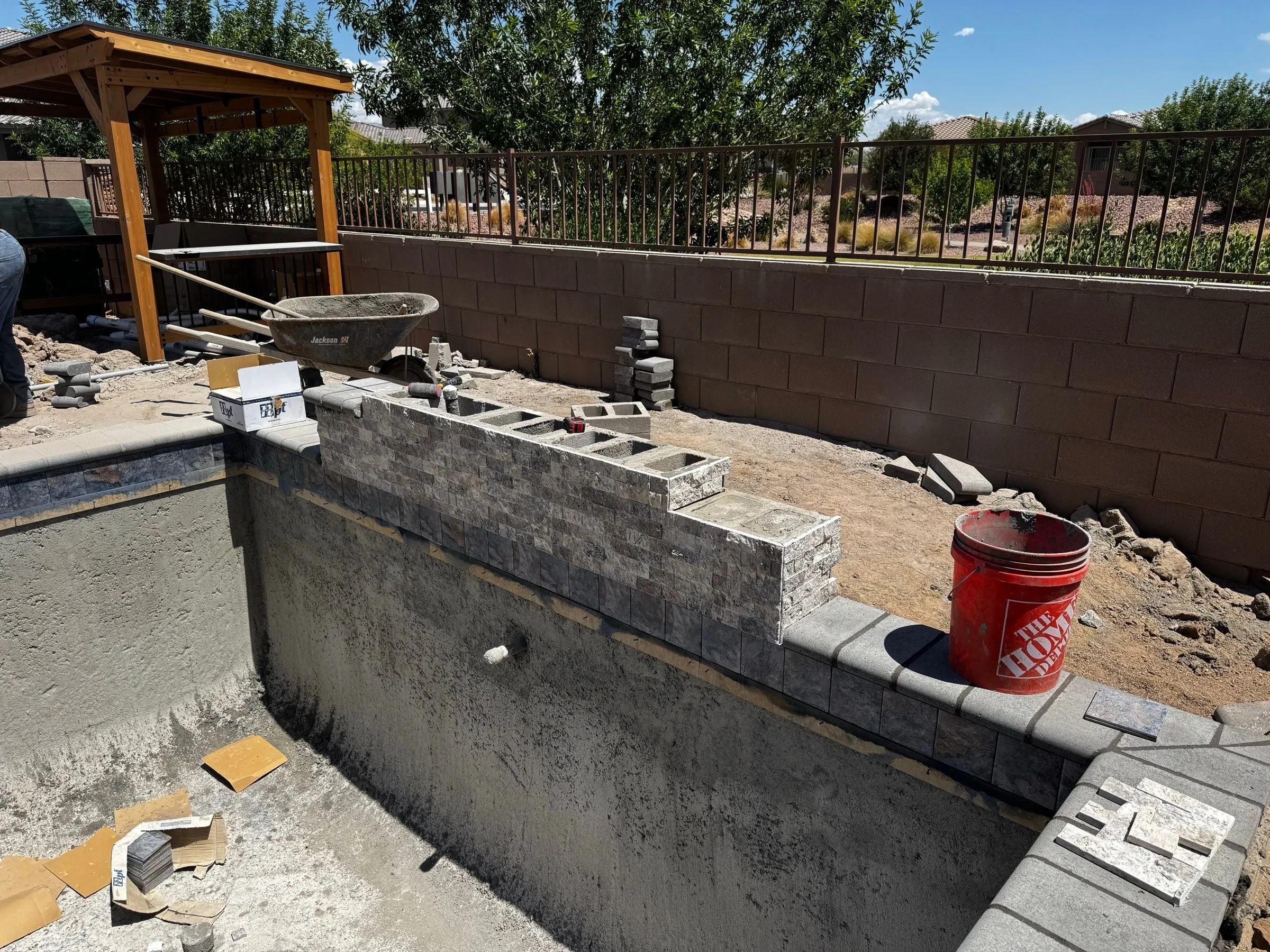
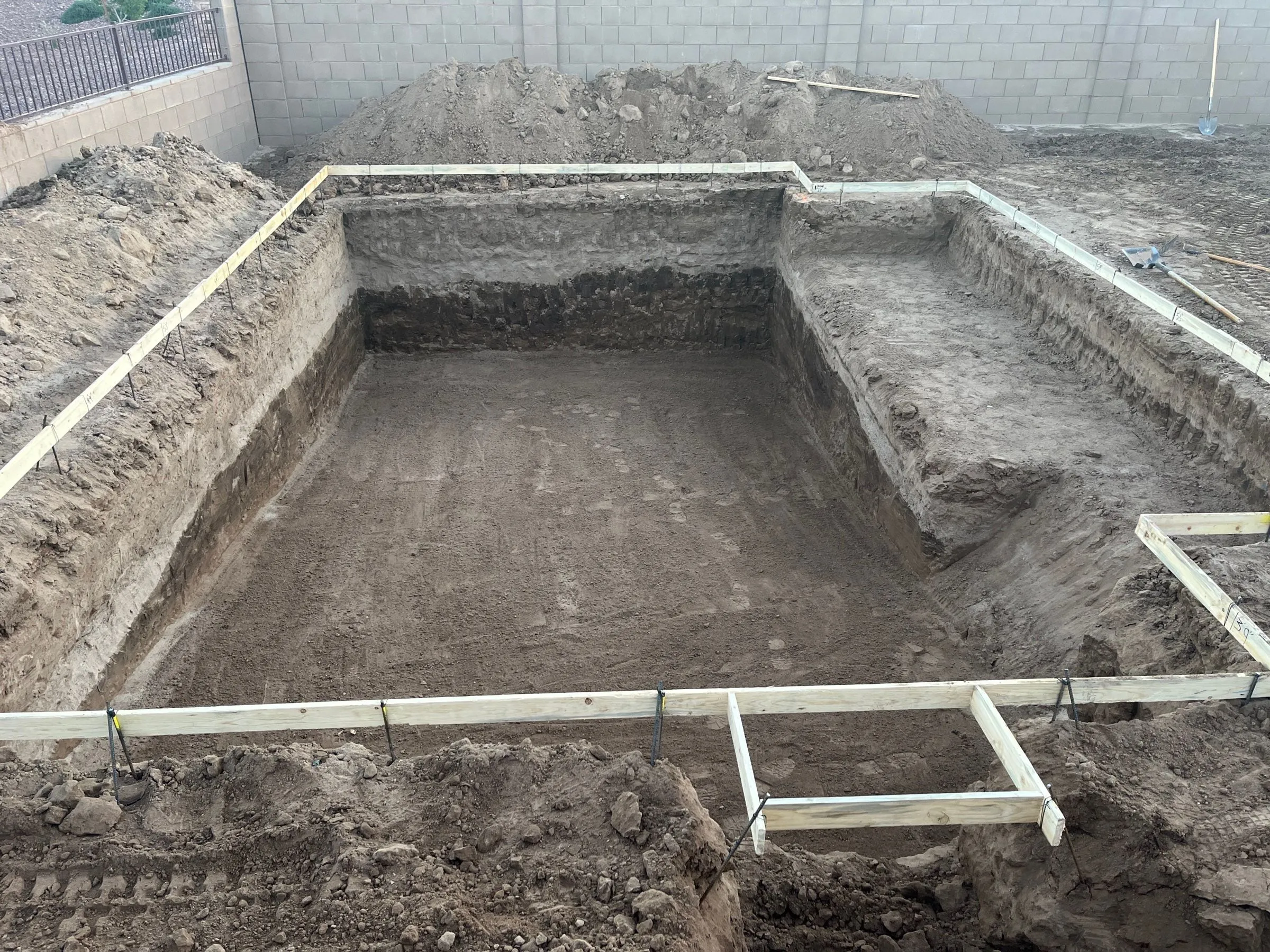
- More excavation. In Tucson that often means digging through caliche, which takes heavier equipment and more time. We own our excavation equipment, which helps, but rock is still rock. Our post on building a pool in caliche explains why.
- More shotcrete and steel for taller walls and a deeper floor.
- More interior finish to cover the extra wall area.
- More water to fill and to balance with chemicals.
New custom pools from our company typically run about $40,000 to $120,000 or more, and depth is one of many factors. Our pool cost guide covers the rest.
How much more water does a deeper pool hold?
One cubic foot holds about 7.48 gallons of water. That makes it easy to see how depth changes volume. Here is a simple example for a 15-by-30-foot pool:
| Average depth | Approximate volume |
|---|---|
| 4 feet | about 13,500 gallons |
| 4.5 feet | about 15,100 gallons |
| 5 feet | about 16,800 gallons |
| 6 feet | about 20,200 gallons |
These are simple length times width times average depth figures. Real pools have steps, benches and sloped floors, so your builder should give you the exact volume from the design. With our 3D design, you see the depth and the gallons before we dig.
Does depth affect Tucson water use and bills?
Depth matters most for the first fill and any later drain and refill. A deeper pool holds more gallons, so it costs more to fill. Our post on how much it costs to fill a pool in Tucson walks through the math with current rates.
After the fill, most water loss comes from evaporation, which depends mostly on surface area, weather and whether the pool is covered. A shallow pool and a deep pool with the same footprint lose about the same water to evaporation. A pool cover is the best way to cut that loss.
Volume also matters for water chemistry. In Tucson’s hard water, a smaller volume is a little easier and cheaper to balance, and cheaper to partly drain when minerals build up. Our guide to pool water chemistry and Tucson hard water explains why.
Does depth affect heating?
Yes. More water takes more energy to warm up. A shallow play pool with the same footprint holds less water, so it heats faster and costs less to warm in spring and fall.
Shallow water also warms faster in the sun. In July and August, that can make a very shallow pool feel too warm, which is one reason most designs balance shallow play areas with enough depth to stay refreshing.
Quick comparison: which depth style fits you?
| Style | Best for | Trade-offs |
|---|---|---|
| Play pool | Young kids, lounging, games, smaller yards | No deep water for jumping or diving |
| Sport pool | Older kids, volleyball, a bit of swimming depth | Middle area not ideal for toddlers |
| Deep end, no diving | Owners who want deep water to jump and tread | More cost and water, less usable area |
| Diving pool | Owners committed to diving | Needs specific depth, shape and board standards, more space and cost |
What about spas and features at different depths?
Depth is not only about the main pool floor. Other features have their own depths:
- Tanning ledges hold just a few inches of water for lounging and toddler play.
- Steps and benches step down gradually, so they double as seating.
- Spas are their own small, deeper body of water with a seating bench, usually heated and kept covered when not in use.
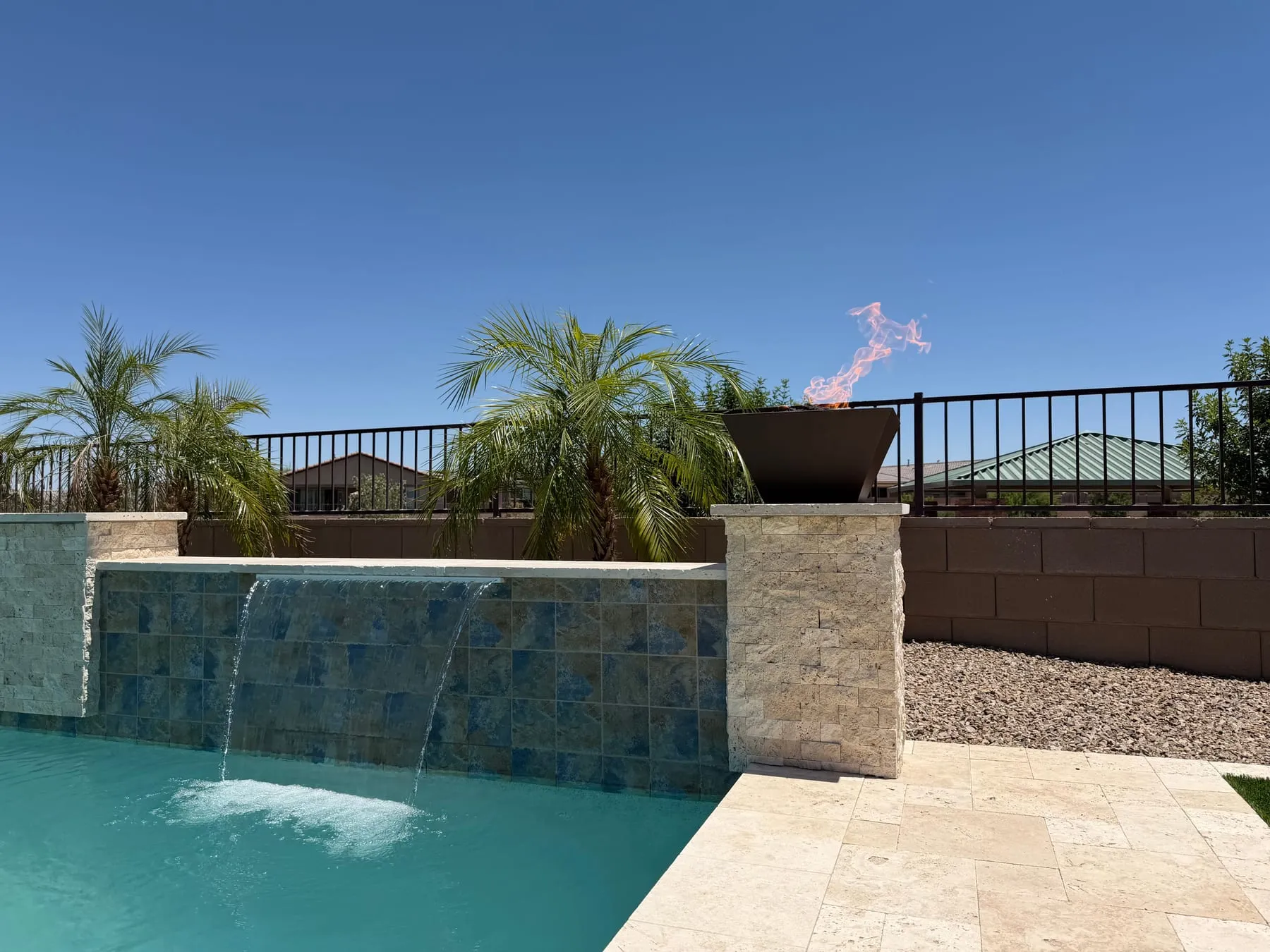
- Swim-up areas near an outdoor kitchen or fire feature need enough depth to sit or stand comfortably.
Planning these together keeps the whole pool comfortable for everyone, from toddlers on the ledge to adults in the spa.
Tips for choosing your pool depth
- Stand in the water in your head. Picture where each person in your family can touch bottom.
- Use depth markers on the coping or tile so everyone knows the depth.
- Mark depth changes with a contrasting tile band.
- Add a tanning ledge and wide steps for the shallowest play and lounging.
- Think about the future. Kids grow fast. A pool that works for a 3-year-old should still be fun at 13.
- Ask for the exact volume so you can plan fill costs, chemicals and heating.
Let’s design the right depth for your family
We plan depth in 3D with every client, and you can walk the pool in VR to see how deep each area feels before we dig. We will show you the exact depths, the volume in gallons and how each area works for your family.
Meraki Pools AZ is a family-owned Tucson pool builder, licensed under AZ ROC #342505 and #352797. Call (520) 342-8335 or request a free estimate.
Put this guide to work
Planning your own project? See our Custom Pool Construction in Tucson, or read about building a pool in Marana.
Frequently asked questions
What is a good pool depth for a family?
Most families do best with a play pool, a pool that stays shallow enough for adults to stand everywhere. Kids can learn to swim, adults can play and lounge, and nobody gets stuck in a deep end. If your kids are older and strong swimmers, a sport pool with a slightly deeper middle is another option.
Do I need a deep end in my pool?
Only if you plan to dive or want deep water for a specific reason. Without diving, a deep end mostly adds water, cost and depth that few people use. Many Tucson families choose a consistent shallow depth and put the extra budget into a tanning ledge, spa or water features.
How deep does a pool need to be for diving?
Diving needs a specific depth and shape of the pool floor, called the diving envelope, and it depends on the board or platform. Follow your local pool code and the diving board manufacturer's requirements. Never dive into a pool that was not designed for it, and post no-diving markers on shallow pools.
Does a deeper pool cost more?
Yes. A deeper pool means more digging, often through caliche in Tucson, more concrete and steel, more interior finish and more water to fill and keep balanced. It also holds more water to heat. Depth is one of the easiest ways to control the size of a project.
Does pool depth affect water use in Tucson?
Depth mostly affects the first fill and any future drain and refill, because a deeper pool holds more gallons. Evaporation depends mainly on the water's surface area, weather and whether you use a cover, not depth. A cover is still the best way to cut water loss.