If you live in a master-planned community like Gladden Farms, Dove Mountain, Rita Ranch, Vail or Sahuarita, you will likely need HOA architectural approval before you build a pool. The committee usually wants a site plan with setbacks, the equipment location and screening, any wall or view fence changes, and how crews will get into the yard. HOA approval runs alongside your city or county permit. It does not replace it.
Every HOA has its own rules, so we cannot tell you what yours requires. What we can do is explain what committees in our area usually ask for and how to keep the process from slowing down your build.
Why do HOAs review pool plans?
A pool changes more than your backyard. Equipment makes noise near a neighbor’s bedroom. A wall opening for access affects the look of the street. A new view fence changes what the golf course or open space sees. Drainage from a deck can end up on the lot next door.
HOAs review plans to protect the neighborhood’s look and to keep one project from causing problems for others. The rules are in your CC&Rs and your architectural or design guidelines. In Arizona, planned community law requires an HOA’s design or architectural review committee to include at least one board member, who serves as its chair (A.R.S. 33-1817).
What do HOAs typically ask for in a pool application?
Requirements vary, but most applications we see ask for some mix of the items below. Read your own guidelines for the exact list.
Site plan with setbacks
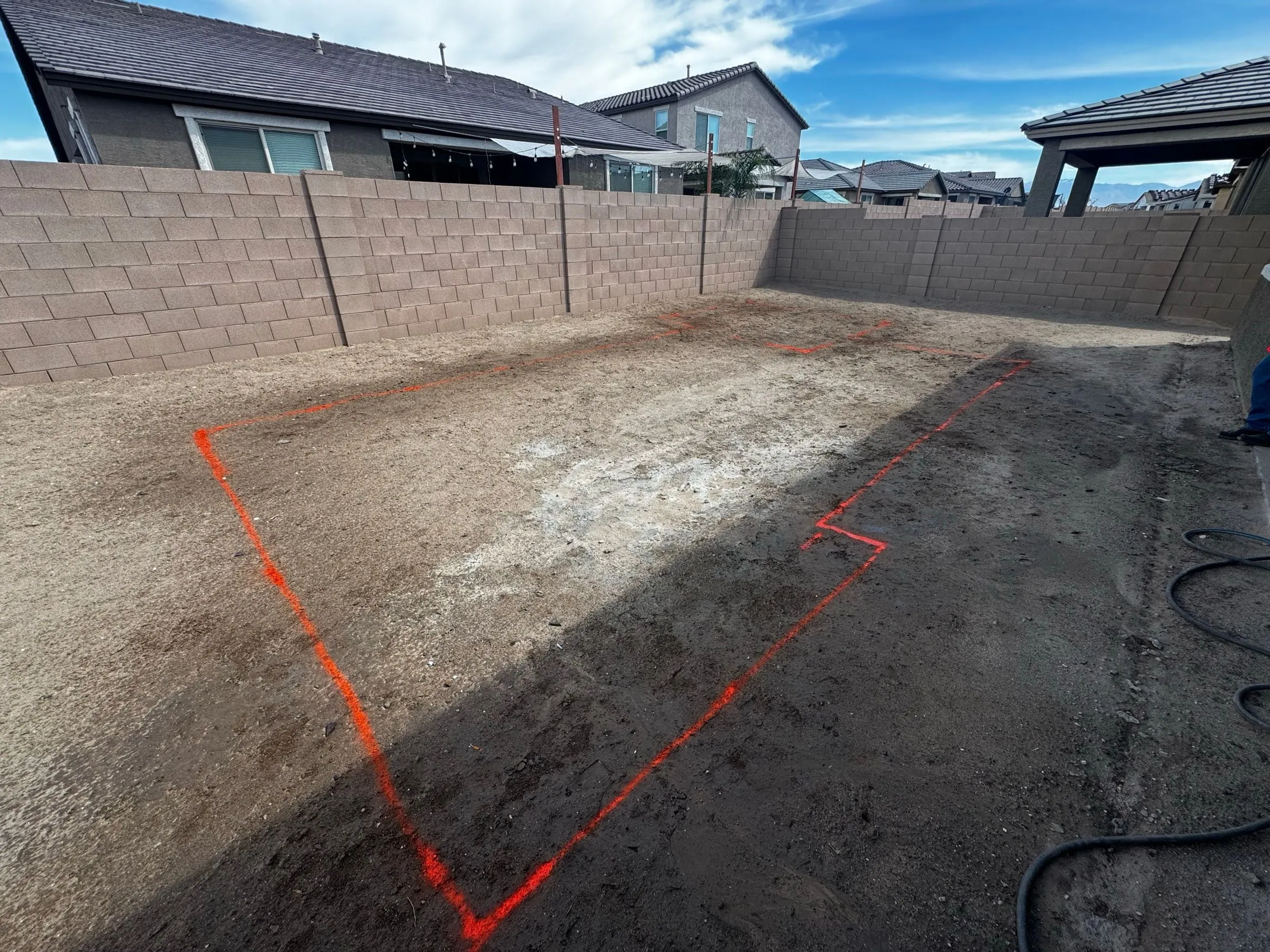
A drawing of your lot showing property lines, the house, the pool and spa with dimensions, and the distance from the water’s edge to each property line. Many HOAs have their own setback rules on top of the city or county rules. Easements matter too. Building over a utility or drainage easement is usually not allowed without permission.
Pool plans and design details
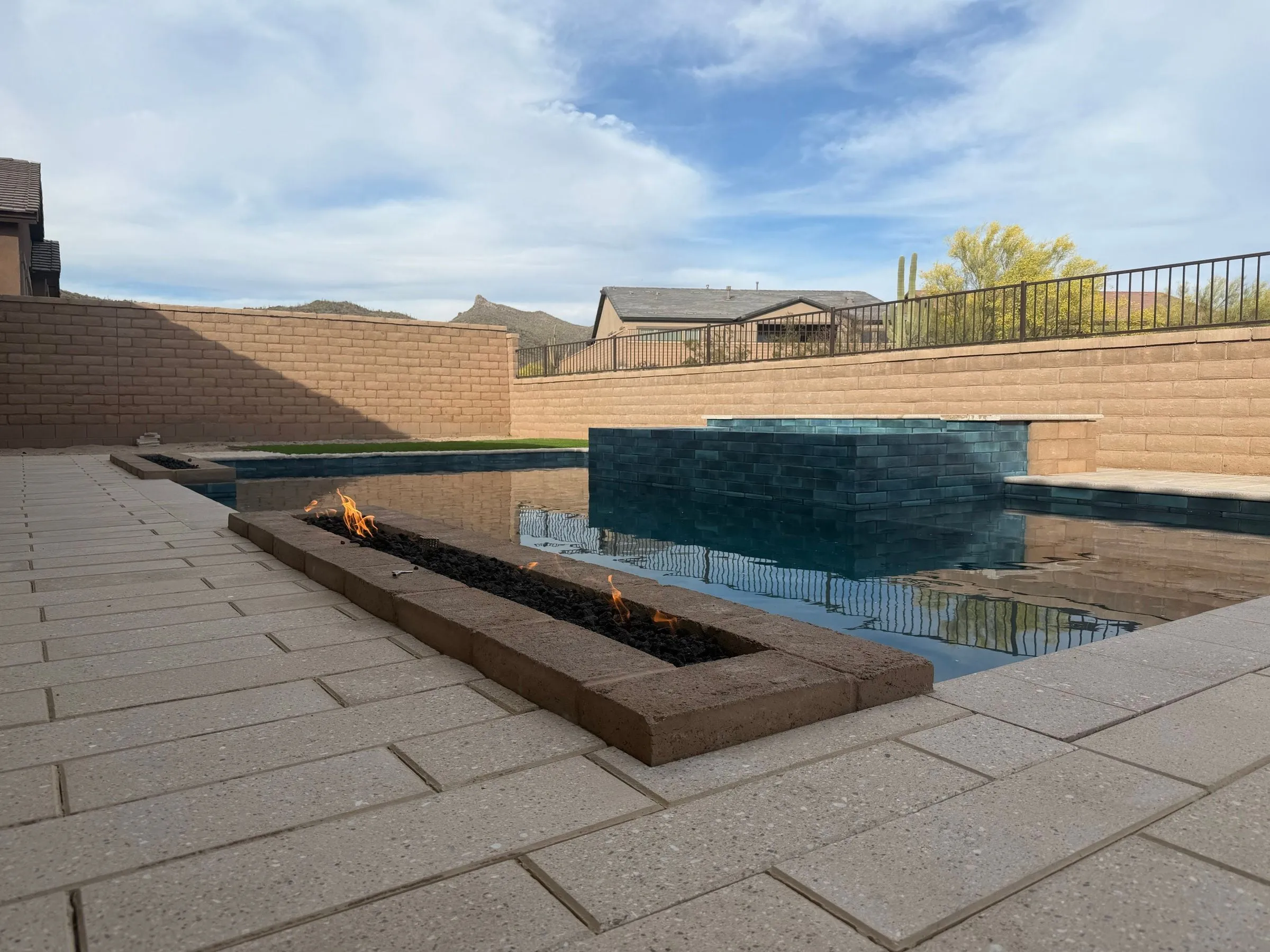
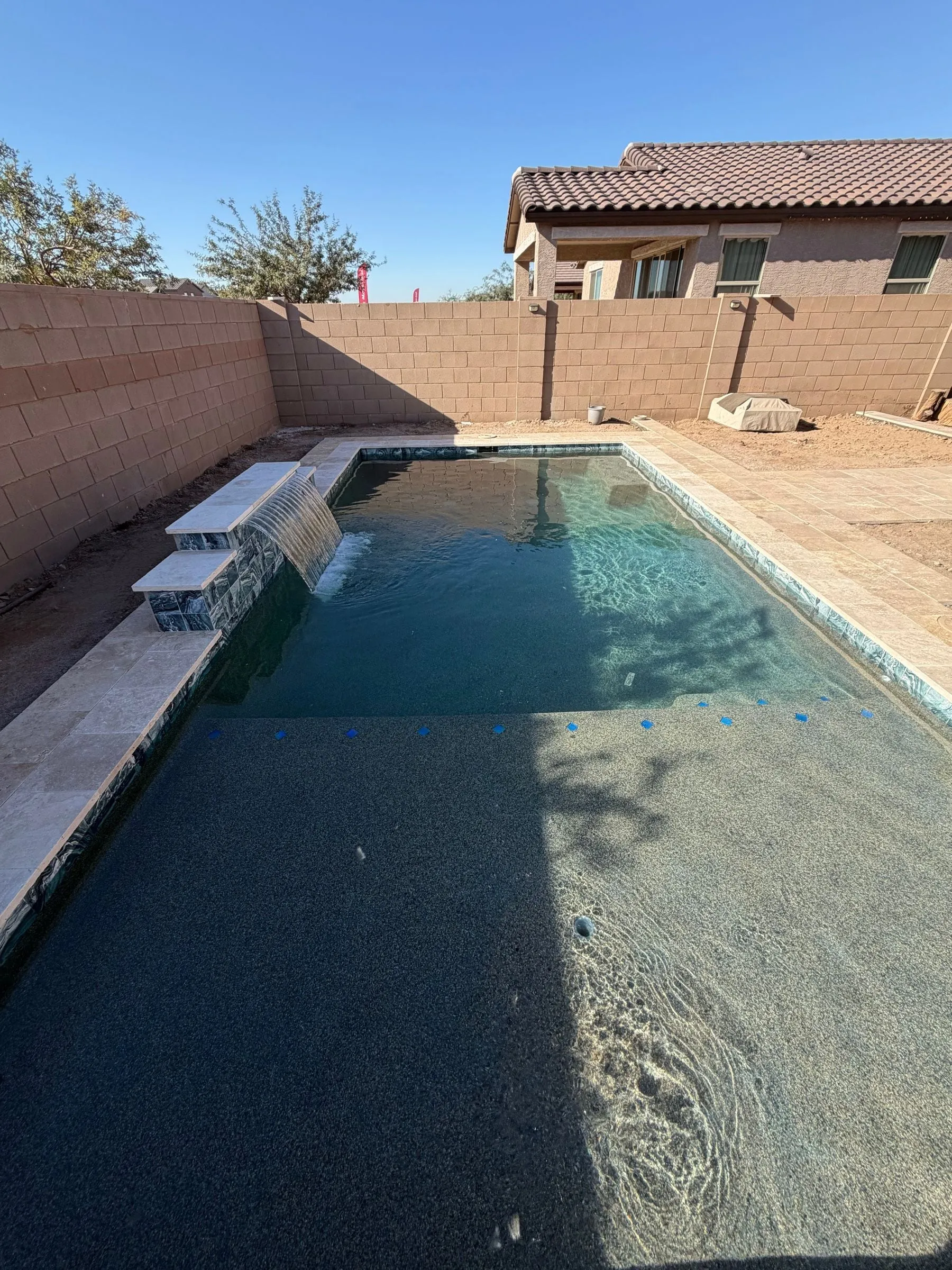
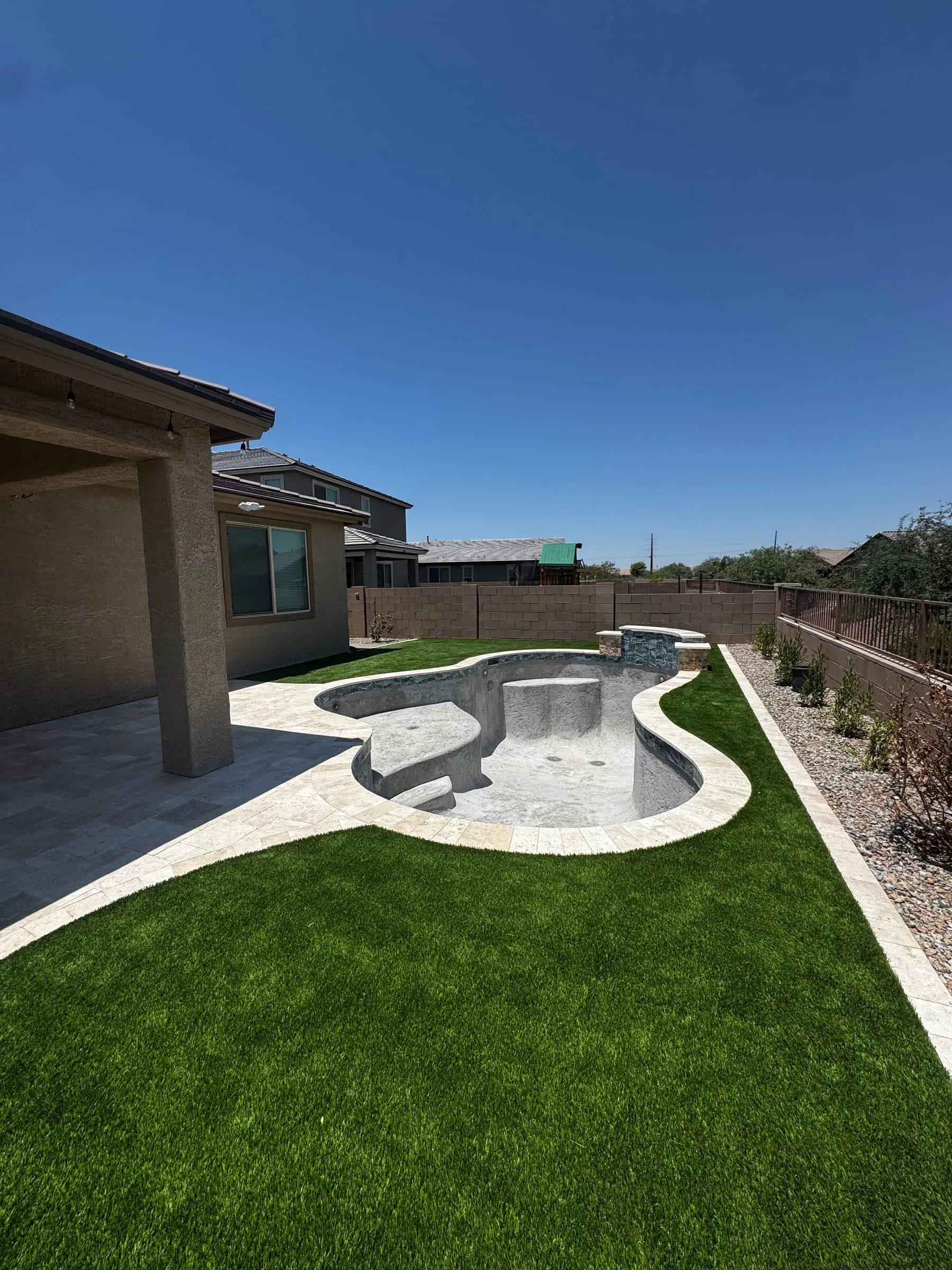
The committee may want the pool shape and size, depth, the deck layout and materials, and any raised walls, water features or fire features. Some ask about colors, especially for anything seen above the wall line. Our 3D designs help here. A rendering shows the committee exactly what will be built instead of asking them to read a construction drawing.
Equipment location and screening
This is one of the most common requests. HOAs often want pool equipment placed away from neighbors’ windows and hidden from view, usually behind a wall or a screen. Some ask for the equipment to sit a set distance from the property line. Variable-speed pumps like the Pentair IntelliFlo3 we use run quieter at low speeds, which helps with noise concerns, but placement still matters. Plan the equipment pad early, because it affects plumbing runs and your side yard.
Wall and view fence changes
Many Tucson-area lots back onto golf courses, washes or open desert with a view fence or open wrought iron. Adding a pool may mean changing that fence to meet the pool barrier law. Arizona requires a pool barrier at least 5 feet tall, and we build every barrier to at least 5 feet. HOAs often care about the look of any new wall or fence: block type, stucco, paint color, cap style and height.
Our guide to Arizona pool barrier and fence rules explains the safety side. The HOA application covers the look. You need to satisfy both.
Construction access through walls
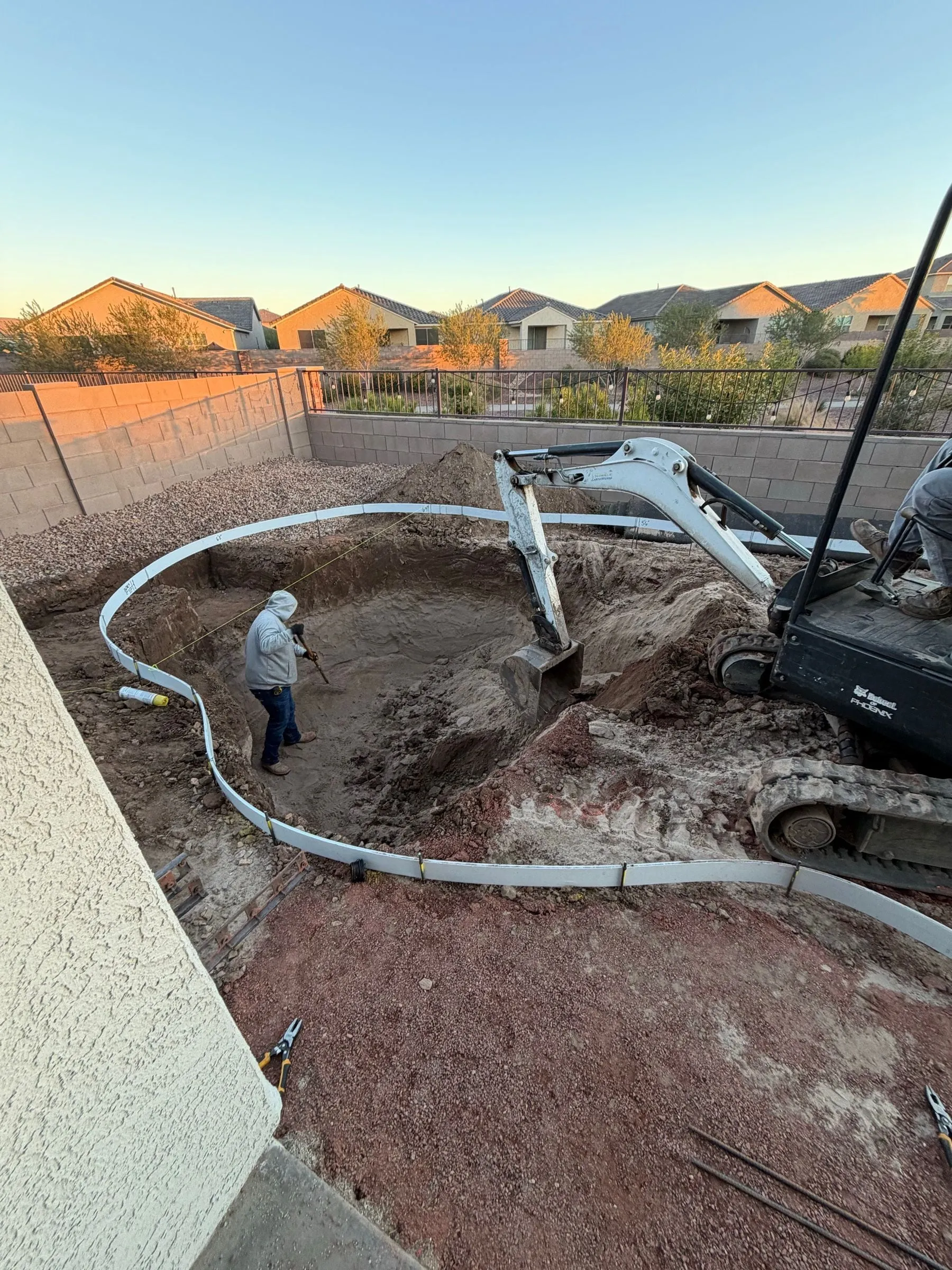
On many newer lots, especially in Gladden Farms and parts of Sahuarita and Vail, side yards are too narrow for an excavator. The usual fix is to take down a section of the rear or side wall, use it as the access point, and rebuild it after the heavy work is done.
HOAs usually want to know:
- Where the opening will be and how wide
- Whether equipment will cross common area, a trail or a neighbor’s lot
- How long the wall will be open, and how the yard will be secured in the meantime
- How the wall will be rebuilt to match the existing block, finish and paint
If access crosses common area or a neighbor’s property, you may need written permission. Some permit offices ask for it too. Our block walls and pool fences page shows how we rebuild walls to match.
Lot drainage
Your lot was graded to send rain water a certain way, often toward the street or a drainage area. A pool and deck change that. HOAs may ask how deck drains, roof runoff and pool overflow will be handled so water does not flow onto a neighbor’s lot. This matters a lot during monsoon season. Draining and backwashing a pool also have their own local rules.
Work hours and site rules
Many HOAs limit construction to certain hours and days, and have rules about dumpsters, dirt piles, portable toilets, street parking and cleaning up mud on the road. Some ask for a deposit that is returned after the work passes their review. Ask for these rules up front so your crew can follow them from day one.
How does HOA approval fit with the city or county permit?
They are separate approvals from separate groups, and you need both.
| HOA architectural approval | Building permit | |
|---|---|---|
| Who reviews it | Your HOA’s architectural or design committee | City of Tucson, Town of Marana, Town of Sahuarita, Oro Valley, or Pima County |
| What it checks | Looks, placement, setbacks, walls, equipment, neighborhood rules | Structural design, electrical, plumbing, barrier and code safety |
| Who usually applies | Homeowner, with plans from the builder | Licensed pool contractor |
| Where the rules come from | CC&Rs and design guidelines | Adopted building and pool codes |
Which permit office you deal with depends on where your home sits. Gladden Farms and most of Dove Mountain are in the Town of Marana. Many Rita Ranch homes are in the City of Tucson. Vail is largely unincorporated Pima County, and Sahuarita has its own town permit office. Our Tucson pool permits guide explains each step of the permit side.
The good news is that the two reviews can run at the same time. We prepare the site plan and design once, and both packages are built from it. If the HOA asks for a change, such as moving the equipment pad, we update the permit drawings to match so there are no surprises at inspection.
How long does HOA approval take?
It depends on your HOA. Some committees meet once a month, so missing a deadline by a day can add weeks. Others review on a rolling basis. Many guidelines state how long the committee has to respond. An incomplete application is the most common cause of delay, because it usually means waiting for the next review cycle.
Do not start digging until you have the HOA’s approval in writing and the permit is issued. If you are planning around a target swim date, our guide on how long it takes to build a pool in Tucson shows where approvals fit into the overall timeline.
Tips for a smooth HOA pool approval
- Read your CC&Rs and guidelines before you design. Look for pool setbacks, equipment rules, wall and fence standards, and the application form.
- Call the management company. Ask for the current application, the meeting schedule and any fees or deposits. Guidelines change, so get the current version.
- Submit a complete package. A clear site plan, a rendering, equipment location and wall details answer most questions before they are asked.
- Talk to your neighbors. If you are opening a shared wall or working near their yard, a heads-up goes a long way. Some HOAs ask for a neighbor acknowledgment.
- Plan the equipment pad early. Moving equipment after approval can mean resubmitting to both the HOA and the permit office.
- Think about the view side. On golf course and open desert lots, check rules for view fences before choosing a barrier design.
- Keep copies of everything. Save the approval letter and approved plans. They help when you sell the home.
How we help with HOA approval
Every project starts with a 3D design that you can walk through in VR. That same design gives your HOA a clear picture of the pool, deck, walls and equipment. We provide the drawings and renderings for your application, plan the access route and wall rebuild, and adjust the plans if the committee asks for changes. Then we handle the permit and inspections.
We work in HOA communities across the area, including Rita Ranch, Vail and Sahuarita. If you are in Marana, our pages for Marana and Gladden Farms and Dove Mountain have more local detail.
Start your pool plans
Meraki Pools AZ is a family-owned Tucson pool builder, licensed under AZ ROC #342505 and #352797. Call (520) 342-8335 or request a free estimate, and we will help you put together a design your HOA can approve.
Put this guide to work
Planning your own project? See our Custom Pool Construction in Tucson and Block Walls & Pool Barrier Walls in Tucson, or read about building a pool in Gladden Farms, Oro Valley or Vail.
Frequently asked questions
Do I need HOA approval to build a pool in Arizona?
If your home is in an HOA, almost certainly. Most master-planned communities in the Tucson area require architectural approval for pools, walls and other visible changes. Check your CC&Rs and architectural guidelines, which spell out what needs approval and how to apply.
How long does HOA pool approval take?
It varies by HOA. Some committees meet monthly, some review on a rolling basis, and incomplete applications get sent back. Your guidelines often state a review period, so read them and submit early, ideally while your design is being finalized and the permit is in review.
Does HOA approval replace the city or county pool permit?
No. They are two separate approvals. The city, town or county checks building code and safety, and the HOA checks its own design rules. You need both before you build.
Can my HOA stop me from building a pool?
An HOA can set rules on how a pool is built, such as setbacks, equipment placement, wall changes and work hours, and it can ask you to revise plans that do not meet them. Your CC&Rs decide what is allowed, so read them before you buy or design.
What happens if I build a pool without HOA approval?
You could face fines, a demand to change or remove work, and trouble when you sell the home. Some HOAs also hold deposits or require inspections of their own. It is much cheaper to get approval first.
Will my HOA let a pool builder take down part of my block wall?
Often, yes, as long as you ask first and agree to rebuild it to match. Many small lots in Marana and Sahuarita have no side-yard access wide enough for equipment, so a temporary wall opening is common. Your HOA may have rules on matching block, paint color and how fast the wall goes back up.