You do not winterize a pool in Tucson the way people do up north. Tucson pools stay full and running all winter. The job is to cut pump run times, make sure freeze protection kicks in on the few nights that drop below freezing, clean the filter, keep testing the water, and use a cover if you heat the pool or spa.
Winter is the easiest season for a Tucson pool. The water is cool, algae slows down and there is far less dust than during monsoon. A little attention now also sets you up for a clean start in spring. Here is what to do.
Do you winterize a pool in Tucson?
No. In cold climates, owners lower the water, blow out the lines, add antifreeze and close the pool for months. That is because water left in pipes would freeze solid for weeks and crack pipes and equipment.
Tucson is different. Most winter days are mild, and freezing temperatures, when they happen, usually last only a few hours before sunrise. A pool that keeps its water moving on those nights is well protected. So instead of closing the pool, you keep it running on a lighter winter schedule.
Pools in higher areas like SaddleBrooke, parts of the Catalina Foothills, Vail and Corona de Tucson can see a few more cold nights than central Tucson. The approach is the same. Just be extra sure freeze protection is set.
How long should you run your pool pump in winter?
Run it less than in summer
In summer, heat, sun, swimmers and monsoon dust all push the water hard, so the pump needs more hours. In winter, cooler water slows algae, fewer people swim and less debris blows in. Most pools can run fewer hours.
There is no single right number. It depends on your pool size, pump, plumbing, sanitizer and how much debris your yard sees. A good approach:
- Cut your daily run time a little at a time.
- Watch the water for a week or two.
- If it stays clear and the chlorine holds, you can trim a bit more.
- If the water gets dull or you see algae, add time back.
Run it slow and long
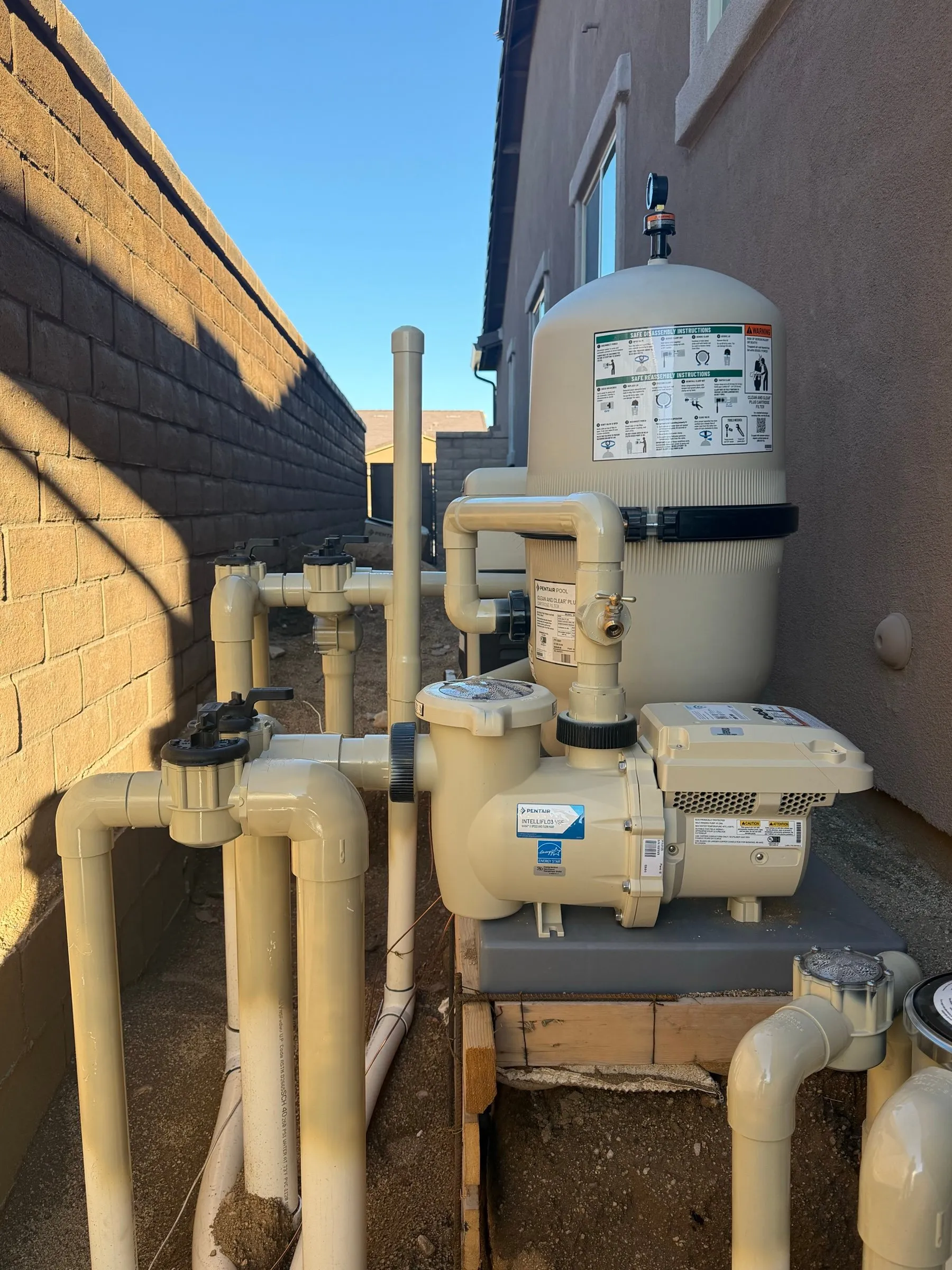
If you have a variable-speed pump like the Pentair IntelliFlo3, running at a low speed for longer is usually more efficient than a short, fast run. It is also much quieter. Our post on Pentair pool equipment explains how these pumps work.
Watch winter peak hours
If you are on a Tucson Electric Power time-of-use plan, winter peak hours are different from summer. TEP lists winter on-peak hours from October through April as 6 to 9 a.m. and 6 to 9 p.m. on weekdays. Weekends and major holidays are off-peak. Midday is a good time for your main filtering run, when the water is warmest and power is off-peak.
Our pool automation guide shows how to set seasonal schedules from your phone.
How do you protect a pool on freezing nights?
Keep water moving
Moving water is far less likely to freeze inside pipes and equipment. The main goal on a freezing night is to make sure the pump runs during the coldest hours, which are usually right before sunrise.
Use freeze protection settings
Most pool automation systems have a freeze protection setting. When the air temperature drops near freezing, the system turns on the pump and can run other circuits, like a spa or water feature line, to keep water flowing. Pentair publishes a freeze control guide for its IntelliConnect system, for example.
Some pumps also have their own built-in freeze or “thermal” setting, but these can work differently from an automation system’s freeze mode. Some read the temperature inside the pump rather than the air, and some are turned off when the pump is connected to a controller. Check your equipment manual to see which one controls freeze protection on your pool.
Before a cold snap
When a hard freeze is in the forecast:
- Confirm freeze protection is on in your app or controller.
- Do not turn the pump off at the breaker for the night.
- Check that the pump actually runs during the coldest hours.
- Run all lines if your system allows, including spa and water feature lines.
- Keep the water level normal so the skimmer does not run dry.
Freeze protection may run the pump during TEP’s winter morning peak window. On the few nights it is needed, protecting your equipment is worth more than the small cost of running at peak.
How do you clean a cartridge filter in winter?
Winter is a great time to give your filter a thorough cleaning. If you have a Pentair Clean & Clear Plus or another cartridge filter, there is no backwashing. You pull the cartridges and clean them by hand.
Basic cleaning steps
- Turn off the pump and any automation so it cannot start while you work.
- Open the air relief valve to release pressure.
- Remove the lid and lift out the cartridges.
- Rinse each cartridge with a garden hose, working between the pleats from top to bottom.
- Check for damage. Torn fabric, crushed pleats or cracked end caps mean it is time for new cartridges.
- Reinstall, close the lid and bleed the air before restarting the pump.
Deep cleaning
Tucson’s hard water and monsoon dust can leave scale and fine grit deep in the pleats that a hose will not remove. Soaking cartridges in a filter cleaner made for pool cartridges, following the product label, can help. Winter, when the pool sees light use, is a convenient time for this.
A quick tip: write down the filter’s pressure reading right after a cleaning. When the pressure climbs noticeably above that number, it is time to clean again.
What happens to water chemistry in cold water?
Chlorine lasts longer
Cool water and weaker sun mean chlorine breaks down more slowly. You will likely need less of it than in summer. Keep testing at least once a week anyway, because a warm spell or a windy week can change things quickly.
Salt systems slow down
Many salt chlorine generators make less chlorine in cold water, and some stop until the water warms up. Check your salt system’s manual. You may need to add some chlorine by hand during the coldest weeks to keep levels steady.
Watch pH and calcium
Cold water can change how your water balance behaves. Water that was balanced in summer can lean toward being more aggressive to plaster and pebble finishes in winter. Tucson’s hard water already brings plenty of calcium, so the goal is balance, not more calcium. Our guide to pool water chemistry and hard water in Tucson covers how to keep it in range year-round.
Keep the spa in mind
A heated spa behaves more like summer water. It uses sanitizer faster than the cool pool next to it, so test it separately if it has its own water.
Should you use a pool cover in winter?
A cover is most useful in winter if you heat the pool or spa. Tucson’s clear winter nights pull heat out of water fast, and a cover holds in heat you already paid for. Covers also cut evaporation and keep out leaves and dust.
If you do not heat your pool, a cover is still helpful for keeping it clean, but it matters less. Our guide to pool covers in Arizona compares the types.
Should you heat your pool in winter?
That depends on how you use it. Many Tucson owners leave the pool unheated in December and January and use a heated spa for winter soaks. Others heat the pool to extend the swim season into fall and start it early in spring.
If you heat, use a cover, keep the temperature reasonable and schedule heating for the hours you will actually swim. Our pool heating guide compares heat pumps, gas heaters and solar for Tucson weather.
When should you drain or acid wash a pool in Tucson?
Only drain when you need to
With good water care, a Tucson pool should rarely need draining. The common reason is hard water. Over time, evaporation leaves calcium and other dissolved solids behind, and topping off adds more. When levels get too high to balance, replacing some or all of the water is the fix. Filling also costs money, which we break down in how much it costs to fill a pool in Tucson.
Do it in the cool months
If you need to drain, late fall through early spring is the time. Never leave a pool empty in summer. The Tucson sun can bake an empty pool’s finish and lead to damage, and it is hard to get the pool refilled and balanced quickly in extreme heat. Follow the City of Tucson’s or your town’s rules for where drained water can go.
Be careful with acid washing
An acid wash strips a thin layer off the pool’s surface to remove stains and scale. It can brighten an older plaster finish, but each wash removes material, so it should not be done often. If your finish is rough, stained or flaking, it may be time to resurface instead. Our post on pool resurfacing and remodeling in Tucson explains the signs and why fall and winter are popular times for that work.
A simple winter checklist
| Task | How often |
|---|---|
| Test water chemistry | At least weekly |
| Check freeze protection is on | Before winter starts and before each cold snap |
| Empty skimmer and pump baskets | Weekly, or after windy days |
| Rinse cartridge filter | When pressure climbs, plus one deep clean in winter |
| Brush walls and steps | Weekly |
| Check water level | Weekly |
| Review pump schedule | When seasons change |
Planning a pool or remodel this winter?
If you are thinking about a new pool, a remodel or upgraded equipment, winter is a good time to start planning. Call (520) 342-8335 or request a free estimate. Meraki Pools AZ is a family-owned Tucson pool builder, licensed AZ ROC #342505 and #352797.
Put this guide to work
Planning your own project? See our Pool Tile & Coping Replacement in Tucson, Custom Spas & Pool-Spa Combos in Tucson and Pool Remodeling & Renovation in Tucson, or read about building a pool in Vail, SaddleBrooke or Catalina Foothills.
Frequently asked questions
Do you need to winterize a pool in Tucson?
No. Tucson pools stay open and running all winter. Freezing nights are usually short, so instead of draining lines and closing the pool, you keep the pump on a schedule and make sure freeze protection is set for cold nights.
How long should I run my pool pump in winter in Arizona?
Less than in summer. Cooler water grows algae more slowly and there is less debris, so most pools need fewer hours of filtering. The right number depends on your pool, pump and how clean the water stays, so cut back gradually and watch the water.
What should I do when it freezes in Tucson?
Make sure the pump runs during the coldest hours of the night. Moving water is much less likely to freeze inside pipes and equipment. Most automation systems and many pumps have a freeze protection setting that turns the pump on automatically when it gets cold.
Should I drain my pool in winter?
Only if the water truly needs to be replaced, usually because hard water has built up too much calcium and dissolved solids. If you do need to drain, the cooler months are the right time. Never leave a pool empty in summer heat, because the sun can damage the finish.
Do I still need to add chlorine in winter?
Yes, but usually less. Chlorine lasts longer in cool water and algae grows more slowly. Keep testing at least weekly, and know that many salt systems make less chlorine when the water gets cold.
Should I cover my pool in winter?
A cover helps a lot if you heat the pool or spa, because it holds in heat overnight. It also keeps out leaves and dust and cuts evaporation. If you do not heat the pool, a cover is still useful but less important in winter.