Running a pool in Tucson costs money every month, but most of it comes from a handful of things you can control: pump electricity, heating, water lost to evaporation, chemicals, and cleaning. The big one-time cost down the road is resurfacing. The choices that make the biggest difference are a variable-speed pump, a cover, smart run times, and balanced water.
We do not want to guess at a single yearly number, because it swings a lot with pool size, heating and habits. Instead, here is each cost, what drives it in our climate, and how to lower it.
What are the yearly costs of owning a pool?
| Cost | What drives it in Tucson | Best ways to lower it |
|---|---|---|
| Water top-offs | Evaporation from heat, dry air and wind | Cover, shade, wind breaks, fewer splashing features |
| Pump electricity | Pump type, run time, time of day | Variable-speed pump, off-peak scheduling, clean filter |
| Heating | Heater type, target temperature, cover use | Cover, lower set point, heat only when you swim |
| Chemicals or salt cell | Sun, heat, swimmers, monsoon debris | Balanced water, cover, salt system, steady testing |
| Cleaning | Dust, leaves, storms, your time | Good design, automatic cleaner, a cover |
| Resurfacing (every several years) | Finish type and water chemistry | Pebble finish, balanced water |
How much water does a pool use after it’s filled?
After the first fill, evaporation is the main water cost. The EPA estimates that an uncovered 500-square-foot pool can lose 12,000 to 31,000 gallons a year, depending on climate, and more if it is heated. Hot, dry and windy conditions push the number up, and Tucson has all three.
Tucson Water bills single-family homes on tiers, so top-off water often lands in higher-priced tiers during hot months. We walk through Tucson Water’s July 2026 rates in our post on how much it costs to fill a pool in Tucson, and the rate decision itself in our news post on the 2026 Tucson Water rate increase.
How to lower it:
- Use a cover. The EPA says solid, mesh or hybrid covers can cut evaporation by up to 95 percent while in use.
- Add shade and block the wind. The EPA lists windbreaks and shade as ways to reduce evaporation. Block walls, plantings and covered patios all help.
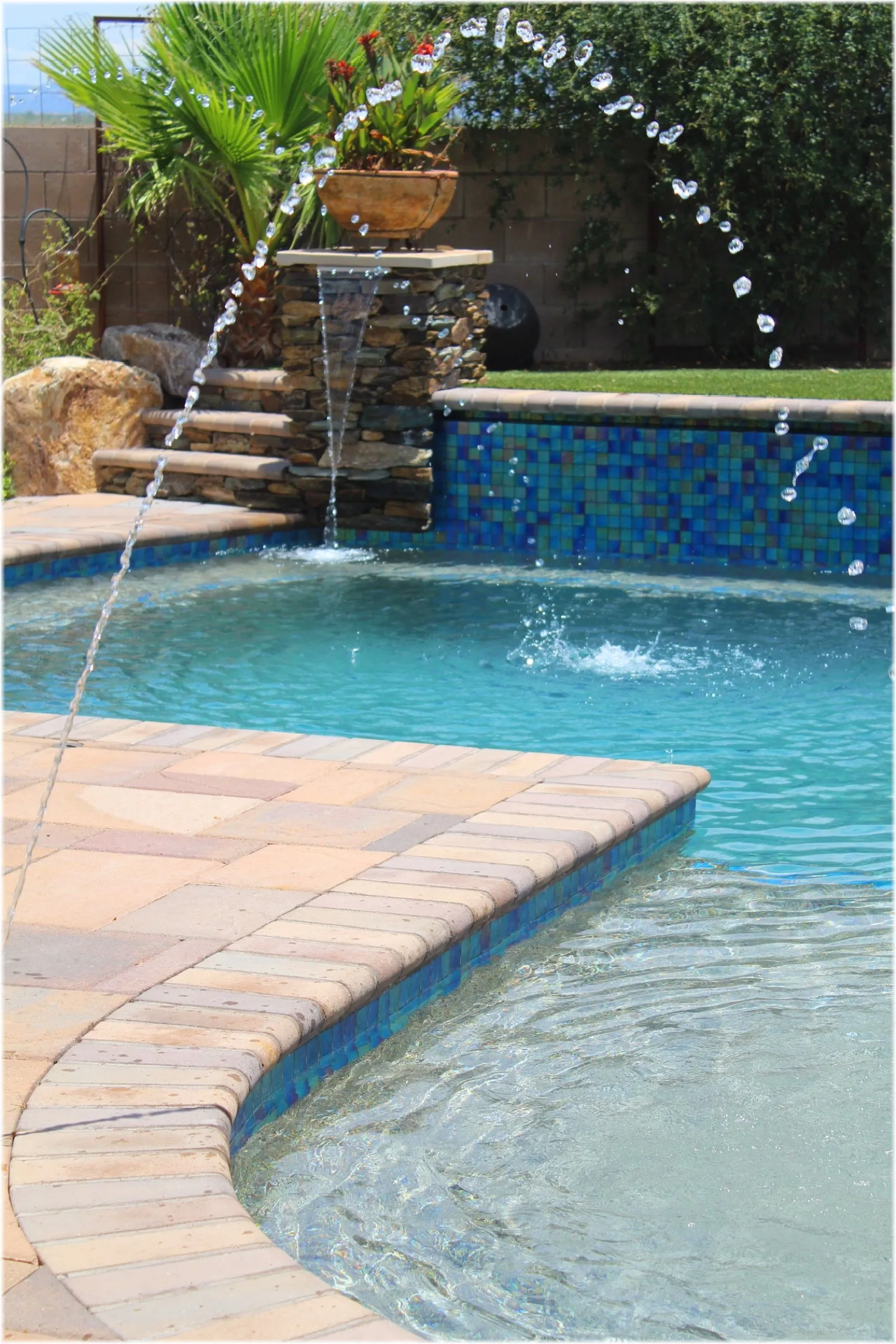
- Run water features on a schedule. Waterfalls and sprays stir up the surface and raise evaporation.
- Watch for leaks. The EPA says losing more than about 3 inches a week in a hot, dry area is a sign of a leak.
How much does it cost to run a pool pump in Tucson?
The pump runs every day, so it is usually the biggest electric cost. What you pay depends on how much power your pump draws, how long it runs, and when.
Tucson Electric Power (TEP) lists these energy charges on its Time-of-Use plan:
| TEP Time-of-Use | On-peak hours (weekdays) | On-peak energy charge | Off-peak energy charge |
|---|---|---|---|
| Summer (May–September) | 3 to 7 p.m. | 19.27¢ to 21.28¢ per kWh | 12.19¢ to 14.19¢ per kWh |
| Winter (October–April) | 6 to 9 a.m. and 6 to 9 p.m. | 13.33¢ to 15.33¢ per kWh | 12.48¢ to 14.49¢ per kWh |
The price within each range rises with your total monthly use. Weekends and major holidays are off-peak. The plan also has a $12 monthly basic service charge.
To see how this adds up, take a simple example. A pump drawing 1 kilowatt for 8 hours uses 8 kWh. At 13.47¢, the middle off-peak summer rate, that is about $1.08 a day in energy charges, or roughly $32 a month. The same 8 hours run during summer on-peak hours would cost noticeably more. Your pump may draw more or less than 1 kilowatt, so treat this as a way to do the math, not a quote.
Rates may also change. TEP has asked regulators for an increase that it says would raise a typical residential bill about 11.6 percent, and it expects a decision in late 2026. We cover that in our news post on the TEP rate request and pool pump costs.
How to lower it:
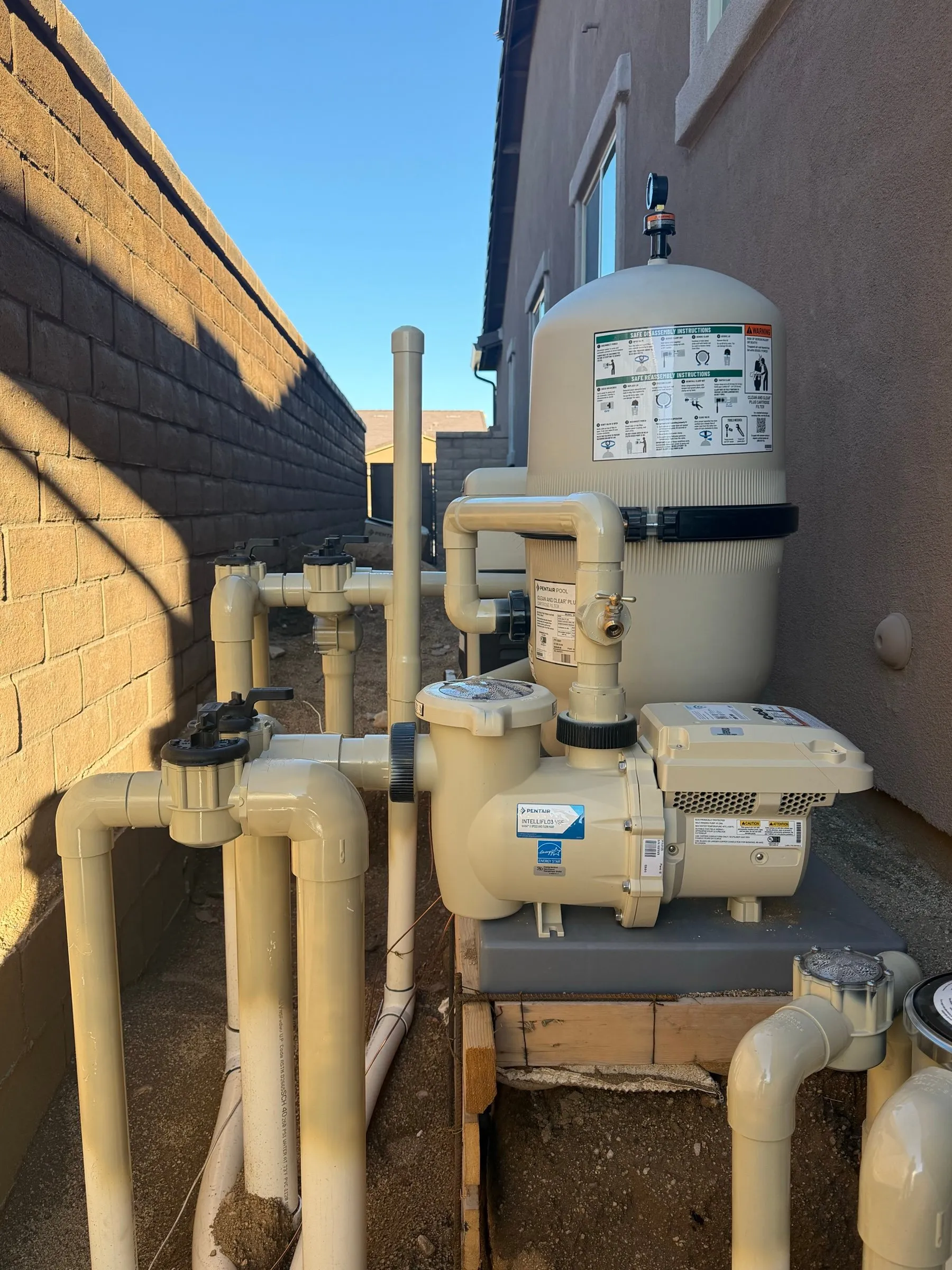
- Choose a variable-speed pump. It can run slow and long, which moves water with far less power. Pentair says its IntelliFlo3 can save up to 90 percent of energy compared with a single-speed pump, based on its stated test conditions (a 20,000-gallon pool, 12 hours a day, at 16¢ per kWh). The EPA’s ENERGY STAR program says certified in-ground pumps use 20 percent less energy than standard models.
- Schedule around on-peak hours. If you are on a time-of-use plan, run the pump mostly outside on-peak windows.
- Keep baskets and the filter clean. A clogged filter makes the pump work harder.
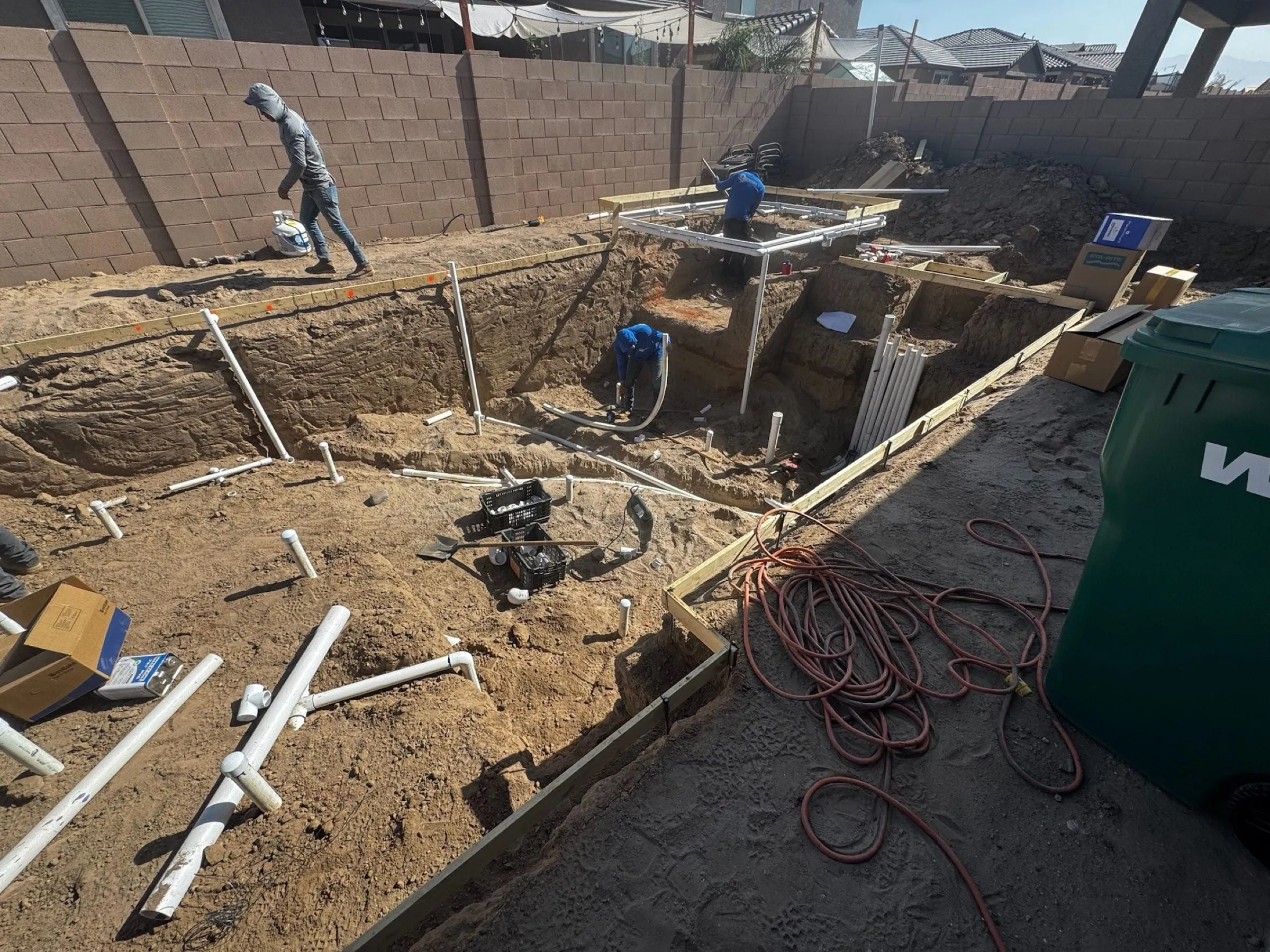
- Size the plumbing right. Larger, well-planned pipes reduce the work the pump has to do. A good builder sizes the pump, filter and plumbing as one system.
What does it cost to heat a pool or spa?
Heating is optional, and it depends on how many months you want to swim. Our summers heat the water for free. The cost comes when you stretch the season into spring and fall or keep a spa hot in winter.
A heat pump runs on electricity and usually costs less per season to run than gas. A gas heater costs more per hour but heats fast, which is why it is common for spas. Our pool heating guide compares heat pumps, gas and solar in detail.
How to lower it:
- Use a cover. The Department of Energy’s Better Buildings program says covers can save 50 to 70 percent of pool heating costs.
- Keep the temperature moderate. The same DOE fact sheet recommends the lower end of the 78 to 82 degree range.
- Heat on a schedule. Automation lets you heat the spa before you use it instead of all day.
How much do chemicals and salt systems cost?
Tucson’s strong sun and summer heat burn through chlorine faster. Dust storms, monsoon rain and pool parties all add to the load.
With a salt system, a cell turns salt into chlorine, so you buy much less chlorine. You still buy salt now and then, test the water, and adjust pH. The cell is a wear item and will need replacing at some point. Our post on salt or chlorine covers the trade-offs.
With traditional chlorine, you buy tablets or liquid chlorine on a steady basis, plus balancing chemicals.
How to lower it:
- Test often and keep the water balanced. Small, regular adjustments cost less than fixing a green pool.
- Use a cover. It keeps out dust and debris that eat up chlorine.
- Clean out debris quickly after storms.
What about cleaning and upkeep?
Some owners clean their own pools. Others hire a pool service. Either way, there is a cost in time or money. Tucson adds dust, leaves from trees and desert plants, and monsoon storms to the list.
How to lower it:
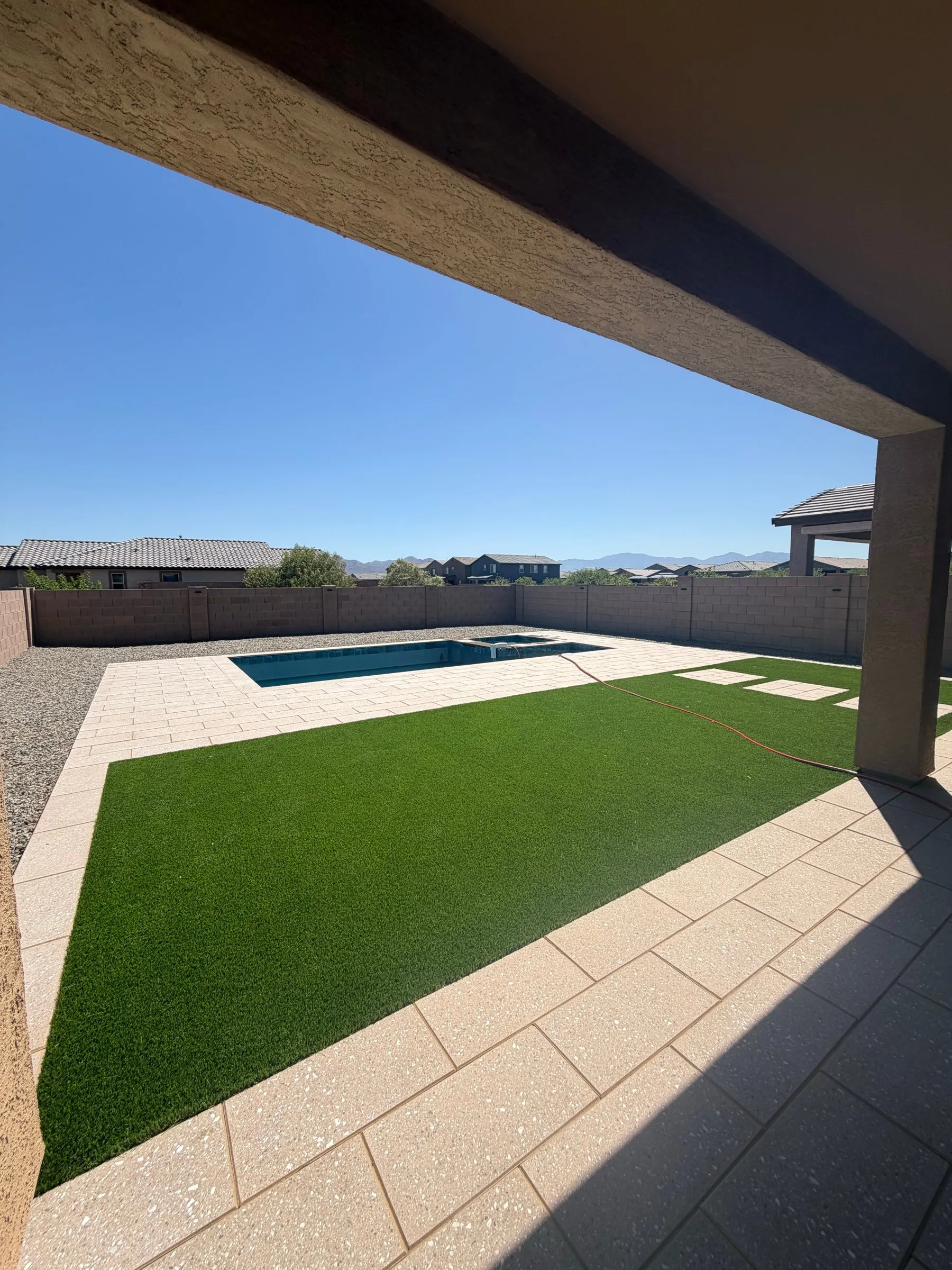
- Plan the yard around the pool. Keep messy trees back from the water, use turf or hardscape near the deck, and grade the yard so runoff flows away. Our pool landscaping and turf work is planned with this in mind.
- Use an automatic cleaner to handle the daily dust.
- Cover the pool when it is not in use.
When will I need to resurface, and what does that mean for my budget?
Resurfacing is not yearly, but it is the biggest maintenance cost most owners face, so it is smart to plan for it. Pebble Technology says plaster often needs resurfacing every 5 to 10 years, quartz lasts around 7 to 15 years, and a pebble finish can last over 20 years with good chemistry and care.
That is one reason we use StoneScapes Mini Pebble finishes. A longer-lasting finish costs more up front but can push the next resurfacing much further out. Our comparison of pebble vs plaster vs quartz explains the differences, and our pool resurfacing page covers the work when the time comes.
How do you build a pool that costs less to run?
Most running costs are set during design. When we plan a new pool, we look at:
- Size and shape. Less surface area means less evaporation and less to heat.
- Equipment. Pentair variable-speed pumps, properly sized filters and automation.
- Placement. Shade from the house or a covered patio, and wind protection from block walls.
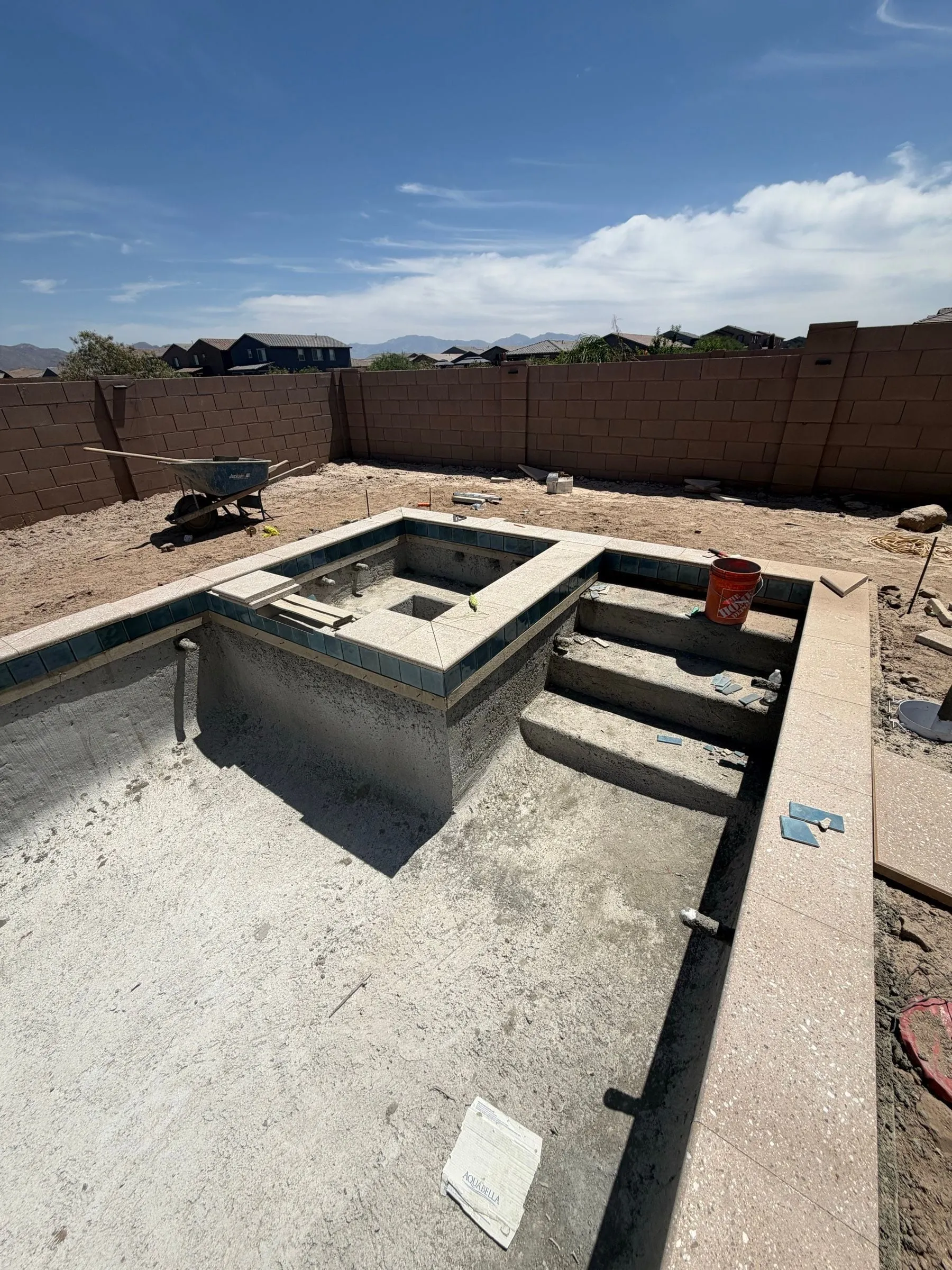
- Finish. A pebble interior that holds up to Tucson’s water and sun.
- A cover. Tucson now requires one on new and remodeled pools, and it saves water, heat and chemicals.
Most new custom pools we build run about $40,000 to $120,000 or more, depending on size, features and site. Our pool cost guide explains what drives that range.
Want a pool that’s easy to own?
We are a family-owned Tucson builder of concrete pools and spas, licensed under AZ ROC #342505 and #352797, with our own crew and equipment. We will walk you through what each choice means for running costs before you build. Contact us or call (520) 342-8335.
Sources
- Tucson Electric Power: Time-of-Use Residential Pricing Plan
- Tucson Electric Power: 2026 Rate Review
- Pentair: IntelliFlo3 Variable Speed & Flow Pool Pump
- ENERGY STAR: Pool Pumps
- U.S. EPA WaterSense: Jump Into Pool Water Efficiency (PDF)
- U.S. Department of Energy, Better Buildings: Pool Efficiency fact sheet (PDF)
- Pebble Technology: How Long Does a Pebble Pool Finish Last?
- City of Tucson: Your Residential Water Bill
Put this guide to work
Planning your own project? See our Custom Spas & Pool-Spa Combos in Tucson and Pool Resurfacing & Replastering in Tucson.
Frequently asked questions
What is the biggest yearly cost of owning a pool in Tucson?
For most homes it is electricity for the pump, followed by heating if you heat the pool or spa. Chemicals and cleaning come next. A variable-speed pump, a cover and smart scheduling bring the biggest savings.
When should I run my pool pump in Tucson?
If you are on a TEP time-of-use plan, run the pump outside the on-peak hours. TEP lists summer on-peak hours (May through September) as 3 to 7 p.m. on weekdays, and winter on-peak hours (October through April) as 6 to 9 a.m. and 6 to 9 p.m. on weekdays. Weekends and major holidays are off-peak.
Does a saltwater pool cost less to run?
A salt system makes chlorine from salt, so you buy less chlorine. You do pay to run the cell and will need to replace it at some point. Many owners like salt for the steady chlorine level and softer-feeling water more than for big savings.
How much does a pool cover save?
A lot. The EPA says solid, mesh or hybrid covers can cut evaporation by up to 95 percent while in use. The Department of Energy's Better Buildings program says covers can save 50 to 70 percent of pool heating costs.
Do variable-speed pool pumps really save money?
Yes, mainly by running slower for longer. Pentair says its IntelliFlo3 can save up to 90 percent of energy compared with a single-speed pump, under its stated test conditions. Actual savings depend on your pool, plumbing, run time and rates.
How often does a pool need resurfacing?
It depends on the finish and how well the water is kept. Pebble Technology says plaster often needs resurfacing every 5 to 10 years, quartz lasts around 7 to 15 years, and pebble can last over 20 years with good care.