A well-built concrete pool can last for decades in Arizona. The shell is the long-lasting part. Everything attached to it wears on its own schedule: the interior finish needs resurfacing every several years to a couple of decades depending on the material, tile and coping hold up for many years with care, and pumps, filters, heaters and salt cells are replaced as they wear out. In Tucson, heat, sun and hard water speed up that wear, and good water chemistry is the biggest thing you can do to slow it down.
Here is what to expect from each part of a pool and what helps it last.
How long does each part of a pool last?
| Part | How long it lasts | What shortens it in Tucson | How to make it last |
|---|---|---|---|
| Concrete shell (gunite or shotcrete) | Decades when built well | Poor soil prep, bad drainage, weak engineering | Proper engineering, steel and soil work at build time |
| Plaster finish | 5 to 10 years before resurfacing (Pebble Technology) | Etching, scale, staining from unbalanced water | Balanced water, careful startup |
| Quartz finish | Around 7 to 15 years (Pebble Technology) | Same as plaster, a bit more resistant | Balanced water, careful startup |
| Pebble finish | Over 20 years with good care (Pebble Technology) | Unbalanced water, poor startup | Balanced water, careful startup |
| Tile and coping | Many years with care | Calcium scale, loose grout, deck movement | Regular cleaning, balanced water, sealing stone |
| Decking | Many years | Soil movement, poor drainage, sun on sealers | Good base and drainage, resealing |
| Pump, filter, heater, salt cell | Varies by part and use | Heat, sun, dust, run hours, water chemistry | Shade or covers, clean filters, balanced water |
Finish figures come from Pebble Technology’s guide to pool finish lifespans. Everything else depends heavily on build quality, use and care, so we describe it in general terms rather than guess at numbers.
How long does a concrete pool shell last?
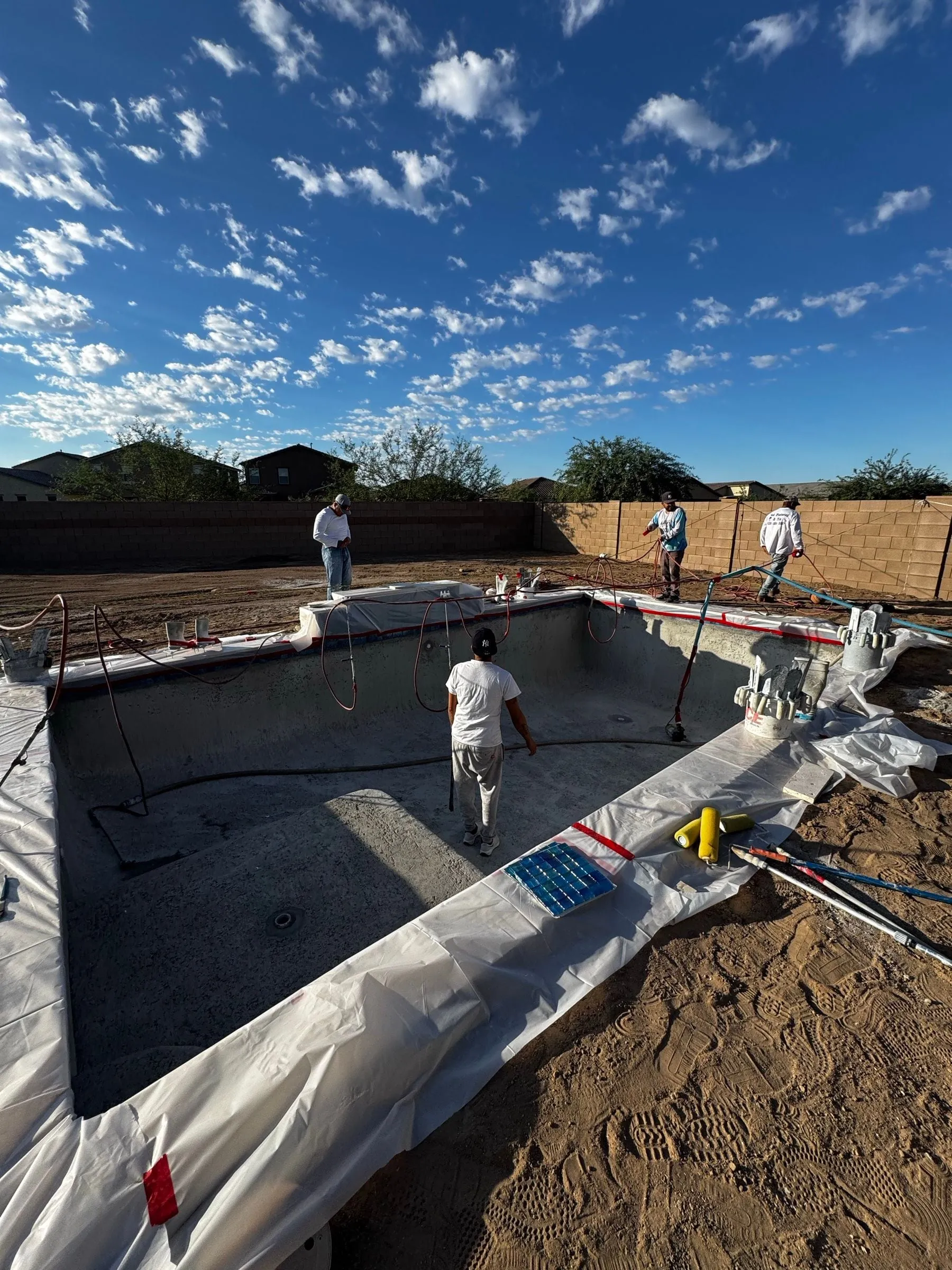
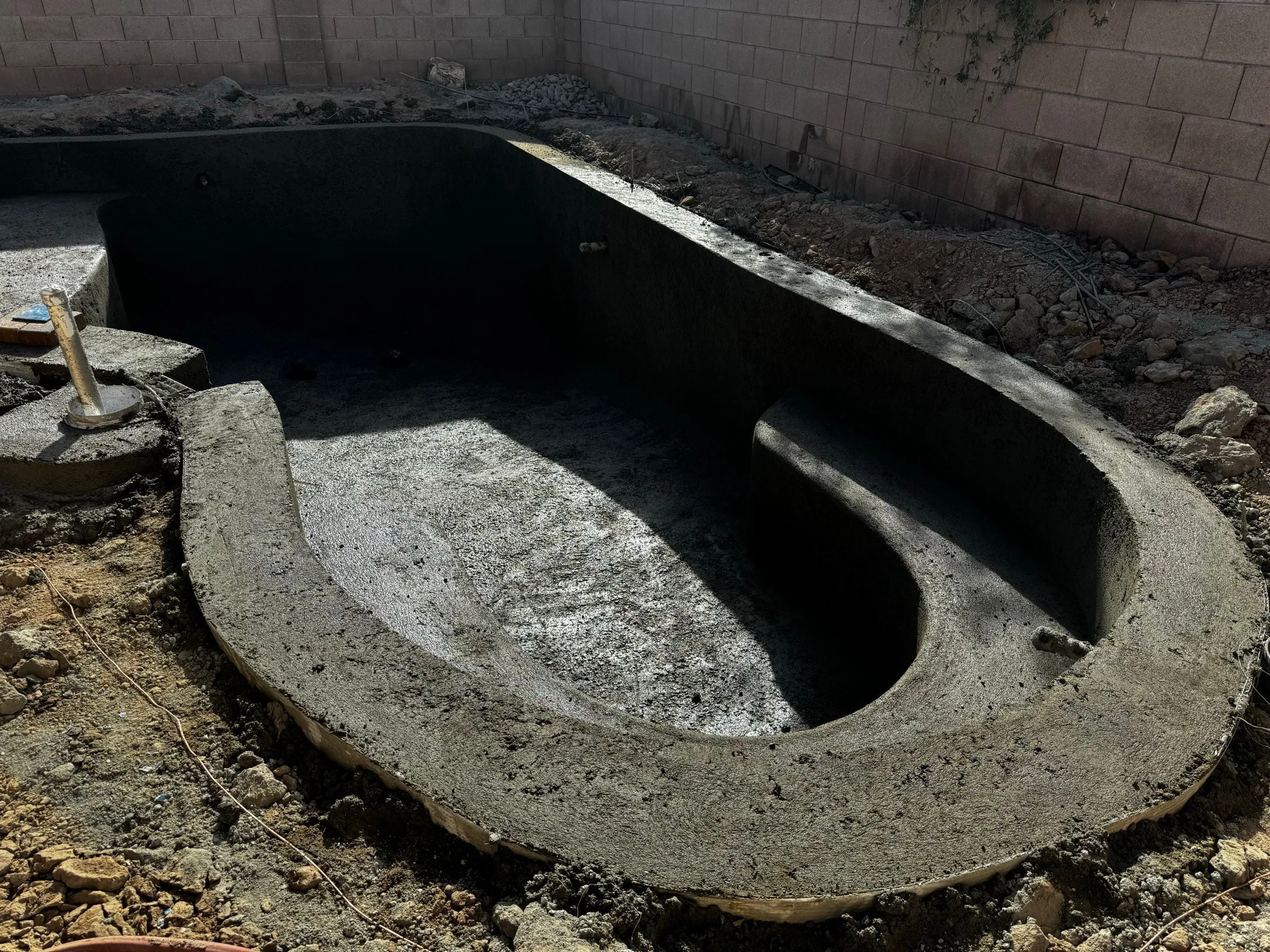
The shell is the structure of the pool: steel rebar, plumbing, and concrete sprayed into place as gunite or shotcrete. It is meant to last for the life of the home when it is designed and built well.
What makes a shell last:
- Good engineering. Steel size and spacing, wall thickness and the bond beam should be designed for your soil and site.
- Solid ground. Around Tucson, that can mean working through rock and caliche. Our post on building a pool in caliche explains why soil matters.
- Drainage. Water that pools around the shell or under the deck can cause movement over time.
Concrete is the only type of pool we build. We like it because it can be shaped to any design and, built well, it is a long-term structure.
How long do plaster, quartz and pebble finishes last?
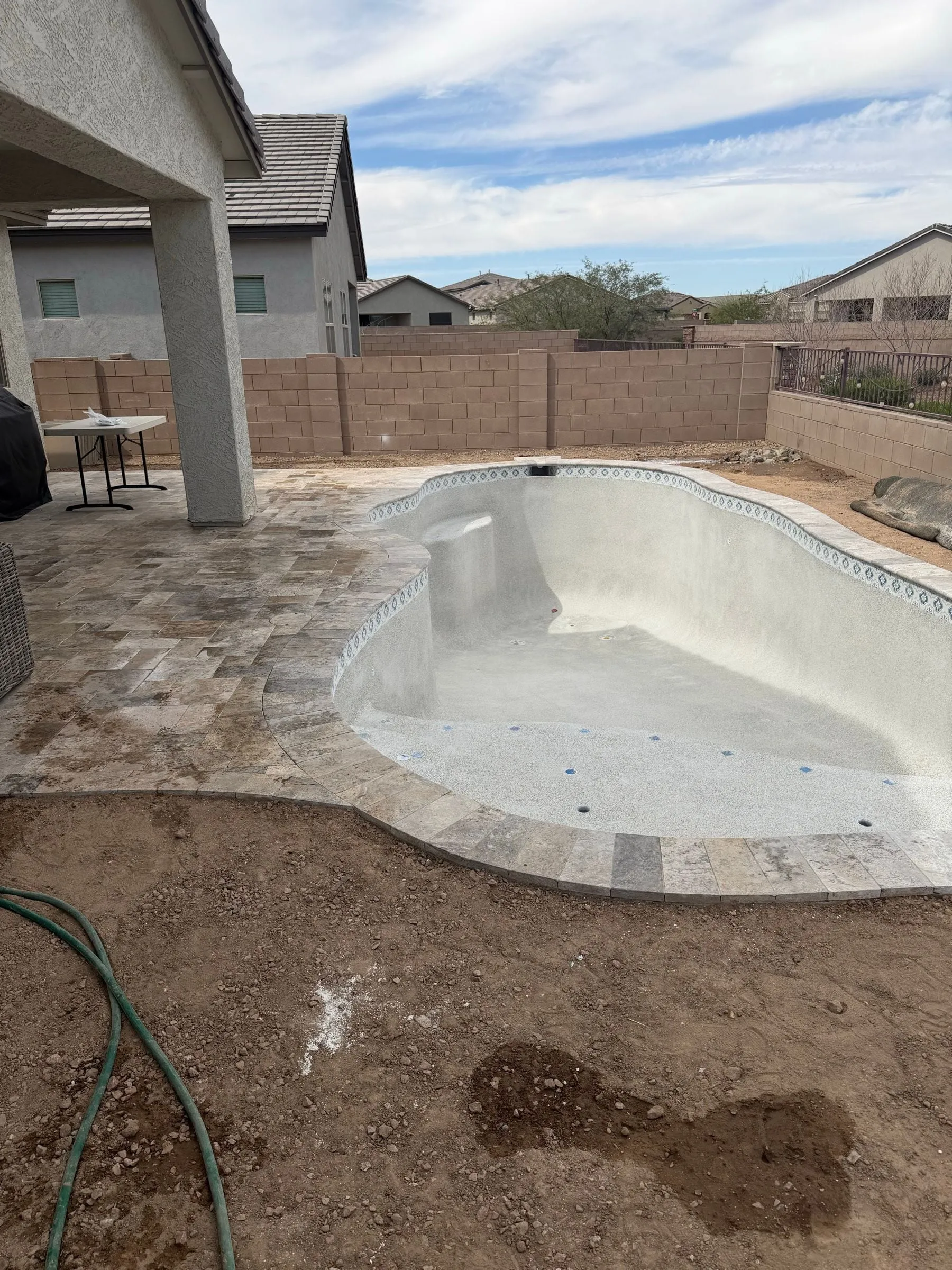
The interior finish is what you see and touch. It is also the part most likely to need work first.
Pebble Technology, which makes PebbleTec finishes, says plaster often needs resurfacing every 5 to 10 years, quartz lasts around 7 to 15 years, and a pebble finish can last over 20 years with proper maintenance and chemistry. The company says balanced pH, alkalinity and calcium hardness are key, along with regular brushing and cleaning.
Startup matters too. Pebble Technology’s start-up instructions say a new finish develops most of its durability in the first 28 days, and that poor chemistry during that time can leave stains, blotchy color or roughness. The same instructions note that failing to keep proper water chemistry can void its warranty.
We use StoneScapes Mini Pebble on our pools for its durability and look. Our comparison of pebble vs plaster vs quartz covers how they differ in feel, color and cost. When a finish does wear out, our pool resurfacing page explains what the work involves.
Signs your finish is wearing out:
- Rough spots that snag swimsuits or scrape feet
- Stains that don’t brush or treat out
- Etching, pitting or exposed patches
- Hollow-sounding or flaking areas
How long do tile and coping last?
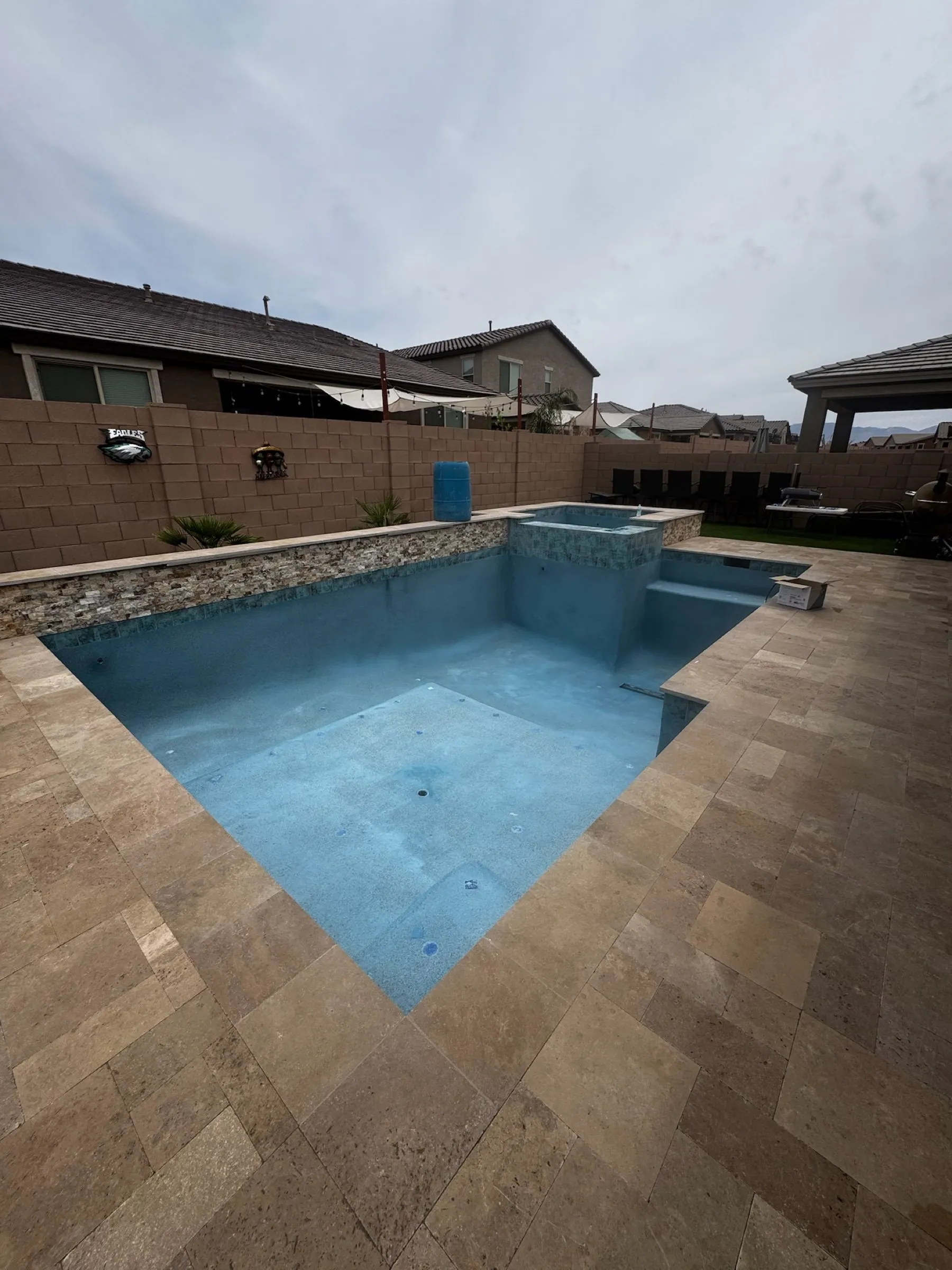
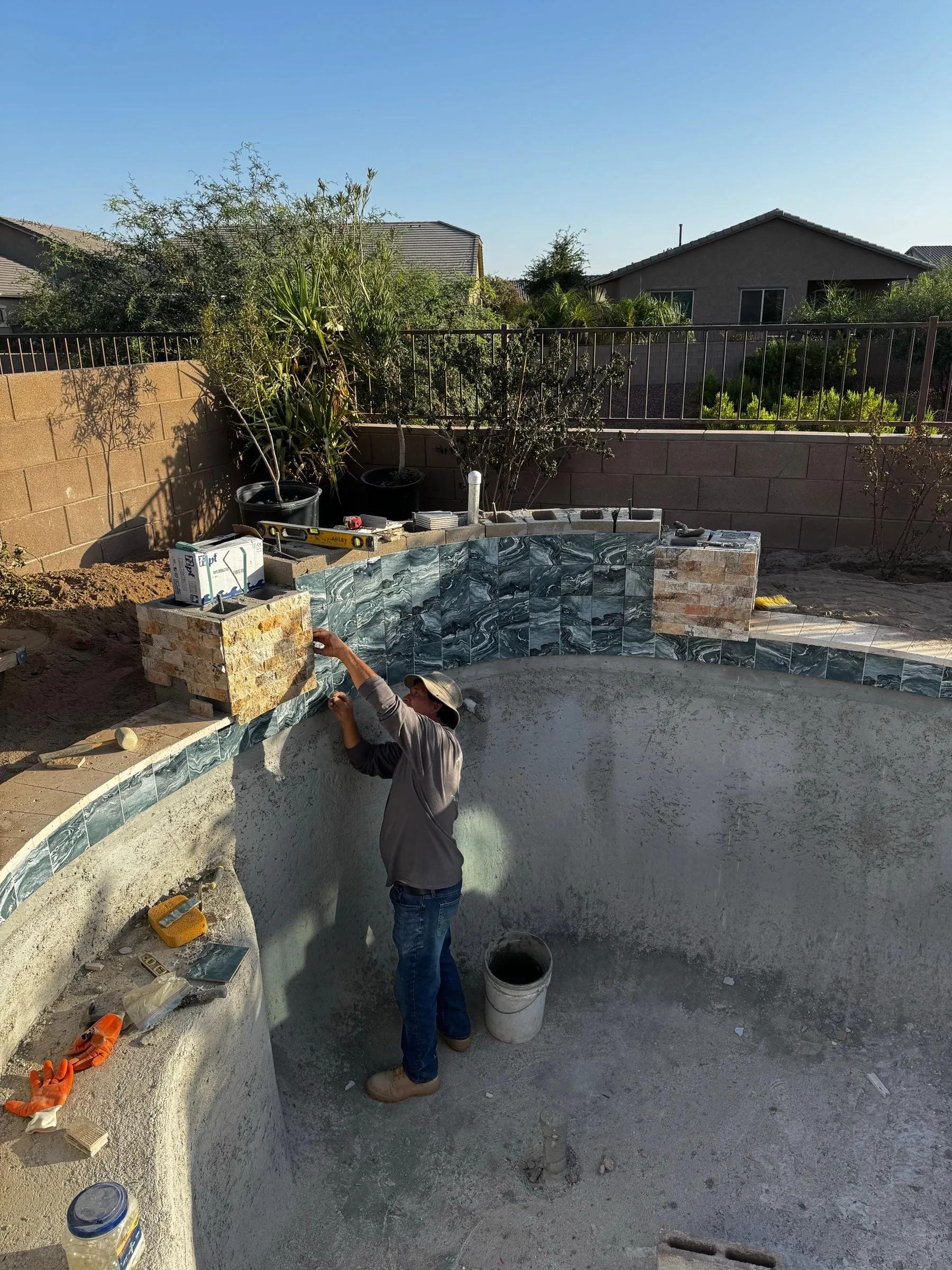
Waterline tile and coping (the cap around the pool edge) can last many years. Their biggest enemies in Tucson are mineral scale and movement.
- Calcium scale. The City of Tucson says the area’s groundwater is naturally hard. As water evaporates, minerals are left behind at the waterline as white crust. Balanced water and regular cleaning keep it from building up.
- Grout and setting materials. Loose or cracked grout lets water behind the tile. Catch it early.
- Movement between the deck and the pool. A good expansion joint between coping and deck lets each move without cracking the other.
- Stone care. Natural stone coping like travertine benefits from sealing, especially around salt pools.
When tile or coping is past saving, we replace it. Learn more on our pool tile and coping page.
How long does a pool deck last?
Decks take full sun, foot traffic, monsoon runoff and pool water every day. How long they last depends on the material and the work underneath.
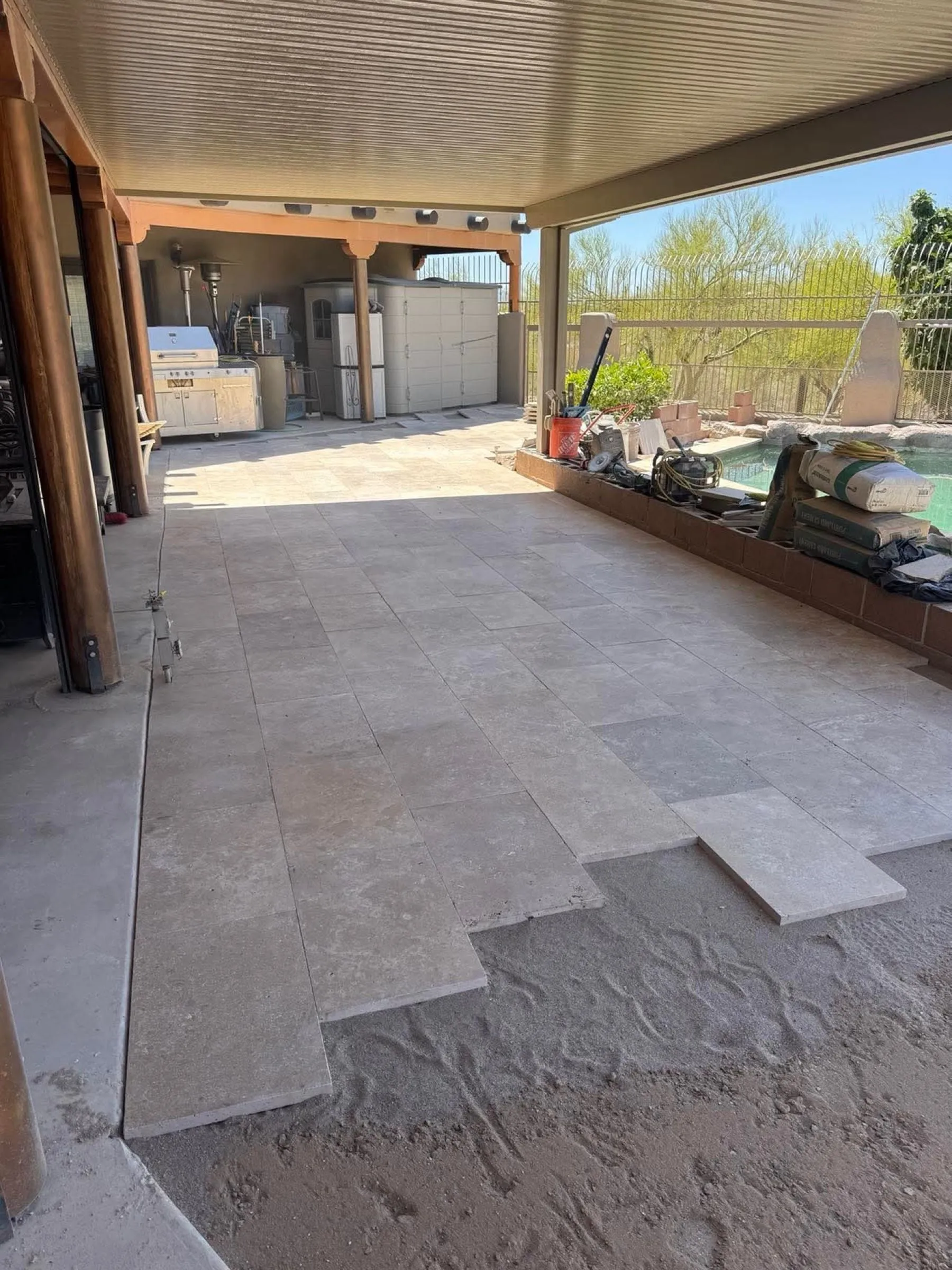
- Pavers and travertine sit on a compacted base. Individual pieces can be lifted and reset if the ground moves, which makes repairs simpler.
- Poured concrete decks can crack if the soil shifts or the joints are not placed well.
- Sealers and coatings fade in the sun and need to be refreshed on a schedule.
- Drainage is key. Decks that slope away from the pool and drain well avoid many problems.
If your deck is cracked, uneven or hot underfoot, see our pool deck replacement options.
How long does pool equipment last?
Equipment has the shortest life of anything in a pool system. How long each piece lasts depends on the model, how many hours it runs, where it sits, and how the water is kept.
Warranties give a sense of what a manufacturer stands behind, though they are not the same as lifespan. On Pentair’s current residential list, for example:
| Pentair product | Listed warranty |
|---|---|
| IntelliFlo3 variable-speed pump | 3 years |
| Filters | 2 years |
| MasterTemp gas heater | 2 years |
| UltraTemp heat pump | 2 years, with 10 years on the compressor and lifetime on the titanium heat exchanger |
Pentair notes that most products need professional installation and registration for full coverage.
What wears equipment out in Tucson:
- Heat and sun. UV breaks down plastic housings, lids and seals over time.
- Dust. Dirty filters make pumps work harder.
- Scale. Hard water can coat heater parts and salt cells.
- Chemistry. Low pH can corrode metal parts in heaters.
How to extend it: keep the equipment pad shaded and well drained, clean baskets and filters, keep the water balanced, and clean the salt cell when it shows scale. A variable-speed pump that runs slower can also put less strain on the system.
What can you do to make your whole pool last longer?
- Keep the water balanced. It protects the finish, tile, heater and salt cell all at once.
- Use a cover. It keeps out dust and debris and cuts evaporation, which means less mineral buildup.
- Clean regularly. Brush, vacuum and empty baskets, especially after storms.
- Fix small problems early. Loose tile, a dripping fitting or a rough patch is easier to fix before it spreads.
- Choose durable materials at build time. A pebble finish and quality equipment cost more up front and less over time.
Building a pool that’s made to last
Most new custom pools we build run about $40,000 to $120,000 or more, depending on size, features and site. We are a family-owned Tucson builder, licensed under AZ ROC #342505 and #352797, with an in-house crew and our own excavation equipment. We build concrete pools with StoneScapes Mini Pebble finishes and Pentair equipment, and we also handle resurfacing, tile and coping, and deck replacement when an older pool needs a refresh. Contact us or call (520) 342-8335.
Sources
- Pebble Technology: How Long Does a Pebble Pool Finish Last?
- Pebble Technology: Recommended Start-Up & Maintenance Procedures (PDF)
- Pentair: Pool & Spa Equipment Warranty Information
- City of Tucson: Hard Water
Put this guide to work
Planning your own project? See our Pool Tile & Coping Replacement in Tucson, Pool Resurfacing & Replastering in Tucson and Pool Decks: Travertine & Pavers in Tucson.
Frequently asked questions
How long does a concrete pool last?
A well-built concrete shell is the longest-lasting part of a pool and can serve for decades. The parts that wear out sooner are the interior finish, tile and coping, decking and equipment, which are replaced or refreshed over the life of the shell.
How often does a pool need to be resurfaced in Arizona?
It depends on the finish and water care. Pebble Technology says plaster often needs resurfacing every 5 to 10 years, quartz lasts around 7 to 15 years, and pebble can last over 20 years with good chemistry and maintenance.
Why do pool finishes wear out faster in Tucson?
Heat, strong sun and hard water all play a part. Warm water speeds up chemical reactions, the sun burns off chlorine, and hard water makes scale more likely. Water that drifts out of balance can etch a finish or leave scale on it.
How long does pool equipment last?
It varies with the equipment, how many hours it runs and how well the water is kept. Manufacturer warranties are a useful guide to what a maker stands behind, though they are not a promise of how long a part will last. Pentair, for example, lists a 3-year warranty on its IntelliFlo3 pump and 2 years on its filters.
Does a salt system shorten the life of a pool?
Salt water that is kept balanced is not harsh on a well-built pool, but salt can be hard on some natural stone and metal if it is not managed. Seal stone, rinse decks, and keep salt within the level your equipment maker specifies.
Is it worth paying more for a pebble finish?
Often, yes, if you plan to stay in the home. A pebble finish usually costs more up front, but its longer life can mean fewer resurfacing projects over the years. It also hides small stains and wear better than smooth plaster.