Shotcrete and gunite are both sprayed concrete. Gunite is the dry-mix method, where water is added at the nozzle. Shotcrete, as pool builders use the word, usually means wet-mix, where the concrete arrives already mixed. Both can make an excellent pool shell. The American Shotcrete Association says that when the work is done properly, there should be no difference in performance between the two.
So the better question is not “which method?” but “who is spraying it, with what steel, and how will it be cured?” We build only concrete pools, and we use shotcrete. Here is how each method works and what to look for in Tucson.
What is the difference between shotcrete and gunite?
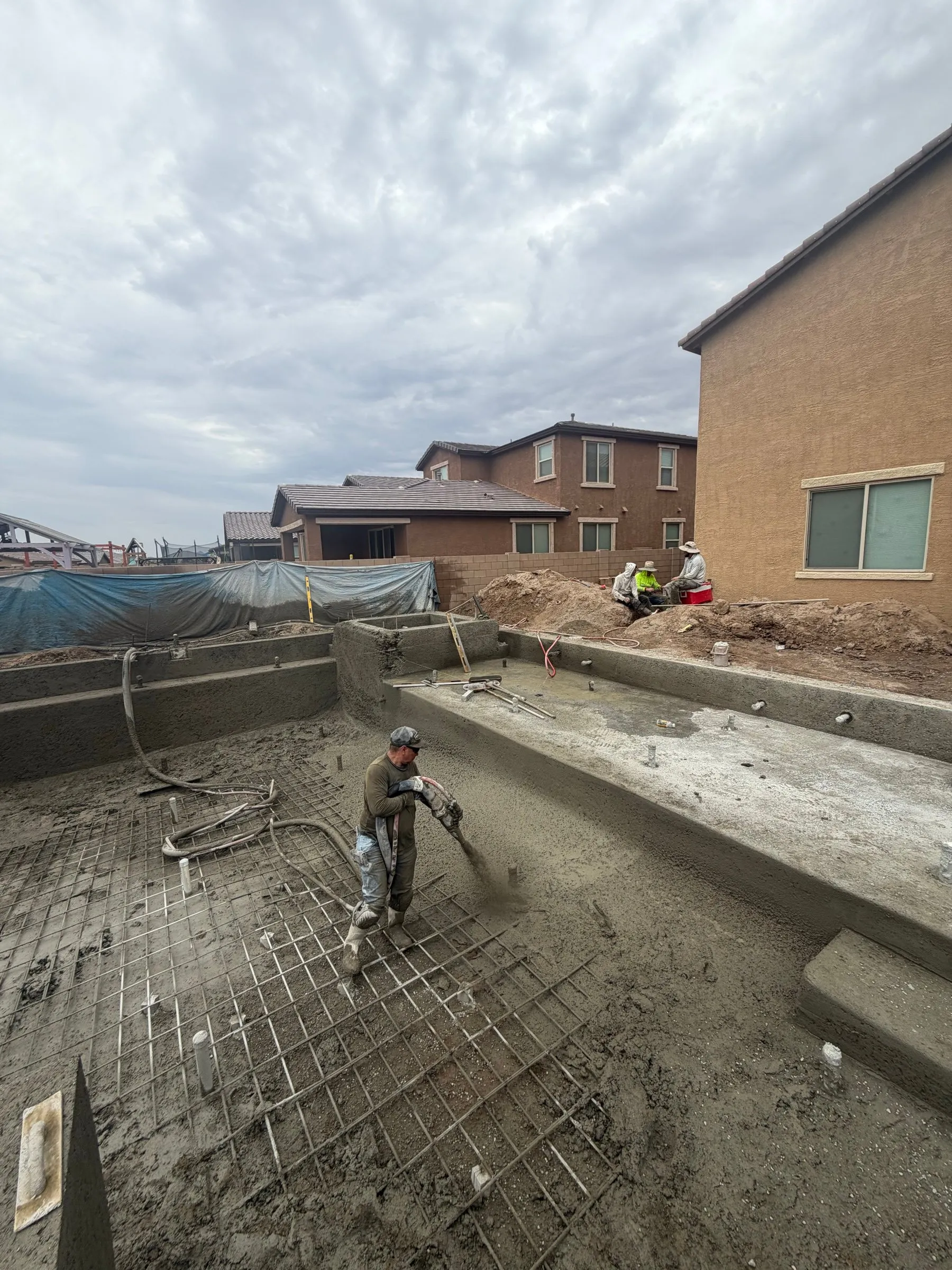
Both methods shoot concrete through a hose with compressed air so it packs tightly around the steel and against the dirt walls of the dig. The difference is when the water goes in.
The American Shotcrete Association (ASA) explains it this way. Shotcrete is the all-inclusive term for spraying concrete or mortar, by either a dry-mix or wet-mix process. Gunite refers only to the dry-mix process. The ASA also notes that the American Concrete Institute (ACI) has used “shotcrete” as the standard term for decades.
Gunite (dry-mix)
A dry blend of cement and sand is blown through the hose. Water is added through a ring at the nozzle, right before the material hits the wall. The nozzle operator controls how much water goes in, on the fly.
That control is the strength and the weakness of dry-mix. A skilled operator can fine-tune the mix as conditions change. A less careful one can make it too wet or too dry in different spots.
Shotcrete (wet-mix)
The concrete is batched with water ahead of time, usually by a ready-mix plant, and delivered in a truck. A pump pushes it through the hose, and air is added at the nozzle to shoot it into place. The water-to-cement ratio is set at the plant, so it starts out consistent from load to load.
Shotcrete vs gunite: side-by-side comparison
| Gunite (dry-mix) | Shotcrete (wet-mix) | |
|---|---|---|
| When water is added | At the nozzle | At the batch plant, before pumping |
| Who controls the mix | Nozzle operator, in real time | Mix design, then the crew on site |
| Rebound | ASA says dry-mix may have more | Usually less |
| Speed | Can stop and start easily | ASA says it can be faster, depending on the pool |
| Dust | More at the nozzle | Less |
| Strength when done right | Equal | Equal |
| Biggest risk | Inconsistent water and leftover rebound | Too much water added on site, trucks arriving late |
The bottom line in that table is the “strength when done right” row. Both methods can produce strong, watertight concrete. Both can also produce a weak shell if the crew cuts corners.
Which is stronger, shotcrete or gunite?
You will see builders on both sides claim their method is stronger. The ASA’s answer to a homeowner asking this exact question was that, when properly done, there should be no difference in performance between wet and dry process shotcrete. It added that the nozzleman plays a key role in both, and that the local market often decides which method a builder uses.
What does change strength is water. The ASA points out that adding 1 gallon of water over the design mix (per cubic yard of concrete) can lower strength by 200 psi. With wet-mix, that means the crew should not be “watering down” the truck to make it pump easier. With dry-mix, it means the nozzle operator has to hold the water steady the whole time.
What is rebound, and why should you care?
When concrete is shot at a wall, some of it bounces off. That is rebound. It is mostly sand and rock with little cement paste, so it is weak and porous compared to the concrete that stuck. The ASA says dry-mix may have more rebound than wet-mix, though good technique and equipment can narrow the gap. It also lists rebound and trimmed concrete as a key factor in the final quality of the shell.
Rebound tends to pile up on the floor and in the cove where the walls meet the floor. A good crew cleans it out as they go. A poor crew may leave it in place or spread it into the floor, where it becomes a weak spot under your finish. This is one of the best reasons to ask how a builder handles it.
Does crew skill matter more than the method?
Yes. A shell is only as good as the steel inside it, the thickness of the concrete around that steel, and the person holding the nozzle.
The nozzle operator
The ACI certifies shotcrete nozzle operators, and the ASA runs that program. According to the ASA certification page, credentials are issued separately for the wet-mix and dry-mix processes. Certification is not required for every residential pool, but asking about it tells you how seriously a builder takes this step.
Steel and thickness
Every pool shell in the Tucson area is built from engineered plans. The structural engineer sets the rebar size and spacing and the shell thickness, and the permit office reviews it. Before any concrete goes in, an inspector checks the steel, shape and depth. Our Tucson pool permits guide walks through that inspection order.
What the plans cannot do is guarantee the crew follows them. Steel needs to sit on supports so concrete can wrap fully around it, not lie in the dirt. Walls need to reach full thickness, including at steps, benches and raised walls. Shooting has to be steady enough that no air pockets get trapped behind the bars.
Site conditions
Tucson digs often hit rock and caliche, and some lots have slopes or retaining walls. Those change how the engineer designs the shell and how the crew prepares the dig. Our guide to building a pool in caliche covers what that looks like.
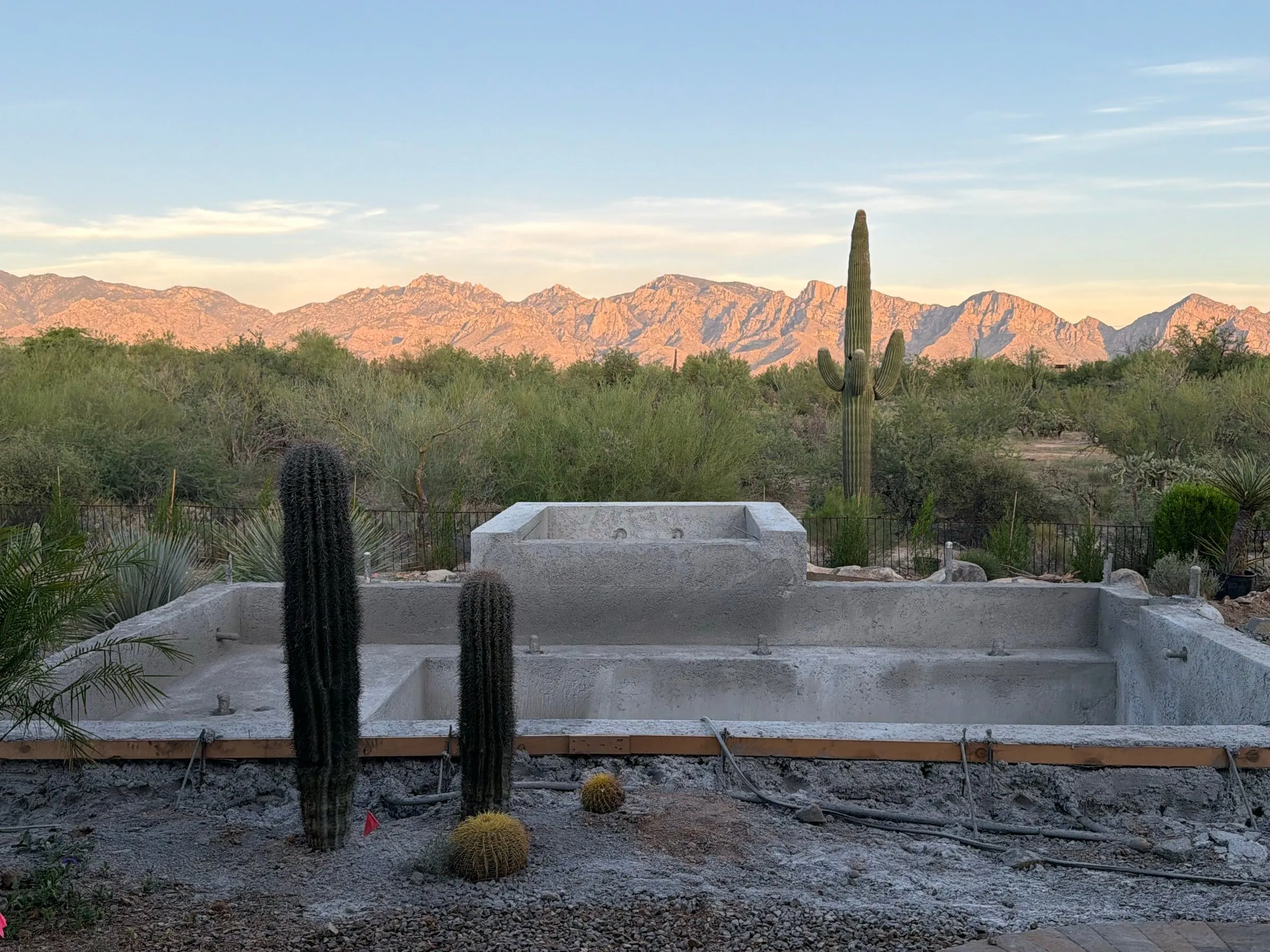
How does desert heat affect a new pool shell?
Curing is where Arizona is different. Concrete does not dry to get strong. It needs water to keep reacting with the cement. Our hot sun, low humidity and afternoon wind pull water out of a fresh shell fast.
The ASA says hot weather makes concrete set faster than the same mix in cool weather. It recommends a minimum of 7 days of curing to help control shrinkage, and warns that skipping curing in windy, hot or dry conditions raises the risk of shrinkage and cracking.
What that looks like in a Tucson backyard:
- Water the shell. The shell gets wetted down regularly in the days after shooting, more often in summer. Homeowners are sometimes asked to help with this, so ask your builder who is responsible and how often.
- Plan the shoot time. In the hottest months, crews often start early in the morning so the concrete is placed before peak heat.
- Watch the monsoon. The ASA says fresh shotcrete should be protected from rain until it reaches final set, usually 4 or 5 hours. After that, rain actually helps curing. A sudden July storm right after a shoot is a real concern, so timing matters.
- Do not rush the next step. Tile, coping and plaster come after the shell has had time to cure. A schedule that jumps straight from shooting to finishes is a warning sign.
Our build timeline guide shows where curing fits in the overall schedule.
Why do Tucson permits still say “gunite”?
You may see “pre-gunite inspection” on your permit card even if your builder uses wet-mix shotcrete. The word stuck around because dry-mix was common for so long. To the inspector, it simply means the steel and layout check before concrete. It does not mean your builder has to use the dry-mix method.
Why we use shotcrete
We use wet-mix shotcrete on our pools. The mix is batched to a set design, which gives us a consistent starting point from load to load, and it lets the crew place a lot of concrete in one continuous shoot. That is one reason we pair it with our own excavation equipment and in-house crews, so the dig, steel and shoot stay on our schedule.
That said, we would never tell you a gunite pool is a bad pool. A well-built gunite shell from a careful crew will outlast a sloppy shotcrete shell every time. How long any shell lasts depends far more on workmanship, water chemistry and care.
What should you ask a pool builder about the shell?
Bring these questions to every bid meeting. They will tell you more than the method name will. Our guide on how to compare pool bids has more.
- Do you use wet-mix shotcrete or dry-mix gunite, and why?
- Who sprays the shell? Is it your crew or a subcontractor? Is the nozzle operator ACI certified?
- What concrete strength does the engineering call for, and who supplies the mix?
- How do you handle rebound and trimmings? Are they removed from the floor and cove?
- How do you keep steel off the dirt so concrete wraps around it?
- How will the shell be cured, for how many days, and who waters it?
- What happens if a monsoon storm hits the day of the shoot?
- How long do you wait after shooting before tile, coping and plaster?
- Is the shell shot in one continuous pour, or in sections?
A builder who answers these clearly and without getting defensive is a good sign. A builder who only wants to argue that one method is always better may be skipping the parts that matter.
Build your concrete pool with Meraki Pools AZ
We design every pool in 3D, with a VR walkthrough, before we dig, and we handle the permits, steel, shotcrete and finishes with our own crew. See how a build unfolds on our step-by-step pool process page or learn more about our custom pool construction in Tucson.
We are a family-owned Tucson pool builder, licensed under AZ ROC #342505 and #352797. Call (520) 342-8335 or request a free estimate.
Put this guide to work
Planning your own project? See our Custom Pool Construction in Tucson.
Frequently asked questions
Is shotcrete or gunite better for a pool?
Neither is better on its own. The American Shotcrete Association says that when properly done, there should be no difference in performance between the wet and dry processes. The crew, the mix, the steel and the curing decide how good the shell is.
Is gunite the same as shotcrete?
Gunite is a type of shotcrete. Shotcrete is the umbrella term for concrete sprayed through a hose, and gunite is the older name for the dry-mix process, where water is added at the nozzle. Wet-mix shotcrete arrives already mixed with water, usually from a ready-mix truck.
Why do Tucson inspectors call it a pre-gunite inspection if my builder uses shotcrete?
It is mostly habit. Many permit offices and builders still use gunite as a general word for a sprayed concrete pool shell. The inspection is the same either way: the inspector checks the shape, depth, steel and setbacks before any concrete goes in.
How long does a shotcrete pool shell need to cure?
The American Shotcrete Association recommends at least 7 days of curing to help control shrinkage, and says hot, dry or windy conditions raise the risk of shrinkage cracks. In practice that means keeping the shell wet, especially in a Tucson summer. Your builder's schedule should leave time for curing before tile, coping and plaster.
What is rebound in pool construction?
Rebound is material that bounces off the wall or floor during spraying instead of sticking. It is mostly sand and rock with little cement paste, so it is weak. It should be cleaned out, not left in the floor or worked into the shell.