Monsoon season in Tucson brings dust storms, heavy rain, high winds and lightning, often all in one afternoon. The short answer for pool owners: get out of the pool at the first sound of thunder, secure loose items before storms, protect your equipment from outages, and clean, test and rebalance the water as soon as it is safe. If the pool overfills, lower the water only in the ways Tucson or Pima County allow.
Here is a simple before, during and after plan, plus a few design choices that make monsoon cleanup much easier.
What should I do to get my pool ready for monsoon season?
A little prep in June saves a lot of work in July and August.
- Clear the yard. Put away or tie down umbrellas, floats, cushions and light furniture. Wind can throw them into the pool or a window.
- Trim trees and plants. Cut back branches that hang over the pool or deck. Palm fronds and mesquite debris are common after storms.
- Check drainage. Make sure yard drains, scuppers in walls and gaps under gates are clear so runoff can leave the yard.
- Look at your equipment pad. Check that covers on the equipment and electrical are in place, and that the area drains well.
- Stock up. Have chlorine or salt, pH adjusters and a test kit on hand so you can rebalance right after a storm.
- Know your shutoffs. Learn how to turn your equipment off at the automation panel or timer.
Is it safe to swim when a storm is coming?
No. The National Weather Service (NWS) is clear on this. Its lightning safety guidance says there is no safe place outside when thunderstorms are nearby, and that if you can hear thunder, you are likely close enough to be struck. NWS guidance also tells swimmers to get out of the water and find shelter right away.
Follow the NWS rule of thumb:
- When thunder roars, go indoors. Get everyone out of the pool and spa at the first rumble, even if the sky above you looks clear.
- Wait 30 minutes after the last thunder or lightning before going back outside.
- Stay off plumbing and plugged-in devices while the storm is overhead. The NWS also advises against showers and baths during a thunderstorm.
Monsoon storms build fast in the afternoon and can arrive with little warning. If you have kids swimming on a summer afternoon, keep an eye on the sky to the east and south, and use a weather app with lightning alerts.
How do I protect pool equipment from dust storms and power outages?
Dust storms and outages are part of most monsoon seasons.
Dust and debris. Dust settles into the water and gets pulled into the filter. Heavy dust can clog a filter quickly and make the pump work harder. After a dust storm, empty the skimmer and pump baskets, and clean or backwash the filter if pressure is up.
Power outages. When the power comes back, check that:
- the pump restarted,
- automation and timers still have the right schedule and clock time,
- the heater, salt system and lights are behaving normally.
Surges and lightning. Electrical surges can damage control boards and pump drives. Some owners turn equipment off at the controller when lightning is close. If you want added surge protection for your pool equipment, talk to a licensed electrician about what fits your panel and equipment.
What should I do right after a monsoon storm?
Once the storm has passed and it is safe to be outside, work through this list:
| Step | Why it matters |
|---|---|
| Remove large debris with a skimmer net | Leaves and branches break down and use up chlorine |
| Empty skimmer and pump baskets | Full baskets cut flow and strain the pump |
| Check filter pressure and clean if needed | Dust and silt clog filters fast |
| Brush walls, steps and floor, then vacuum | Lifts settled dust so the filter can catch it |
| Check the water level | Heavy rain can push the pool above the skimmer |
| Test chlorine, pH and alkalinity | Rain dilutes and changes chemistry |
| Run the pump longer for a day or two | Helps clear cloudy water |
| Look over the deck and equipment pad | Catch erosion, standing water or damage early |
How does rain change pool water chemistry?
Rainwater is not the same as balanced pool water. A big storm adds water that dilutes your chlorine and can shift pH and alkalinity. It also washes dust, pollen, leaves and dirt into the pool, and all of that uses up chlorine.
The result is often cloudy or slightly green water a day or two after a storm. The fix is usually simple if you act quickly: clean the baskets and filter, brush and vacuum, test the water, and bring chlorine and pH back into range. If you have a salt system, check that salt levels did not drop too far after a lot of rain.
My pool overflowed. Can I drain water into the street?
Sometimes, but only under specific rules. Most pools are built to handle normal rain, but a big storm can push the level high enough that the skimmer stops working well. If you need to lower the water, follow the rules where you live.
Inside the City of Tucson, the city’s instructions for pool and spa owners say the preferred method is to run a hose into the cap of your own private sewer cleanout, not a public manhole. Draining to a street gutter or storm drain is allowed only as a last resort, if you have no access to a private cleanout. In that case, the water must sit untreated for at least 72 hours after the last chlorine was added, the pH must be between 7 and 8, and the water must be clear and free of algae. It cannot flow onto other properties, sidewalks or unpaved areas, and you must control it so it does not cause erosion. Acid-wash water cannot leave your property.
In unincorporated Pima County, the county’s guidelines allow three options: your own landscaping, a paved road with a curb or storm drain, or the sanitary sewer through your cleanout. Water going anywhere but the sewer must have chlorine below 1 part per million, a pH between 6.5 and 9, and be clear and free of algae and debris. Saltwater pools must be drained to the sanitary sewer. A pump into the sewer cleanout must run at less than 15 gallons per minute, and you should not drain pool water into a septic system.
Filter backwash water has its own rules. The city says it must stay on your property, where the soil can absorb it. The county allows it to soak into your own yard or go to the sewer at 15 gallons per minute, but not to a street or wash.
Other towns, like Marana, Oro Valley and Sahuarita, may set their own rules, so check with your town before draining.
How can landscaping and drainage design help during monsoon season?
Most monsoon headaches come from water and dirt moving the wrong way. Good design keeps them out of the pool.
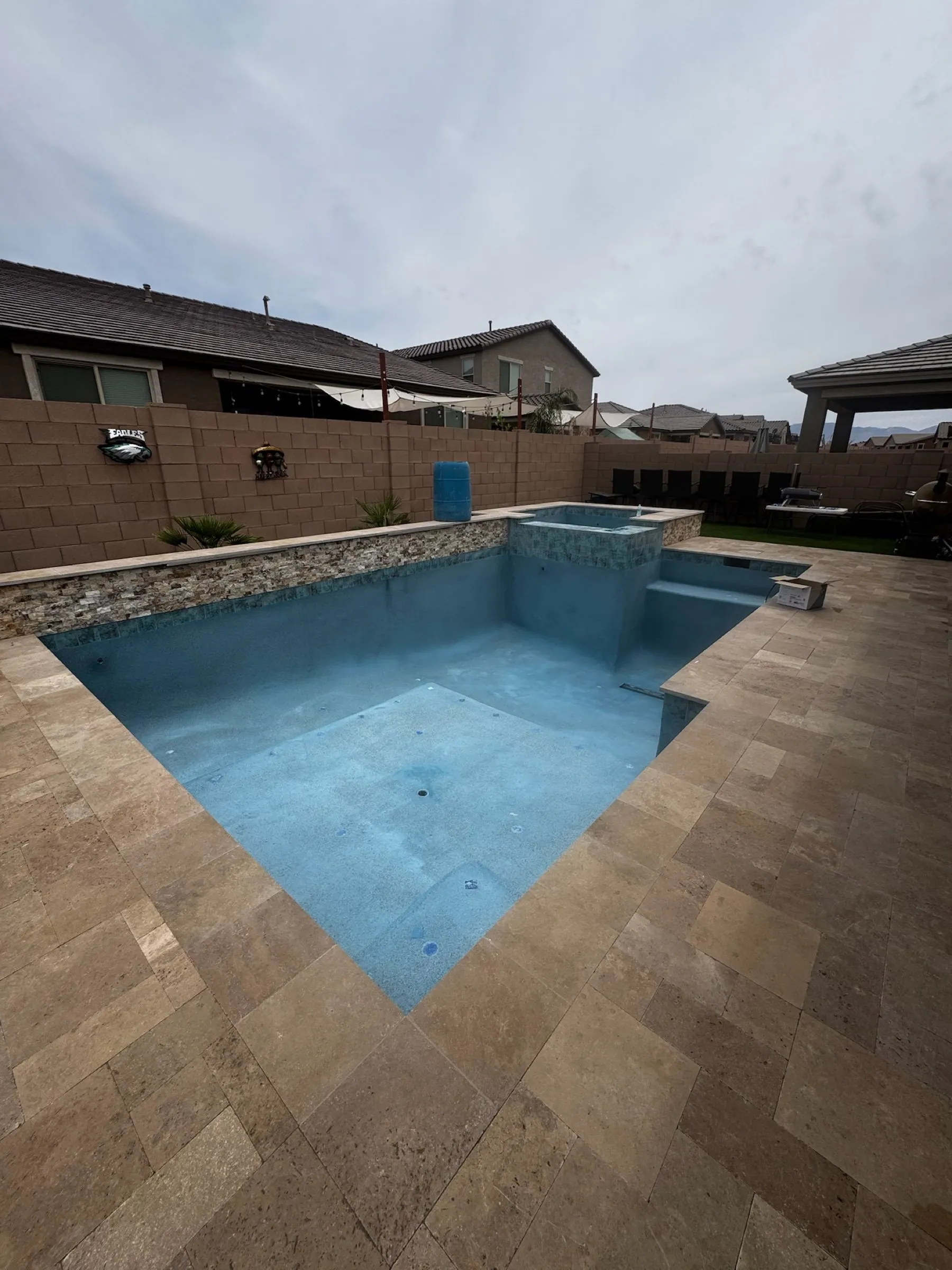
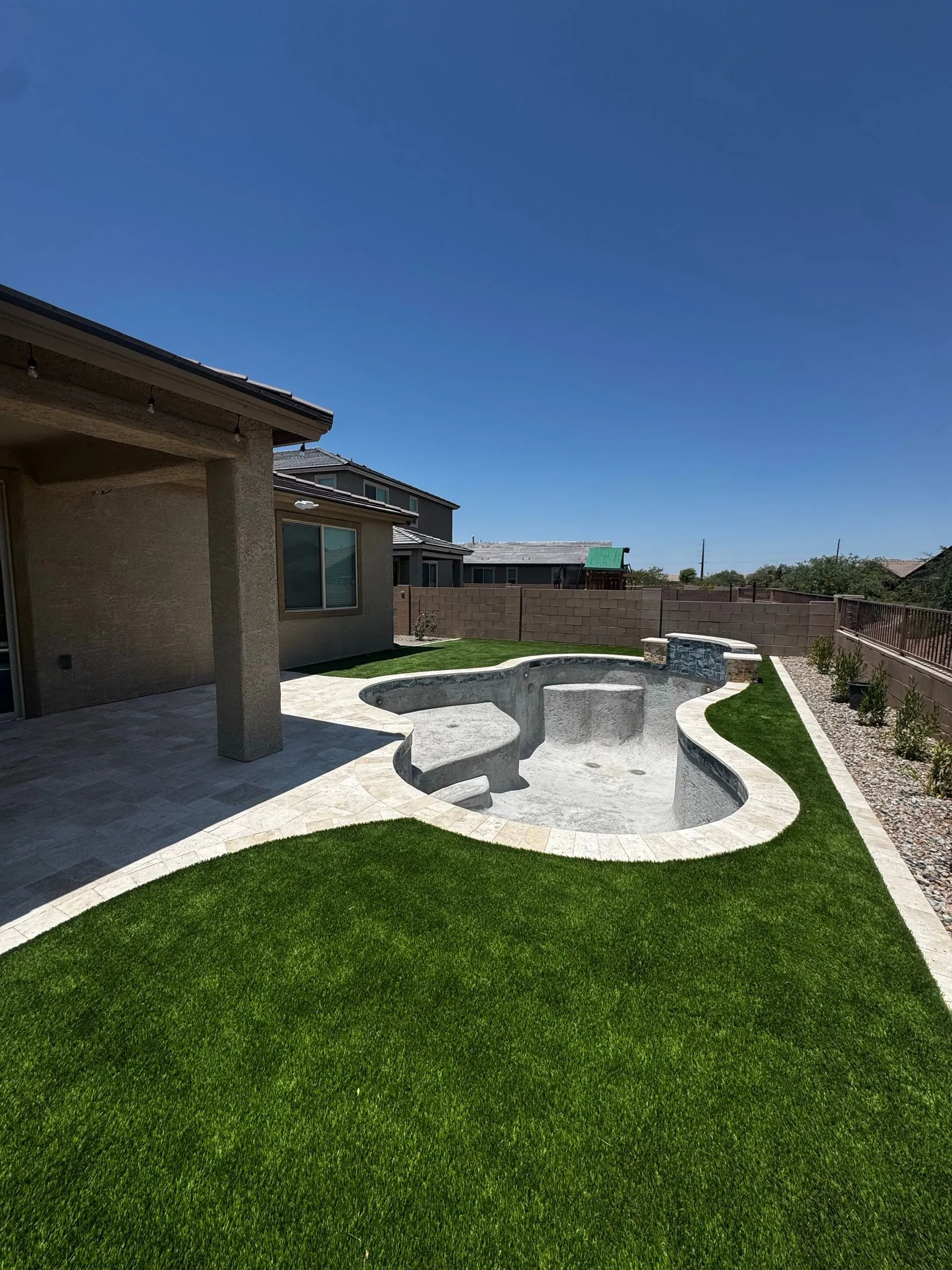
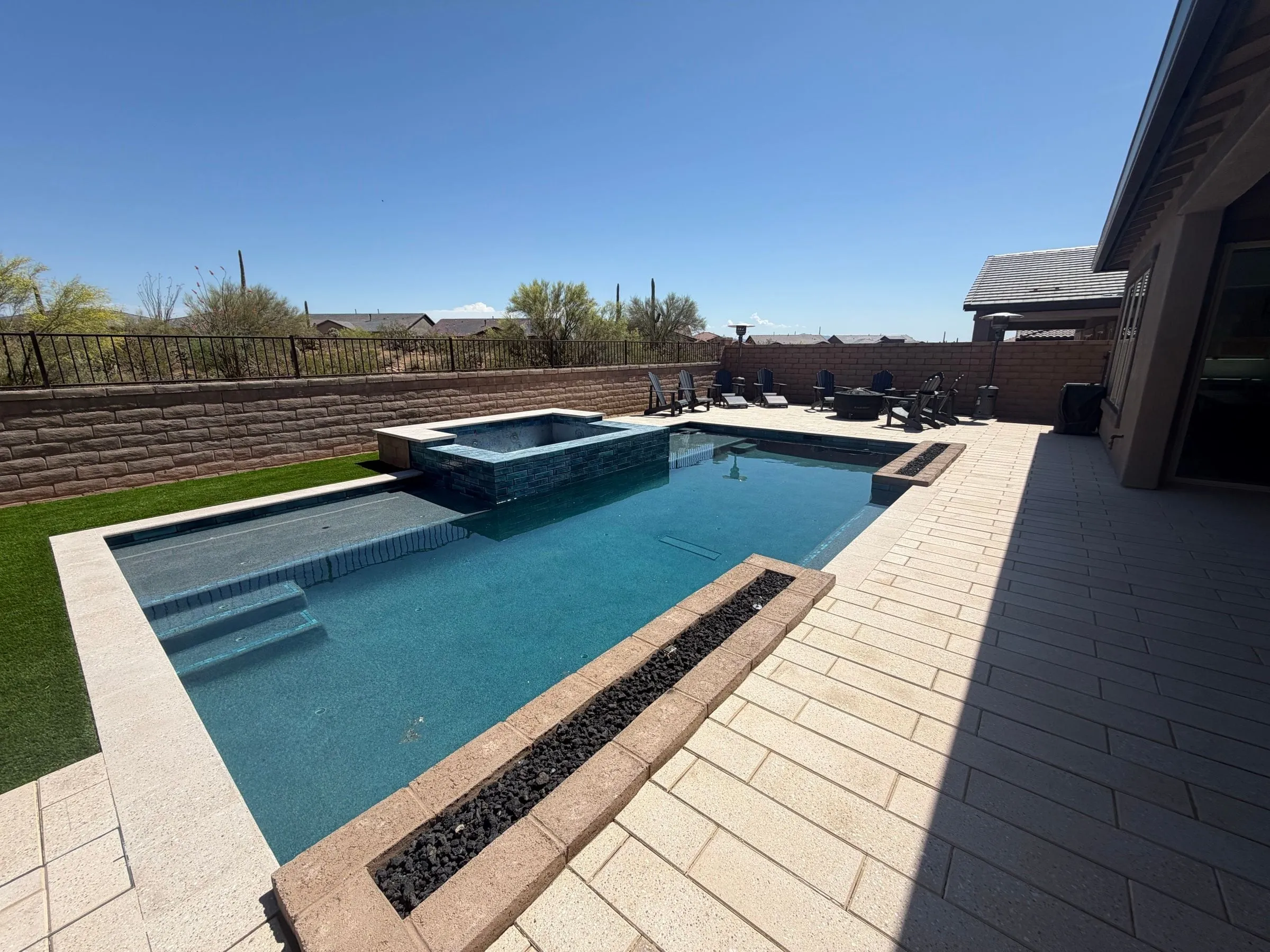
- Slope the deck away from the pool. Rain should run off the deck toward drains or planters, not into the water.
- Plan yard drainage. Water needs a path around the pool and out of the yard. Block walls need weep holes or drain openings in the right spots.
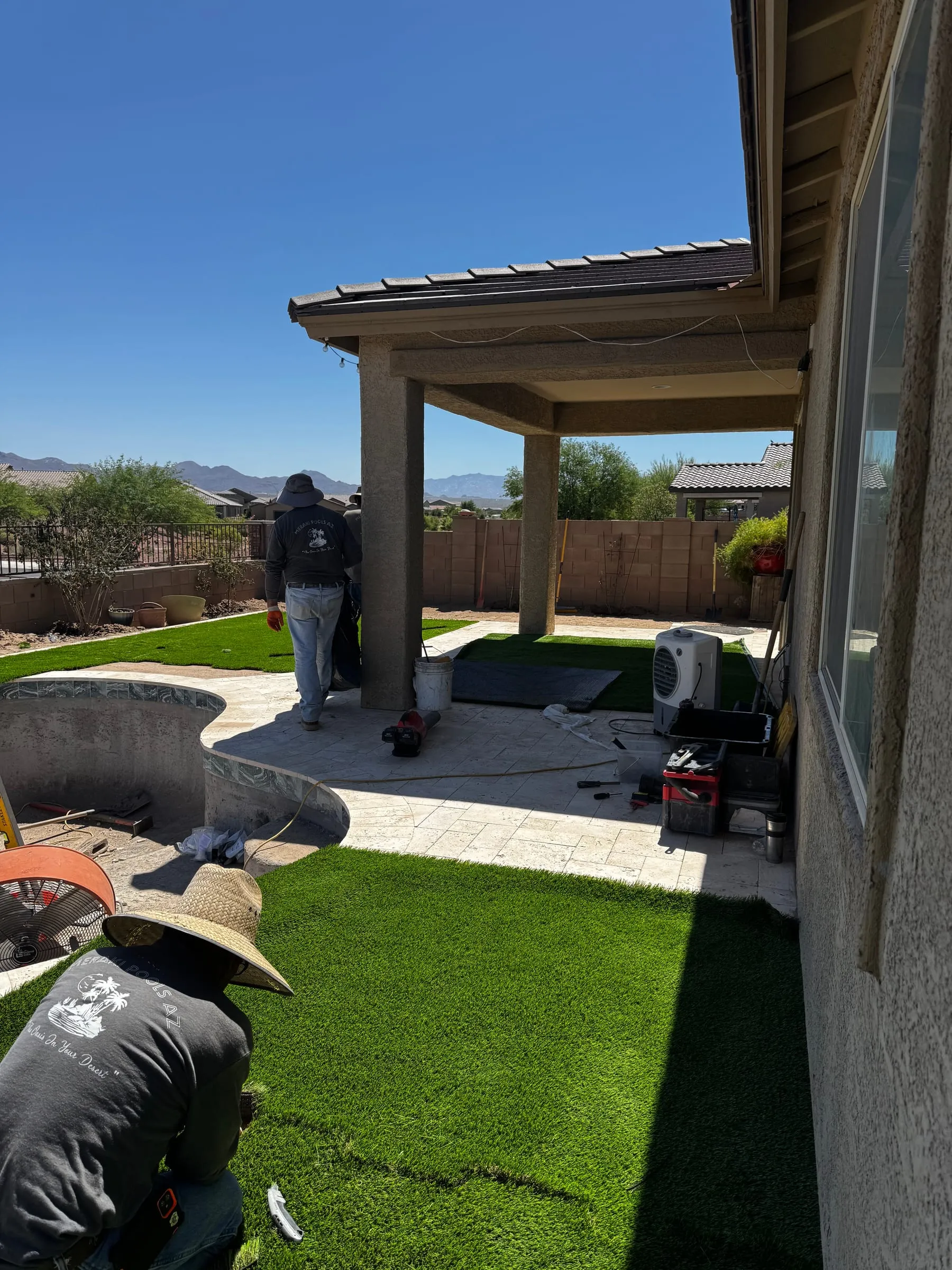
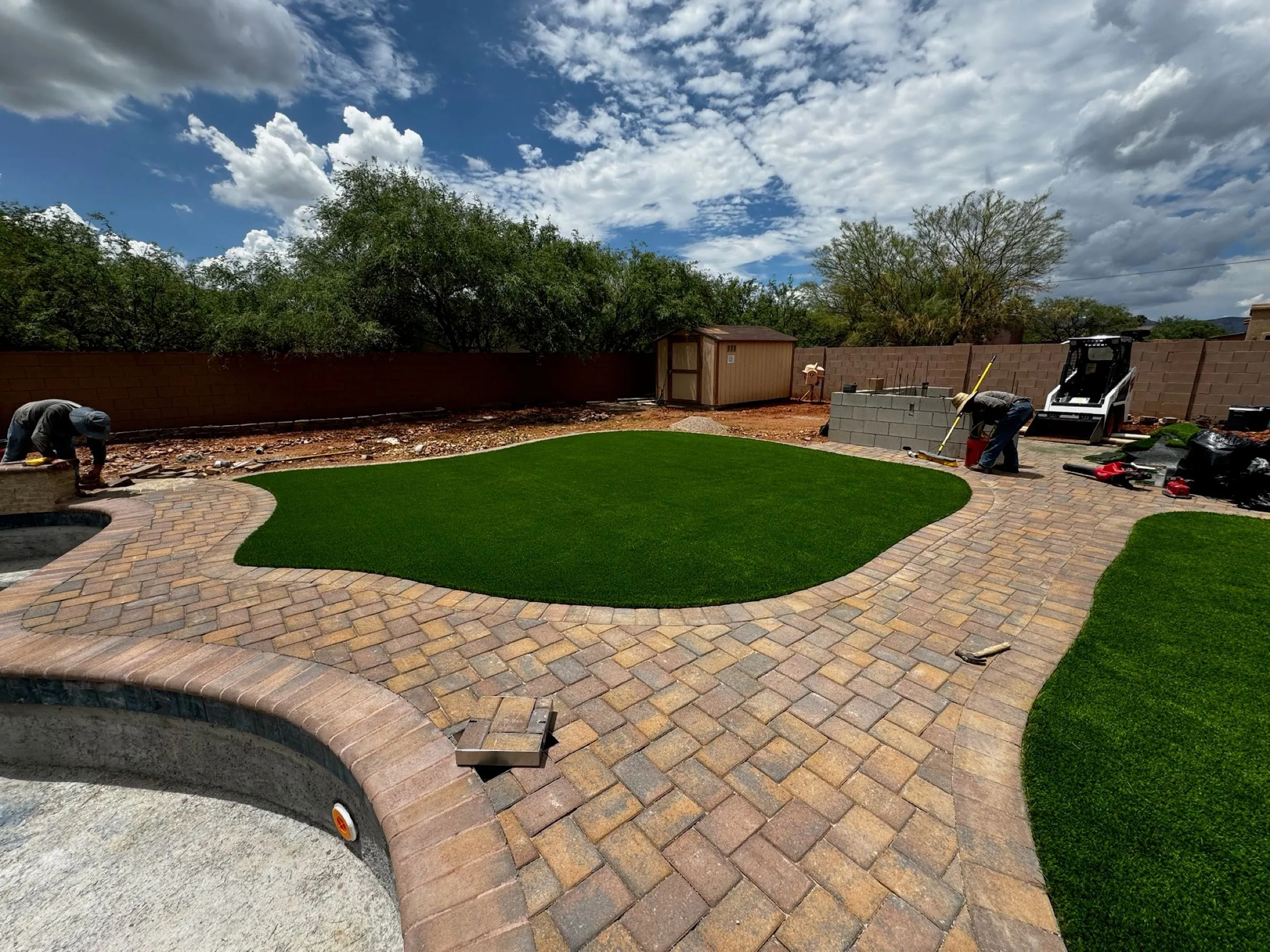
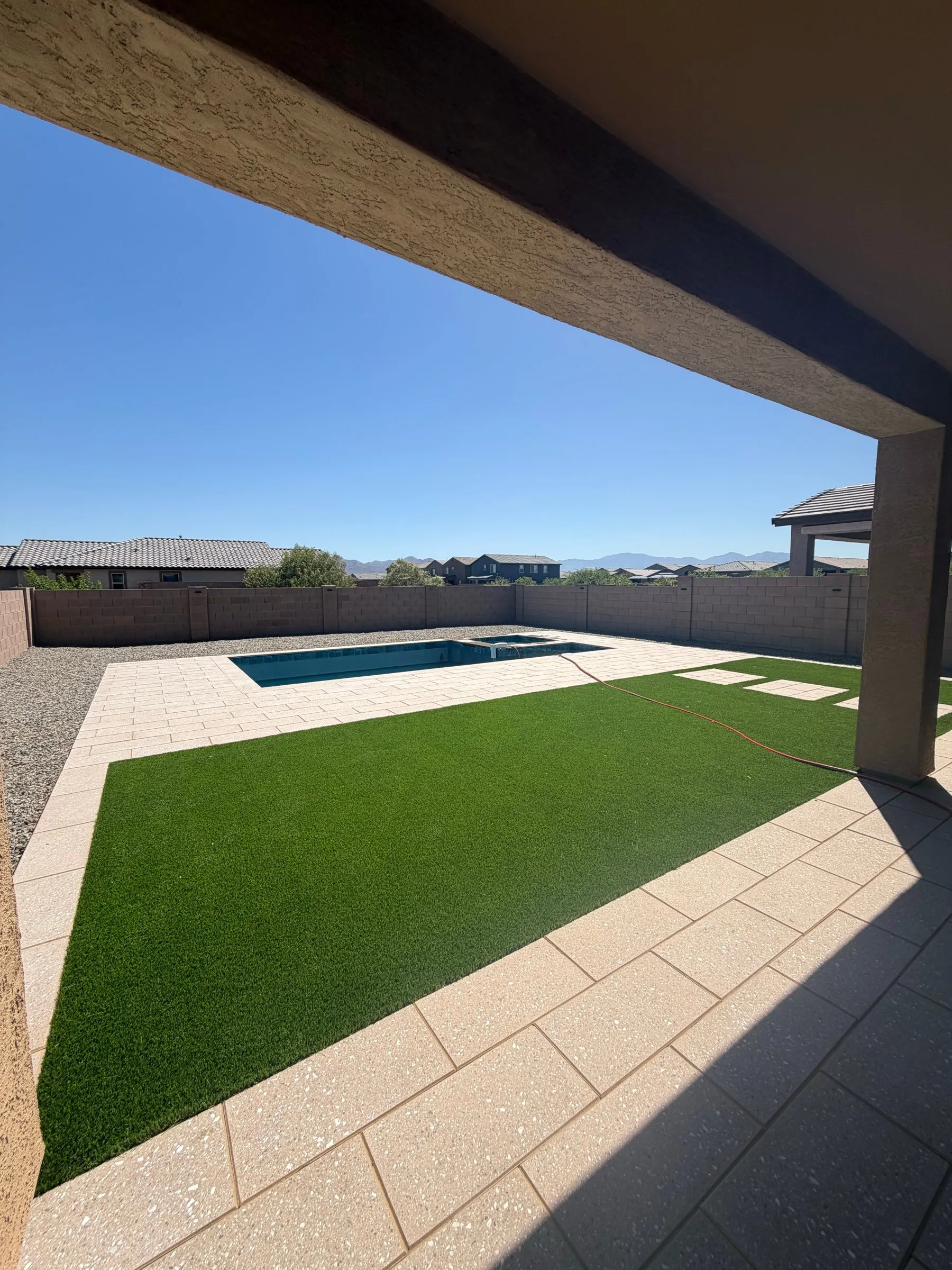
- Use turf and hardscape near the water. Bare dirt and loose gravel next to the deck turn into mud that washes in. Artificial turf and pavers help.
- Pick plants carefully. Keep plants that drop a lot of leaves, pods or flowers away from the pool edge.
- Protect the equipment pad. Set it where it drains well and is easy to reach after a storm.
We design decks, block walls, pool landscaping and turf and irrigation together with the pool, so drainage is part of the plan from day one.
What did the 2026 monsoon look like in Tucson?
The 2026 season was close to normal for rain but came after a very hot summer. We summarized the National Weather Service’s numbers in our news post on Tucson’s summer 2026 heat and monsoon. Long hot stretches mean warm water and fast chlorine loss, so the post-storm checklist above matters even more.
Thinking about a pool that handles monsoon season well?
We are a family-owned Tucson builder of concrete pools and spas, licensed under AZ ROC #342505 and #352797. We plan drainage, decking, landscaping and Pentair equipment around your yard so storms are easier to deal with. Our pool water features guide and pool deck options are good places to explore ideas. Contact us or call (520) 342-8335.
Sources
- National Weather Service: Lightning Safety Overview
- National Weather Service Blacksburg: Outdoor Activities, Lightning Safety and Preparedness
- City of Tucson: Instructions for Pool and Spa Owners
- Pima County Department of Environmental Quality: Draining Your Swimming Pool & Spa Guidelines (PDF)
- National Weather Service Tucson: 2026 Monthly and Seasonal Reviews
Put this guide to work
Planning your own project? See our Custom Spas & Pool-Spa Combos in Tucson, Pool Decks: Travertine & Pavers in Tucson and Pool Landscaping, Turf & Irrigation in Tucson, or read about building a pool in Marana, Oro Valley or Sahuarita.
Frequently asked questions
Is it safe to swim when there's thunder but no rain yet?
No. The National Weather Service says there is no safe place outside when thunderstorms are in the area, and that if you can hear thunder you are likely within striking distance. Get out of the pool, go indoors, and wait 30 minutes after the last thunder or lightning before going back out.
Should I run my pool pump during a monsoon storm?
It is fine for the pump to keep running in rain, but many owners turn equipment off at the controller when lightning is close and turn it back on after the storm. After any power outage, check that your pump, automation and timers came back on the right schedule.
Can I drain my pool water into the street after a storm?
Only under strict conditions. Inside Tucson, the city prefers you drain to your private sewer cleanout, and street discharge is a last resort with chlorine and pH limits. Pima County has similar rules for unincorporated areas and says saltwater pools must go to the sanitary sewer. Never send water onto a neighbor's property or an unpaved road.
Why is my pool cloudy after a monsoon?
Rain, dust and debris dilute and use up chlorine and add dirt and organic matter to the water. Run the pump, clean the filter and baskets, brush and vacuum, then test and rebalance. Cloudiness usually clears once the filter catches up and chlorine is back in range.
Should I cover my pool before a monsoon storm?
A cover keeps out dust and debris, which makes cleanup easier. Make sure it is secured for strong winds, and remove standing water from the top after the storm. Never let anyone swim or walk on a cover.
How can pool design help during monsoon season?
Decks should slope away from the pool, yard drainage should carry runoff around it, and messy plants should be kept back from the water. Turf and hardscape near the deck also reduce mud and debris washing in.